
Politics
Checking the pulse of Florida health care news and policy


Welcome back to Diagnosis, a vertical that focuses on the crossroads of health care policy and politics.
— It’s a trend —
Florida’s Safety Net Hospitals say the newest round of Graduate Medical Education data confirms a report from earlier this year showing the hospitals that provide the state’s most complex care are also training the most doctors.
The new update from the Safety Net Hospital Alliance of Florida shows its members once again outpacing the rest of the state in residency Match Rates, program performance and physician retention.
It’s an extension of the findings from the Alliance’s 2020-24 Florida Hospital GME Match Rates & Quality report, which found that Safety Net systems are not only filling nearly all their residency slots, but doing so at rates above both the statewide and national averages.
This year’s numbers reinforce those findings.
According to the Alliance, Safety Net Hospitals draw nearly half of all new residents choosing to train in the state. Their combined Match Rate reached 100% after the supplemental match, and their newer GME programs continue to post perfect fills year after year — a sign, the group argues, that program quality matters more than program age.
“This 2025 data proves, once and for all, that Safety Net Hospitals set the pace for training the next generation of Florida’s doctors. Safety Net Hospitals comprise only 14% of hospitals, yet almost 50% of the new doctors are choosing our hospitals to complete their training,” said Safety Net Hospitals President & COO Lindy Kennedy.
”This is because medical school graduates seek out high-quality programs when considering where to do their training. For Florida families, that means more communities gaining access to well-trained, compassionate doctors.”
Statewide trends are moving in the same direction. Since 2020, Florida has increased the number of new doctors in training by nearly 50%, expanded GME slots by more than 40%, and increased the number of hospitals administering GME from 58 to 65.
“Excellence in care and excellence in training go hand in hand, and that is why our hospitals consistently lead in both. Every physician we train represents another step toward ensuring every Florida family continues to have access to outstanding care close to home,” Safety Net Hospitals CEO Justin Senior said.

— Tick Tock —
As the calendar ticks toward the Dec. 31 expiration of the enhanced Affordable Care Act premium tax credits, Florida health advocates are sounding increasingly alarmed about what they describe as a slow-moving but entirely predictable coverage shock.
Multiple recent reports point to the same conclusion: Florida has the most to lose if Congress allows the subsidies to lapse. Roughly 4.7 million Floridians are enrolled in ACA marketplace plans — more than any other state — and about a quarter of all non-elderly residents rely on the marketplace for coverage.

Analysts warn that premiums could spike dramatically without the enhanced credits, with some estimates projecting average increases of more than 100% for subsidized enrollees. That kind of jump would price out as many as 1.4 million Floridians, according to Florida Voices for Health, and leave many others making trade-offs between health care and basic necessities.
Carriers, meanwhile, have signaled steep rate increases if federal support ends, which could trigger a classic “death spiral.” As younger people are priced out, the pool of insured Floridians shrinks, raising average risk and, by extension, premiums for those who maintain coverage.
Florida’s lack of Medicaid expansion leaves many of those priced out of marketplace plans without a fallback option. With the deadline now weeks away, stakeholders are urging Congress to extend the credits before the state tumbles off what they say is a preventable coverage cliff.
Floridians can estimate how much their premiums would increase if the credits aren’t extended via KFF’s calculator, which accounts for required contribution caps released by the IRS for 2026 and updated federal poverty guidelines.

— Cracks in the infrastructure —
A new national analysis warns that the country’s unpaid family caregiver network is nearing a breaking point, with Florida landing in the middle of the pack for overall burden but still facing steep pressure points.
The report on the “invisible infrastructure,” released by Seniorly, finds that 38 million Americans provide an average of 3.9 hours of unpaid eldercare each day, up sharply from a decade ago. The trend is driven by rising life expectancy, the rapid growth of the 85-plus population, projected to more than double by 2050, and the escalating cost of home- and community-based services.

Florida ranked No. 28 for overall caregiver strain, but the state still posted some red flags. It had the worst ratio in the nation of residents receiving Medicaid home-based services to those stuck on waiting lists and one of the highest shares of multigenerational households. This structure lends itself to constant caregiving.
Adult day care is comparatively affordable, with a median cost of $85 per day. Still, annual home health costs roughly 1.24 times higher than the median income of senior households, showing how paid support is out of reach for many Florida seniors.
The study also highlights the toll on caregivers themselves: higher rates of depression and deteriorating health, reduced work hours, and lost wages and benefits. The financial impacts are estimated to exceed $1 trillion a year nationwide, according to an analysis by the nonprofit National Partnership for Women & Families.
— Power leader —
Simply Healthcare’s Medicaid Plan President Dana Gryniuk was recently named one of the South Florida Business Journal’s 2025 Power Leaders in Health Care. She oversees the Florida-based Medicaid plan’s delivery of patient-centered and whole-person care to more than 675,000 Medicaid and Florida Healthy Kids members.

Gryniuk is instrumental in crafting the evolving landscape of health policy and care delivery for Floridians. Through her leadership, Simply Healthcare consistently launches innovative initiatives that expand access to care and positively transform lives. Recently, these efforts have included the Florida Self-Sufficiency Council, statewide health literacy efforts and enhanced mental health support services at Wolfson Children’s Hospital, among numerous other impactful projects.
Testifying before the Florida House Health Care Budget Subcommittee on Tuesday, November 18, as part of a panel of Medicaid providers, Gryniuk underscored Simply Healthcare’s core philosophy of empowering Floridians to be proactive in their health and well-being.
“We like to empower our members in their health care journey,” she said. “We want to educate them on the options that they have being served by a Managed Care Plan — whether it’s value-added benefits, whether it’s wraparound services. Is it food insecurity? Are they looking for employment? We want to be able to help mom, dad, grandma or any legal guardian in empowering them to have a better health care experience.”
— Holiday cheer —
The Tampa General Hospital Foundation is teaming up once again with jewelry designer Kendra Scott for a holiday-season fundraiser benefiting Muma Children’s Hospital.
This year, a young patient got the opportunity to design her own line to help others.
Charlize Davis, now 10, survived a devastating house fire last year and has spent the months since undergoing ongoing procedures at Muma Children’s Hospital at TGH. Her mother describes the hospital as the family’s “anchor” through a long and challenging recovery.
“The exceptional medical care, paired with the love, kindness and remarkable encouragement from the doctors, nurses and staff at Muma Children’s Hospital, transformed an unbearably dark time into one filled with hope,” Jamie Davis said.

Charlize returns to the hospital monthly for procedures that she’ll need for a few years and is known for her courage and positivity. She was invited to Scott’s shop at Hyde Park Village in Tampa to design personalized pendants as part of the Kendra Gives Back program. She created the Brave Heart Collection by Charlize, which her mom said reflects Charlize’s spirit.
“Creating this collection is her way of giving back, celebrating the hospital that continues to change her life, and helping other children receive the same level of care,” Davis said.
“Despite everything she has been through, Charlize remains the same loving child who sings and dances in the hallways, hugs everyone she meets, and believes every day is full of rainbows. That joy shines through every colorful piece in this collection — a little girl with a huge heart and extraordinary resilience.”
Kendra Scott will host an in-store fundraiser benefiting Muma Children’s Hospital from 5-7 p.m. on Tuesday, Dec. 9, at its Hyde Park location, with 20% of sales supporting the Child Life Fund, which provides toys, games and enrichment activities for pediatric patients.
Both the Brave Heart Collection and the TGH Blue Collection are available online. Shoppers can also use code GIVEBACK-TGH2025 at kendrascott.com from Dec. 9-18 to direct 20% of their purchase to Muma Children’s Hospital.

— ICYMI —
“Activists have right to leaflet within 5 feet of Clearwater abortion clinic, appeals court says” via Liv Caputo of Florida Phoenix — Anti-abortion activists have the right to hand leaflets to women in the driveway of a Clearwater abortion clinic, a federal appeals court ruled Thursday. In a 2-to-1 decision, the U.S. Court of Appeals for the 11th Circuit tossed a trial judge’s decision preventing the Florida Preborn Rescue organization from entering within 5 feet of the Bread and Roses Women’s Health Center’s driveway. Instead, the lower court must pause the Clearwater ordinance preventing the group — and any other pedestrians — from entering the center’s “buffer zone” — a 38-foot stretch of public sidewalk, 28 feet of which cross the clinic’s driveway. “The Ordinance seriously burdens Florida Preborn’s speech … by restricting the sidewalk counselors’ ability to distribute leaflets to patients as they arrive at the clinic,” the majority opinion reads.
“Bills would expand health care providers’ right to sue under 2023 medical conscience objection law” via Christine Sexton of Florida Phoenix — Health care providers and insurers in Florida could opt out of providing or paying for health care services, such as abortion, that violate their conscience and under a 2023 state law, they cannot be sued in court for denying the care based on their beliefs. A pair of Republicans have filed bills that would allow health care providers and insurance companies to file lawsuits seeking damages, injunctive relief, and attorney fees for adverse actions taken against them for exercising their medical conscience rights. Rep. Dean Black sponsors HB 551; Sen. Clay Yarborough is offering the identical Senate companion bill, SB 670. “Well, I think in this situation, the concern is that a provider — a doctor, a nurse, a lab tech — whatever, is being compelled to perform a service that violates their conscience. … So, think, you know, being forced to perform transgender surgery or an abortion, something like that,” Black said.

“State’s federal Medicaid payment undermines Ron DeSantis claim about Hope Florida donation” via Jeffrey Schweers of the Orlando Sentinel — Florida’s $10 million diversion from a Medicaid fraud settlement to the Governor’s favored Hope Florida charity is facing new scrutiny after state payment records show Florida repaid the federal government based on the full $67 million settlement, contradicting earlier claims that the $10 million wasn’t Medicaid money. DeSantis had called the donation a discretionary “cherry on the top,” but the state’s 57% federal pass-through indicates otherwise. “Not only did we lose $10 million, but we are still paying the feds back for it,” said Rep. Alex Andrade, who led the Legislature’s probe and argues the entire settlement “was Medicaid money.” The repayment revelation deepens a scandal that sparked investigations, fueled criticism of Casey DeSantis’ Hope Florida network, and raised allegations that Medicaid funds were steered into political fights.
“Florida’s health department eyes changes to childhood immunizations” via Katelyn Ferral of the Tampa Bay Times — State health officials will meet Dec. 12 in Panama City Beach to begin rolling back childhood immunization requirements, three months after DeSantis and Surgeon General Joseph Ladapo announced plans to end all vaccine mandates. The Department of Health will review administrative-code vaccine rules, including chickenpox, hepatitis B, Hib and pneumococcal shots, which the agency can change without legislators. Other long-required vaccines, such as polio and mumps, are written into statute and cannot be removed without a bill and none has been filed. Florida would become the first state to scale back school vaccine mandates, even as kindergarten vaccination rates fall and health experts warn of increased risk to vulnerable children. DeSantis and Ladapo frame the move as a protection of personal freedom.
— RULES —
The Board of Osteopathic Medicine’s final rule regarding physician assistant fees (64B15-6.013) goes into effect on Dec. 15. More here.
The Board of Medicine’s final rule regarding physician assistant fees (64B15-6.019) goes into effect on Dec. 15. More here.
The Board of Pharmacy’s final rule regarding pharmacist licensure and pharmacist technician registration by endorsement goes into effect Dec. 14. More here.
The Board of Clinical Social Work, Marriage and Family Therapy and Mental Health Counseling’s final rule regarding application for licensure endorsement goes into effect Dec. 14. More here.

— PENCIL IT IN —
Dec. 9
Happy birthday to Rep. Webster Barnaby!
9 a.m. — The EDR Social Services Estimating Conference meets to review KidCare expenditures. Room 117, Knott Building, the Capitol.
10 a.m. — The Senate Health Policy Committee meets to consider SB 312 on patient-directed medical orders and hear the Department of Health’s presentation on the Cancer Connect Collaborative’s Annual Report and the Cancer Innovation Fund. Room 412, Knott Building, the Capitol.
12:30 p.m. — The House Health Professions & Programs Subcommittee meets to consider bills, including the Social Work Licensure Interstate Compact and Dental Therapy. Members will also hear a briefing from Dr. Almut Winterstein of UF’s Consortium for Medical Marijuana Clinical Outcomes Research. Room 102, House Office Building, the Capitol.
3 p.m. — The House Human Services Subcommittee convenes for a series of briefings on quality guardianship, DOEA investigations, and the Auditor General’s findings related to the Office of Public and Professional Guardians. DOEA Secretary Michelle Branham is scheduled to present. Room 314, House Office Building, the Capitol.
Dec. 10
Happy birthday to Rep. Alex Rizo!
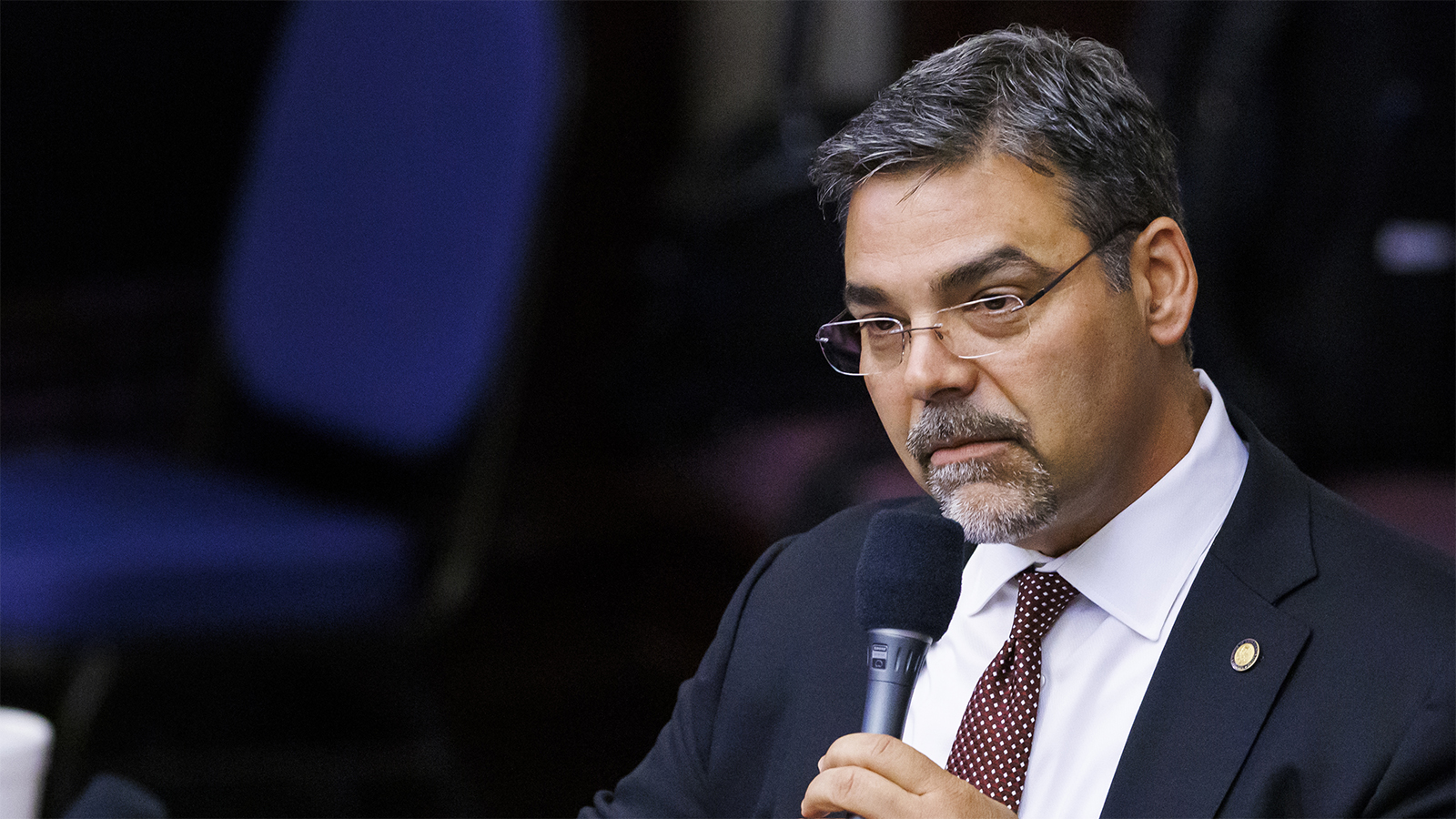
1 p.m. — The House Health Care Facilities & Systems Subcommittee receives updates from AHCA on nursing home resident satisfaction and patient safety culture, as well as Medicaid managed care outcomes related to maternal health and infant mortality. Room 404, House Office Building, the Capitol.
Dec. 11
9 a.m. — The House Health Care Budget Subcommittee meets for a presentation on the Department of Health’s use of artificial intelligence, including the Medical Quality Assurance Enforcement Licensure Information (ELI) System. Room 314, House Office Building, the Capitol.
12:30 p.m. — The House Health & Human Services Committee considers HB 355 and hosts a panel discussion on AI in health programs, with leaders from Cleveland Clinic Florida, FAHP, Lakeview Center, DCF, the National Health Law Program and FSU’s College of Nursing. Room 17, House Office Building, the Capitol.
Dec. 18
Happy birthday to Rep. Rita Harris!
Dec. 19
Happy birthday to Sen. Jonathan Martin!
10 a.m. — The EDR Self-Insurance Estimating Conference meets to review State Employees’ Health Insurance enrollment. Room 117, Knott Building, the Capitol.
Politics
Ron DeSantis says most Floridians won’t notice ‘schools of hope,’ as they will be in places most people don’t go
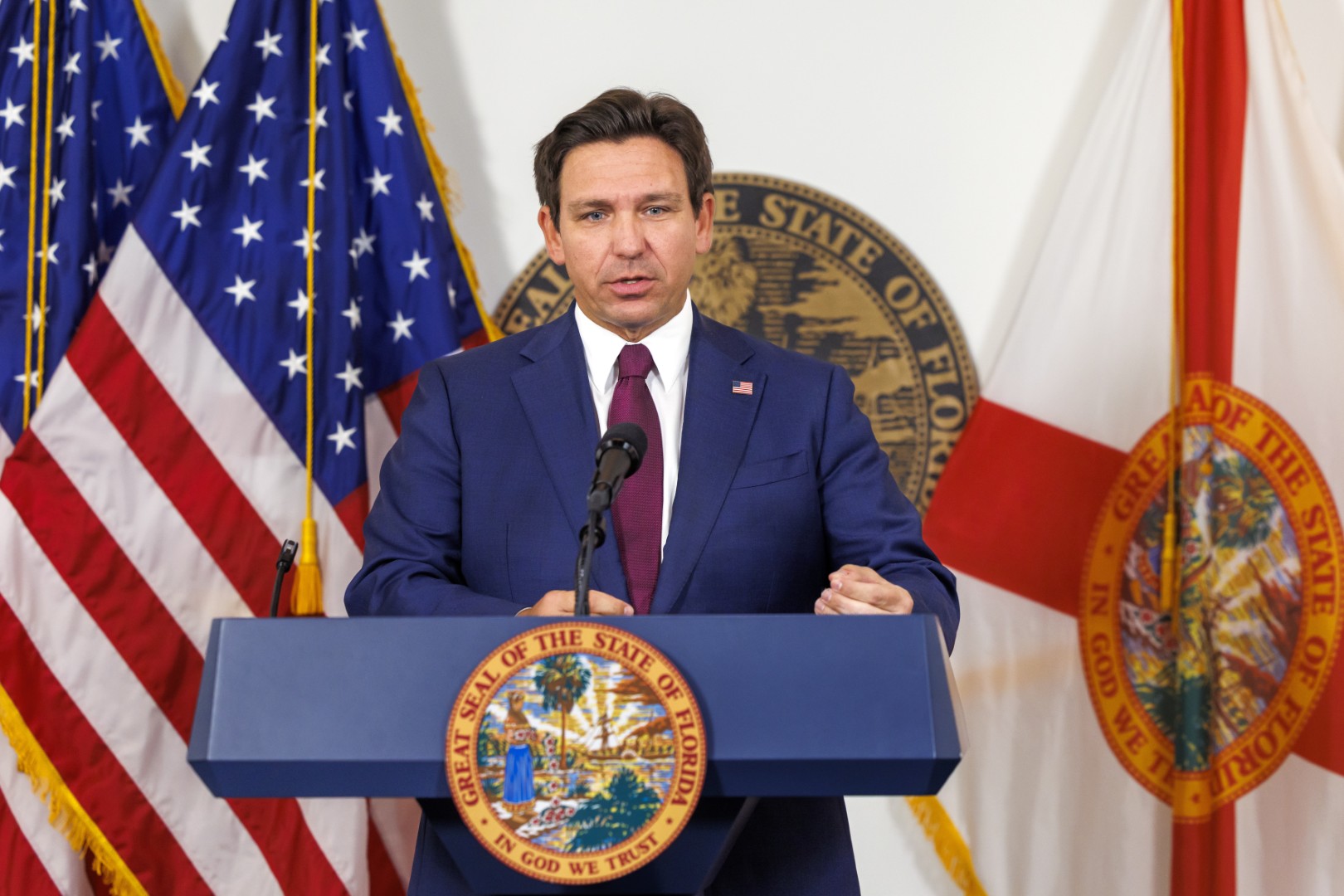
Gov. Ron DeSantis is strongly advocating for the “Schools of Hope” model, which would co-locate charter schools in underused public school facilities.
And as DeSantis said in Orlando, the facilities primarily will cater to children whose parents aren’t doing as much as some others, in places most people wouldn’t even go, with tonier communities insulated from the concept.
“You’re really relieving burdens on the district, right? Because, you know, you’re creating a program where it is going to be targeted at … the least-advantaged students. And in areas where a lot of people say it’s not even worth trying,” DeSantis said.
It’s unclear which people are allegedly saying it’s not worth “trying” to educate some students but not others.
But worries that they will be in places like Windermere or Palm Beach are misplaced, DeSantis said.
“This is not going to be something where a school of hope is going to be coming in and descending on Palm Harbor or Destin or some of these places,” he said, singling out two wealthy communities where more than 80% of residents are White.
He reassured parents that these schools of hope won’t come in where “my Sally or my Johnny goes,” but instead would be in “some hard areas in Miami. Probably Fort Lauderdale, Broward County, probably Orlando, maybe Tampa, maybe Jacksonville.”
In these areas, DeSantis predicts the Schools of Hope will largely go unnoticed.
“I don’t think most Floridians are even going to know that there’s a school of hope. Because quite frankly, probably where they’re setting up, already a lot of Floridians aren’t spending a lot of time in some of these areas, but they’re going to go in,” DeSantis said.
Regardless of whether residents are aware of the schools, DeSantis made it clear his preferred vendor would be the Success Academies championed by arguably his leading political patron over the years, billionaire Ken Griffin.

Griffin has already pledged to devote $50 million to expanding the concept in Florida.
“It’s a difficult mission, but at least with Success Academy, you have an operator who’s been able to do some really, really great things,” DeSantis said.
He credits Success Academies with having “gone into the worst areas in terms of opportunity … the most at-risk … areas where no one else wants to go.”
Lots of vendors want into the taxpayer-subsidized space.
As of last month, 22 School Districts across the state have received at least 690 letters of intent from charter school operators, according to data gathered by the Florida Policy Institute, a member of the Florida Coalition for Thriving Public Schools.
School Districts reporting letters as of mid-November include Brevard, Broward, Collier, Duval, Hillsborough, Indian River, Lake, Lee, Manatee, Miami-Dade, Orange, Osceola, Palm Beach, Pasco, Pinellas, Polk, St. Johns, St. Lucie, Sarasota, Seminole, Sumter and Volusia counties.
The letters, sent by privately operated charter school organizations, seek to occupy portions of public schools the state considers underutilized. Under provisions added to the 2025–26 state budget, “Hope operators” may move into those spaces at no cost, leaving districts to absorb maintenance, custodial and other operational expenses.
South Florida had received the most letters at last check, with at least 224 between Broward and Miami-Dade counties. Miami-Dade officials said the district received at least 180 letters, though only 90 were considered valid because many came from Bridge Prep Academy, which is not yet an approved Schools of Hope operator.
The impact also was obvious across the Tampa Bay region, where Hillsborough, Pinellas, Pasco and Manatee counties collectively show some of the highest concentrations of claims in the state. Together, the four districts account for more than 80 campuses and more than 46,000 requested seats, according to data compiled by the coalition.
Even as those letters go out, state lawmakers are already working to pull the plug on the program’s most controversial rule that allows charter school operators to move into “underused” public school buildings rent-free. SB 424, filed by Democratic Sen. Darryl Rouson of St. Petersburg, would repeal that provision.
“By eliminating language requiring co-location in public schools, we are ensuring schools do not face the unintentional consequence of an unfunded mandate, and that students can continue thriving in their schools without losing access to spaces they need for academic success,” Rouson said in an earlier statement about the bill.
___
A.G. Gancarski and Jesse Mendoza of Florida Politics contributed to this report.
Politics
Gov. DeSantis now says poorer counties will ‘eventually’ be on their own to deal without property taxes
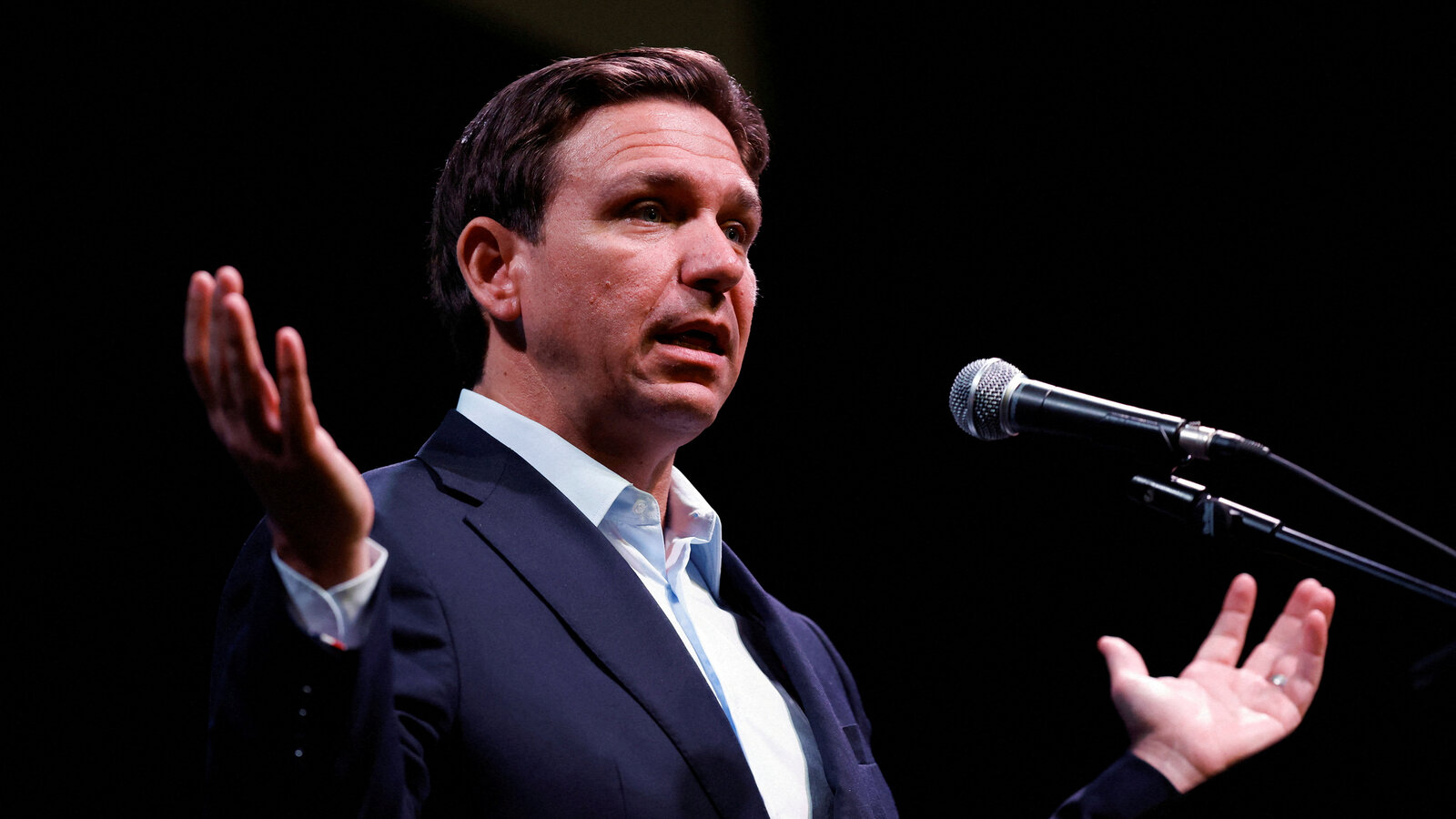
What once was framed as “budget dust” could eventually be gone with the wind, leaving local politicians in small towns with tough decisions in the coming years.
Gov. Ron DeSantis is reiterating his promise to give fiscally constrained counties money in his new budget proposal to replace potentially property tax revenues should they be phased out. But DeSantis is now saying those cash-strapped jurisdictions will have to do without supplementary funds down the road.
“I’m not saying it’s even going to be necessary, but I put in the budget enough money to completely, 100% reimburse any homestead property tax reduction for those fiscally constrained counties,” DeSantis said in Orlando.
“There’s some people that say you shouldn’t do that. But my view is it’s a little more difficult maybe for some of them. And now, eventually they’re going to have to figure it out.”
DeSantis rolled out the budget proposal to aid smaller counties during a cable news hit last week, but did not say there would eventually be an end to state-level generosity despite touting a “big surplus” to a national audience.
“We have 32 fiscally constrained counties. You know, Miami-Dade, Palm Beach, these are powerhouses. I’m putting in my budget the revenue to totally backfill every one of those rural counties. So they’re not going to miss a single thing,” the Governor said on “Fox & Friends.”
However, he first teased the idea in October.
“I can fund all that. I can take all 32 fiscally constrained counties, I could fund 100% of tax revenue that would be derived from a homestead Florida residence, property taxes. And it’s like budget dust for us,” DeSantis said in Panama City.
A total of 32 of Florida’s 67 counties are designated as fiscally constrained.
Typically lower in population and property value, they include Baker, Bradford, Calhoun, Columbia, DeSoto, Dixie, Franklin, Gadsden, Gilchrist, Glades, Gulf, Hamilton, Hardee, Hendry, Highlands, Holmes, Jackson, Jefferson, Lafayette, Levy, Liberty, Madison, Okeechobee, Putnam, Suwannee, Taylor, Union, Wakulla and Washington counties.

DeSantis has been leaning on lawmakers in the supermajority Republican Legislature to put a measure eliminating homestead property taxes on the ballot, even teasing a Special Session during the Summer if they don’t ratify something during the Regular Session.
That ballot measure would need 60% support should it be presented to voters.


Winter, Jung Kook Dating Rumors Prompt SM Entertainment Legal Action

Amazon to pay 510 million euros to settle tax probe in Italy – sources

Ron DeSantis says most Floridians won’t notice ‘schools of hope,’ as they will be in places most people don’t go
-

 Politics8 years ago
Congress rolls out ‘Better Deal,’ new economic agenda
-
Entertainment8 years ago
New Season 8 Walking Dead trailer flashes forward in time
-
Politics8 years ago
Poll: Virginia governor’s race in dead heat
-
Entertainment8 years ago
The final 6 ‘Game of Thrones’ episodes might feel like a full season
-
Entertainment8 years ago
Meet Superman’s grandfather in new trailer for Krypton
-
Politics8 years ago
Illinois’ financial crisis could bring the state to a halt
-
Business8 years ago
6 Stunning new co-working spaces around the globe
-
Tech8 years ago
Hulu hires Google marketing veteran Kelly Campbell as CMO