Connect with us

Business

Paramount, Netflix spur Wall Street race to win jumbo loan deals

Published

on


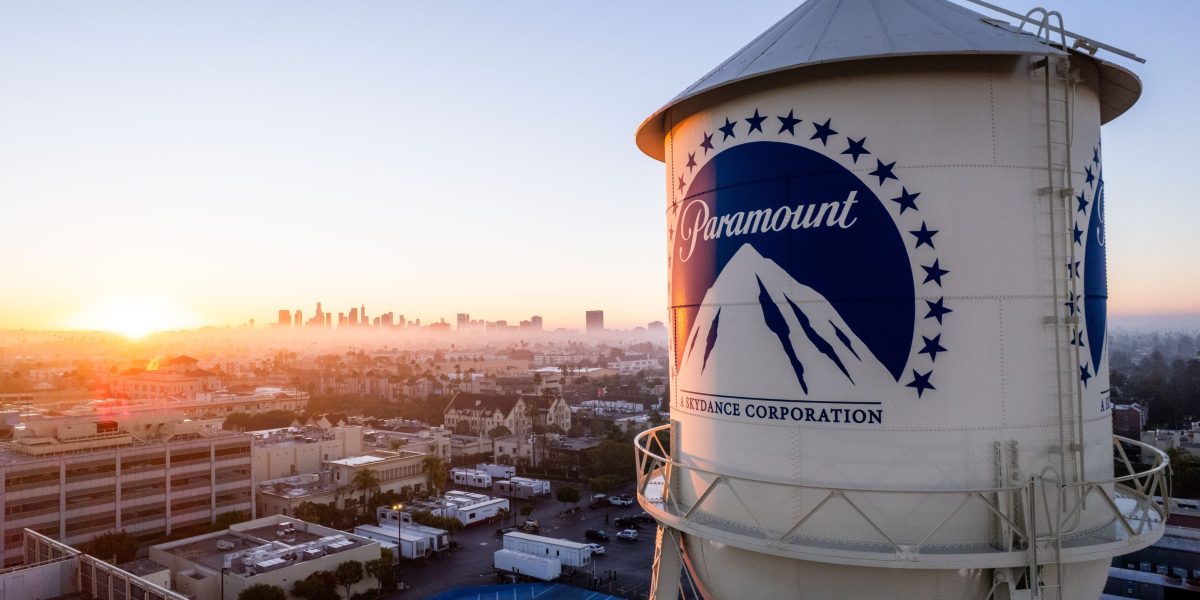
In the space of less than a week, the bidding war for Warner Bros. Discovery Inc. has unleashed two multi-billion debt deals that rank among the largest in the past decade.

The latest came from Paramount Skydance Corp. as it lined up as much as $54 billion of financing from Wall Street’s biggest firms to help support its $108 billion hostile bid for Warner Bros., just days after the company agreed to a deal with Netflix Inc.

Loans of this size have been few and far between over the past couple of years amid subdued acquisition activity. But that’s all changed recently amid a frenzy to fund data-center build outs in the race for artificial intelligence expansion, as well as a pick up in M&A.

Bank of America Corp., Citigroup Inc. and Apollo Global Management Inc. are providing the debt commitment to Paramount, according to a statement Monday. Each one of the trio has signed up for about $18 billion, or a third, of the total commitment, according to a filing.

Just late last week, Netflix lined up $59 billion of unsecured financing from Wells Fargo & Co., BNP Paribas SA and HSBC Plc in another bridge loan for its own bid for part of Warner Bros. Such bridge loans, a type of facility that’s usually replaced with permanent financing like bonds, are a crucial step for banks in building relationships with companies to win higher-paying mandates down the road.

Paramount’s bid at $30 a share in cash comes after Netflix agreed to buy Warner Bros. for $27.75 in cash and stock in a $72 billion deal. Paramount’s bid is for the entirety of Warner Bros., while Netflix is only interested in the Hollywood studios and streaming business. Paramount — which is backed by Larry Ellison, one of the world’s richest people — said its offer gives shareholders $18 billion more in cash than the Netflix bid would.

The Ellison family and RedBird Capital Partners are backstopping the $40.7 billion equity financing for the Paramount bid. Affinity Partners, the private equity firm founded by President Donald Trump’s son-in-law Jared Kushner, Saudi Arabia’s Public Investment Fund, Abu Dhabi’s L’imad Holding Company PJSC and the Qatar Investment Authority are also financing partners. China’s Tencent Holdings Ltd., which had originally been listed as providing a $1 billion commitment, is no longer involved as a financing partner, according to the filing.

Ratings Game

While sizable, the financings for Netflix and Paramount don’t quite match the $75 billion of loans Anheuser-Busch InBev SA obtained to back its acquisition of SABMiller Plc in 2015, which amounted to the largest ever bridge loan, according to data compiled by Bloomberg.

Even so, Wall Street is looking to earn lucrative fees tied to a long-awaited revival in acquisitions. One or a small group of banks typically provide the initial bridge loan, and then bring in other banks to spread the risk once the acquisition is publicly announced. After a time, those loans are replaced with bonds sold to institutional investors.

One key difference with Paramount’s bridge loan is that it will be secured by the company’s assets. Netflix’s bridge is unsecured, meaning it’s not backed by specific collateral. That’s likely due to the different credit ratings each company has. 

Netflix, which is rated investment grade, is expected to replace its bridge loan with up to $25 billion of bonds, plus $20 billion of delayed-draw term loans and a $5 billion revolving credit facility, both of which are typically held by banks. Paramount has lower credit scores of a BB+ rating by S&P Global Ratings, which is one level below investment grade, and BBB- by Fitch Ratings, or on the cusp of junk.

The high-grade market typically has a deeper pool of investors and offers cheaper financing, and would be more easily able to absorb a large financing of this size.


Source link

Continue Reading

Business

The U.S. has over 900 billionaires and their wealth soared by 18% to $6.9 trillion this year: UBS

Published

on


The United States remains the clear leader in global wealth creation, with its billionaire population expanding and their combined fortunes soaring over the past year, according to UBS Global Wealth Management’s Billionaire Ambitions Report for 2025. It reveals that U.S. billionaires’ wealth increased by almost a fifth (18% year on year) to a staggering $6.9 trillion in 2025.

This massive surge helped lift the global billionaire population to 2,919 individuals, holding a total record wealth of $15.8 trillion. The U.S. now hosts 924 billionaires, representing nearly a third (31.7%) of the global billionaire population. The growth in the Americas region, which was led by the U.S., saw overall billionaire wealth climb 15.5% to $7.5 trillion.

The dramatic increase in U.S. wealth was largely driven by an exceptional year for innovation and rising financial asset prices, the Swiss bank concluded. The United States welcomed 109 fresh entrants to the billionaire ranks, vastly outnumbering the 18 who dropped below the threshold or passed away. The growth was heavily buoyed by self-made success, as 87 new U.S. residents became self-made billionaires, contributing $171.9 billion to the Americas’ total new wealth.

The technology sector played a crucial role in this growth, UBS added, with tech billionaires globally seeing their assets increase by 23.8% to $3 trillion. This surge in tech wealth is closely linked to the appreciating values of companies driving the artificial intelligence revolution, such as Nvidia, Oracle, and Meta.

Six U.S. tech billionaires alone saw their wealth increase by a combined $171 billion compared with the previous year. This wave of entrepreneurship means that 2025 recorded the second-highest number of self-made individuals becoming billionaires in the history of the report, behind the remarkable year for markets that was 2021, demonstrating widespread business creation across diverse sectors.

That year, 360 self-made billionaires accounted for $782 billion, an “exceptional rise [that] resulted from asset price appreciation in a period of ample financial liquidity following the COVID-19 pandemic.” The result in 2025 was more down to “widespread business creation,” UBS added. The report found the number of new billionaires minted annually increased roughly eightfold from 35 in 2022 to 287 in 2025, while their assets have grown by roughly ninefold, from $74.6 billion to $684.3 billion.

The coming transfer of wealth

While U.S. entrepreneurs are busy creating new wealth, the long-anticipated “great wealth transfer” is accelerating. Globally, at least $5.9 trillion is expected to be inherited by billionaire children over the next 15 years. Of that amount, at least $2.8 trillion will pass to U.S. heirs over this period. This calculation is likely conservative as it does not factor in future appreciation of asset values.

The report highlights that families are becoming increasingly international as the wealth transfer intensifies, yet the inheritance itself is set to be concentrated in a small number of markets, with the U.S. leading the way.

Female billionaires made notable progress in 2025, according to the report. While there are only 374 female billionaires globally, compared with 2,545 male, their average wealth grew by 8.4% to $5.2 billion in 2025, more than twice the 3.2% average growth rate for men. This is part of a trend, with the average wealth of female billionaires rising at a faster rate for each of the four years since 2022. In part, this is driven by inheritance, with more women becoming billionaires through inheritance than any other way in 2025. Of the 43 women who became billionaires in the year, UBS found that 27 inherited while 16 were self-made.

Despite the vast sums set for inheritance, surveyed billionaires expressed a strong desire for their children to achieve success independently. More than eight in 10 (82%) of those surveyed hope their children will develop the necessary skills and values to succeed without relying solely on the inherited fortune. Over half (55%) also want their heirs to use their wealth to make a positive impact on the world.

Furthermore, billionaires are highly mobile, with 36% of those surveyed having relocated at least once, and a further 9% considering a move. The top three reasons for relocation are linked to better quality of life (36%), geopolitical concerns (36%), and organizing tax affairs more efficiently (35%). This high level of mobility could potentially alter the geographic picture of where wealth is ultimately transferred.

The report was generated in part through an online survey of 87 billionaire clients as well as in-depth interviews which took place over several weeks in September and October.


Source link

Continue Reading

Business

‘This isn’t what Walt and Roy would have wanted’: Disney fans with disabilities sue over new ride restrictions

Published

on


Changes that Disney made to a popular program that lets qualifying disabled people skip long lines at its California and Florida theme parks are too restrictive, disabled fans contend in a federal lawsuit and shareholder proposal that seek to expand eligibility.

The battle over who can skip long lines on popular rides because of their disabilities marks the latest struggle by Disney to accommodate disabled visitors while cracking down on past abuses. But some Disney fans say the company has gone too far and has no right to determine who is disabled.

“This isn’t right. This isn’t what Walt and Roy would have wanted,” said Shannon Bonadurer, referring to the Disney brothers who founded the entertainment empire. Despite being unable to wait for long periods of time in the heat because she uses an ileostomy bag, Bonadurer was denied a pass for the disability program.

In a statement, Disney said it was committed to providing a great experience to all visitors, particularly those with disabilities who may require special accommodations.

Here’s a look at changes to Disney parks’ policies for disabled visitors.

What is the disability program?

The Disability Access Service, or DAS, program allows pass-holders and their immediate family members to make an online reservation for a ride while in the park and then get into an expedited line that typically takes about 10 minutes when it’s their time to go on the ride. DAS guests never have to wait in normal standby lines, which on the most popular attractions can be two hours or more.

The DAS program started in 2013 in response to past abuses by disabled “tour guides” who charged money, sometimes hundreds of dollars, to accompany able-bodied guests, enabling such guests to go to the front of lines. Disney says the DAS program needed changing because it had grown fourfold. Before last year’s changes, the percentage of guests having DAS passes jumped from around 5% to 20% over the past dozen years “and showed no signs of slowing,” the company said in court papers.

Disney parks make other accommodations for disabled visitors, including maps in Braille, a device that helps transfer visitors from wheelchairs to ride seats, quiet break locations and American Sign Language interpreters for some live shows. The parks permit some service animals on rides and allow some disabled guests to leave a line and rejoin their party before boarding a ride.

Who qualifies now?

Disney narrowed the scope from people with a wider range of disabilities to mostly guests who “due to a developmental disability such as autism or similar” have difficulties waiting in a long line. Under the changes, guests seeking a DAS pass must be interviewed via video chat by a Disney worker and a contracted medical professional who determine if the person is eligible. Visitors found to have lied can be barred from the parks.

Some people with disabilities who have been denied say the new policy is too restrictive. Not only was Bonadurer denied a pass, but so was her 25-year-old son, who is blind and has cerebral palsy and autism.

“They are making a determination about whether you’re disabled enough,” said Bonadurer, a professional travel adviser from Michigan. “I would love to wait in line with everyone else, and so would my son, since that would mean he has a normal life. But we don’t, and unfortunately for us, we need adaptations to how we wait.”

Disney says the Americans with Disabilities Act doesn’t require equal treatment of people with varying disabilities. The company accommodates those visitors who don’t meet the new DAS criteria with alternatives, Disney said in court filings responding to a federal lawsuit in California.

“For example, in a crowded movie theater, a person using a wheelchair may be entitled to priority seating even if they arrive shortly before the movie starts, while a deaf person may only be entitled to a seat with closed captioning,” the company said.

At Disney’s main theme park rival, Universal, disabled visitors can get shorter lines if they have a card issued by an international board that certifies venues for their accessibility.

What’s next?

A shareholder proposal submitted on behalf of DAS Defenders, an advocacy group of Disney fans opposed to the DAS changes, calls on the company next year to commission an independent review of its disability policies and publicly release the findings. The shareholder proposal claims the change to the DAS program has contributed to lower park attendance.

Disney’s attorneys told the Securities and Exchange Commission in a November letter that it intends to block the proposal ahead of the company’s 2026 shareholder meeting, saying it was false and misleading about the reasons for an attendance decline, which the company attributed to hurricanes. The company also argued the shareholder proposal amounts to micromanaging day-to-day operations.


Source link

Continue Reading

Business

Kushner suddenly enters the Paramount–Netflix fight with Saudi billions and a fresh mega-deal

Published

on


Jared Kushner has quietly reemerged as a player in one of the biggest takeover fights in modern Hollywood. Paramount’s audacious, all-cash $108 billion hostile bid for Warner Bros. Discovery, announced Monday, names Kushner’s fully owned private equity firm, Affinity Partners, as one of four outside financing partners backing the offer, alongside the sovereign wealth funds of Saudi Arabia, Abu Dhabi, and Qatar.

Axios first reported the involvement of Saudi and Gulf investment.

The detail is buried in Paramount’s tender offer, with Paramount listing “the Public Investment Fund (Kingdom of Saudi Arabia), L’imad Holding Company PJSC (Abu Dhabi), Qatar Investment Authority (Qatar) and Affinity Partners (Jared Kushner)” as investors who would, under a successful deal scenario, hold non-voting equity and forgo governance rights, including board seats. 

The filing also states that because these investors are structured without such rights, “the Transaction will not be within CFIUS’s jurisdiction,” referring to the Committee on Foreign Investment in the United States. Reports have suggested that WBD’s board opted for Netflix’s deal as it lacked any foreign financing components and therefore faced no issues with CFIUS, a notably opaque and powerful antitrust tool that the government can employ to block controversial mergers.

Both Paramount and Netflix are likely to increase their offers. David Ellison said on CNBC that he told the CEO of Warner Bro’s, David Zaslav, that $30 per share wasn’t the company’s best and final offer.

Kushner’s Middle Eastern ties

Kushner’s inclusion reflects a broader fact pattern: since leaving government, his firm has raised several billion dollars from Gulf investors and has participated in large private transactions involving capital from the same region. In September, his firm joined Silver Lake and Saudi Arabia’s Public Investment Fund in the $55 billion agreement to take Electronic Arts private, the largest private-equity buyout in history. 

WSJ reporting shows Kushner helped connect Silver Lake with PIF leadership earlier in the year as discussions around an EA buyout accelerated. Affinity Partners ultimately took a roughly 5% stake in the transaction, alongside Silver Lake and PIF, which financed the majority of the equity. The EA deal marked the first time Kushner’s fund appeared in a major global technology buyout of that scale, and it involved the same Gulf investors who now appear in Paramount’s financing package.

Kushner has also remained active in Middle East political diplomacy, not just financial. He played a meaningful role in the administration’s recent Israel-Gaza peace effort, brought in because of his involvement in negotiating the Abraham Accords during Trump’s first term, which established diplomatic ties between Israel and several Gulf states including Saudi Arabia. The Gulf state is increasingly opening up, especially with regard to western businesses, as highlighted by Barclays’ confirmation in late October at the Fortune Global Forum in Riyadh that it was relocating its regional headquarters there. Separately at the Fortune Global Forum, Saudi Investment Minister Khalid A. Al-Falih described the breakthroughs occurring under Vision 2030, the kingdom’s economic transformation plan that is roughly nine years old. He said he saw 2025 as a “pivotal moment,” when “the very foundations of global business are being shaken, in a way, and being rewritten before our own eyes.”

The deal took on new political dimensions over the weekend, with President Donald Trump publicly weighing in on Netflix’s agreement to acquire WBD’s studio and streaming assets. Speaking to reporters on Sunday, Trump said the Netflix–WBD deal “could be a problem” because of the combined businesses’ market share, and noted that he expects to be involved in the review process. He also confirmed meeting with Netflix co-CEO Ted Sarandos in the Oval Office shortly before the deal was announced by Netflix, saying Sarandos had made “no guarantees” about the transaction. 

Trump did not confirm the scoop by Bloomberg’s Lucas Shaw, who wrote in his influential entertainment newsletter that Sarandos has been wooing Trump since late November, when he visited Mar-A-Lago. Trump did indicate, however, that he has a good relationship with the Netflix leader, calling Sarandos a “fantastic man” who had played a major role in building Netflix into such a great company. Netflix executives expressed great confidence in regulatory approval on Friday’s call with analysts about their deal, worth $72 billion in equity and about $83 billion including the assumption of debt.

The political plot thickens

The political overtones of the wrangling here are at least worth noting. Paramount was recently acquired by David Ellison, son of longtime Republican donor Larry Ellison, who Trump named as one of several U.S. billionaires to take control of the U.S. assets of TikTok. (Bloomberg’s Shaw reported that Sarandos was interested in the Paramount studio before Ellison acquired it.) Meanwhile, Sarandos is married to Nicole Avant, who was ambassador to the Bahamas during the Obama administration. Netflix co-founder Reed Hastings is a prominent and longtime Democratic donor, although Hastings is now non-executive chairman at Netflix and has been focused on his Powder Mountain resort in Utah, acquired shortly after Fortune’s profile of the resort in 2023.

Paramount explicitly argued that its own proposal carries fewer regulatory risks than Netflix’s. In its filing, the company contends that the Netflix agreement faces significant antitrust hurdles, including a long potential review timeline. Paramount also emphasizes that its outside financing—because it is non-voting—does not trigger CFIUS review, eliminating one additional hurdle of national-security scrutiny.

Trump’s posture toward Paramount, however, has been mixed. Roughly 20 minutes after Paramount launched its hostile offer, Trump explicitly criticized Paramount management over a 60 Minutes segment featuring Rep. Marjorie Taylor Greene, writing on Truth Social that it was “NO BETTER THAN THE OLD OWNERSHIP.” Trump added that “since they [Paramount] bought it, 60 Minutes has actually gotten WORSE!” CBS News and 60 Minutes, as is customary with news organizations, maintain that they have editorial independence from their ownership. Paramount settled a lawsuit brought by Trump over a certain 60 Minutes episode during the 2024 election, paying $16 million in July 2025, shortly before Ellison’s takeover won regulator approval.

Separately on Monday, Larry Ellisontold CNBC that he has had “great conversations” with Trump about the WBD bid, without elaborating. 

Nidhi Hegde, executive director of the American Economic Liberties Project, wrote on X in response to Ellison’s remarks that “the correct option is neither Paramount nor Netflix buy Warner.”

“The president inserting himself in the deal is obviously problematic, regardless of the parties involved,” said Hegde. 

[Disclosure: one of the author’s worked at Netflix from June 2024 through July 2025.]


Source link

Continue Reading

Trending

Copyright © Miami Select.