Connect with us

Business

OpenAI goes from stock market savior to burden as AI risks mount

Published

on


Wall Street’s sentiment toward companies associated with artificial intelligence is shifting, and it’s all about two companies: OpenAI is down, and Alphabet Inc. is up.

The maker of ChatGPT is no longer seen as being on the cutting edge of AI technology and is facing questions about its lack of profitability and the need to grow rapidly to pay for its massive spending commitments. Meanwhile, Google’s parent is emerging as a deep-pocketed competitor with tentacles in every part of the AI trade.

“OpenAI was the golden child earlier this year, and Alphabet was looked at in a very different light,” said Brett Ewing, chief market strategist at First Franklin Financial Services. “Now sentiment is much more tempered toward OpenAI.” 

As a result, the shares of companies in OpenAI’s orbit — principally Oracle Corp., CoreWeave Inc., and Advanced Micro Devices Inc., but also Microsoft Corp., Nvidia Corp. and SoftBank, which has an 11% stake in the company — are coming under heavy selling pressure. Meanwhile, Alphabet’s momentum is boosting not only its stock price, but also those it’s associated with like Broadcom Inc., Lumentum Holdings Inc., Celestica Inc., and TTM Technologies Inc.

Read More: Alphabet’s AI Strength Fuels Biggest Quarterly Jump Since 2005

The shift has been dramatic in magnitude and speed. Just a few weeks ago, OpenAI was sparking huge rallies in any company related to it. Now, those connections look more like an anchor. It’s a change that carries wide-ranging implications, given how central the closely held company has been to the AI mania that has driven the stock market’s three-year rally. 

“A light has been shined on the complexity of the financing, the circular deals, the debt issues,” Ewing said. “I’m sure this exists around the Alphabet ecosystem to a certain degree, but it was exposed as pretty extreme for OpenAI’s deals, and appreciating that was a game-changer for sentiment.”

A basket of companies connected to OpenAI has gained 74% in 2025, which is impressive but far shy of the 146% jump by Alphabet-exposed stocks. The technology-heavy Nasdaq 100 Index is up 22%. 

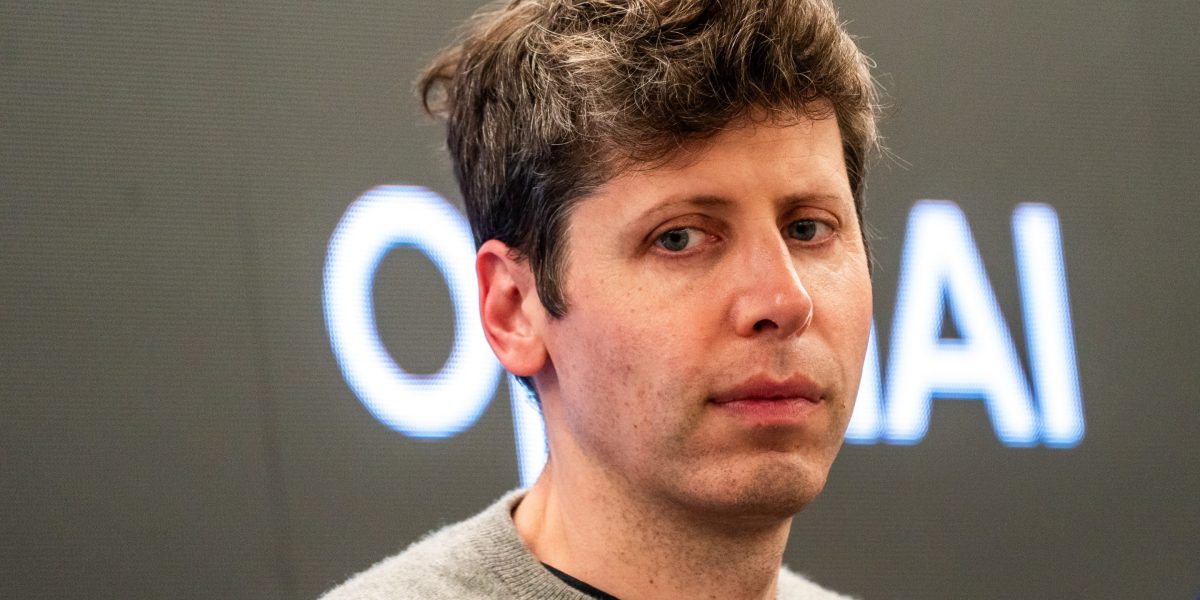
The skepticism surrounding OpenAI can be dated to August, when it unveiled GPT-5 to mixed reactions. It ramped up last month when Alphabet released the latest version of its Gemini AI model and got rave reviews. As a result, OpenAI Chief Executive Officer Sam Altman declared a “code red” effort to improve the quality of ChatGPT, delaying other projects until it gets its signature product in line.

‘All the Pieces’

Alphabet’s perceived strength goes beyond Gemini. The company has the third highest market capitalization in the S&P 500 and a ton of cash at its disposal. It also has a host of adjacent businesses, like Google Cloud and a semiconductor manufacturing operation that’s gaining traction. And that’s before you consider the company’s AI data, talent and distribution, or its successful subsidiaries like YouTube and Waymo.

“There’s a growing sense that Alphabet has all the pieces to emerge as the dominant AI model builder,” said Brian Colello, technology equity senior strategist at Morningstar. “Just a couple months ago, investors would’ve given that title to OpenAI. Now there’s more uncertainty, more competition, more risk that OpenAI isn’t the slam-dunk winner.”

Read More: Alphabet’s AI Chips Are a Potential $900 Billion ‘Secret Sauce’

Representatives for OpenAI and Alphabet didn’t respond to requests for comment.

The difference between being first or second place goes beyond bragging rights, it also has significant financial ramifications for the companies and their partners. For example, if users gravitating to Gemini slows ChatGPT’s growth, it will be harder for OpenAI to pay for cloud-computing capacity from Oracle or chips from AMD.

By contrast, Alphabet’s partners in building out its AI effort are thriving. Shares of Lumentum, which makes optical components for Alphabet’s data centers, have more than tripled this year, putting them among the 30 best performers in the Russell 3000 Index. Celestica provides the hardware for Alphabet’s AI buildout, and its stock is up 252% in 2025. Meanwhile Broadcom — which is building the tensor processing unit, or TPU, chips Alphabet uses — has seen its stock price leap 68% since the end of last year.

OpenAI has announced a number of ambitious deals in recent months. The flurry of activity “rightfully brought scrutiny and concern over whether OpenAI can fund all this, whether it is biting off more than it can chew,” Colello said. “The timing of its revenue growth is uncertain, and every improvement a competitor makes adds to the risk that it can’t reach its aspirations.”

In fairness, investors greeted many of these deals with excitement, because they appeared to mint the next generation of AI winners. But with the shift in sentiment, they’re suddenly taking a wait-and-see attitude.

“When people thought it could generate revenue and become profitable, those big deal numbers seemed possible,” said Brian Kersmanc, portfolio manager at GQG Partners, which has about $160 billion in assets. “Now we’re at a point where people have stopped believing and started questioning.”

Kersmanc sees the AI euphoria as the “dot-com era on steroids,” and said his firm has gone from being heavily overweight tech to highly skeptical.

Self-Inflicted Wounds 

“We’re trying to avoid areas of over-hype and a lot of those were fueled by OpenAI,” he said. “Since a lot of places have been touched by this, it will be a painful unwind. It isn’t just a few tech names that need to come down, though they’re a huge part of the index. All these bets have parallel trades, like utilities, with high correlations. That’s the fear we have, not just that OpenAI spun up this narrative, but that so many things were lifted on the hype.”

OpenAI’s public-relations flaps haven’t helped. The startup’s Chief Financial Officer Sarah Friar recently suggested the US government “backstop the guarantee that allows the financing to happen,” which raised some eyebrows. But she and Altman later clarified that the company hasn’t requested such guarantees. 

Then there was Altman’s appearance on the “Bg2 Pod,” where he was asked how the company can make spending commitments that far exceed its revenue. “If you want to sell your shares, I’ll find you a buyer — I just, enough,” was the CEO’s response.

Read More: Sam Altman’s Business Buddies Are Getting Stung

Altman’s dismissal was problematic because the gap between OpenAI’s revenue and its spending plans between now and 2033 is about $207 billion, according to HSBC estimates.

“Closing the gap would need one or a combination of factors, including higher revenue than in our central case forecasts, better cost management, incremental capital injections, or debt issuance,” analyst Nicolas Cote-Colisson wrote in a research note on Nov. 24. Considering that OpenAI is expected to generate revenue of more than $12 billion in 2025, its compute cost “compounds investor nervousness about associated returns,” not only for the company itself, but also “for the interlaced AI chain,” he wrote. 

To be sure, companies like Oracle and AMD aren’t solely reliant on OpenAI. They operate in areas that continue to see a lot of demand, and their products could find customers even without OpenAI. Furthermore, the weakness in the stocks could represent a buying opportunity, as companies tied to ChatGPT and the chips that power it are trading at a discount to those exposed to Gemini and its chips for the first time since 2016, according to a recent Wells Fargo analysis. 

“I see a lot of untapped demand and penetration across industries, and that will ultimately underpin growth,” said Kieran Osborne, chief investment officer at Mission Wealth, which has about $13 billion in assets under management. “Monetization is the end goal for these companies, and so long as they work toward that, that will underpin the investment case.”



Source link

Continue Reading

Business

Google Cloud CEO lays out 3-part AI plan after identifying it as the ‘most problematic thing’

Published

on


The immense electricity needs of AI computing was flagged early on as a bottleneck, prompting Alphabet’s Google Cloud to plan for how to source energy and how to use it, according to Google Cloud CEO Thomas Kurian.

Speaking at the Fortune Brainstorm AI event in San Francisco on Monday, he pointed out that the company—a key enabler in the AI infrastructure landscape—has been working on AI since well before large language models came along and took the long view.

“We also knew that the the most problematic thing that was going to happen was going to be energy, because energy and data centers were going to become a bottleneck alongside chips,” Kurian told Fortune’sAndrew Nusca. “So we designed our machines to be super efficient.”

The International Energy Agency has estimated that some AI-focused data centers consume as much electricity as 100,000 homes, and some of the largest facilities under construction could even use 20 times that amount.

At the same time, worldwide data center capacity will increase by 46% over the next two years, equivalent to a jump of almost 21,000 megawatts, according to real estate consultancy Knight Frank.  

At the Brainstorm event, Kurian laid out Google Cloud’s three-pronged approach to ensuring that there will be enough energy to meet all that demand.

First, the company seeks to be as diversified as possible in the kinds of energy that power AI computation. While many people say any form of energy can be used, that’s actually not true, he said.

“If you’re running a cluster for training and you bring it up and you start running a training job, the spike that you have with that computation draws so much energy that you can’t handle that from some forms of energy production,” Kurian explained.

The second part of Google Cloud’s strategy is being as efficient as possible, including how it reuses energy within data centers, he added.

In fact, the company uses AI in its control systems to monitor thermodynamic exchanges necessary in harnessing the energy that has already been brought into data centers.

And third, Google Cloud is working on “some new fundamental technologies to actually create energy in new forms,” Kurian said without elaborating further.

Earlier on Monday, utility company NextEra Energy and Google Cloud said they are expanding their partnership and will develop new U.S. data center campuses that will include with new power plants as well.

Tech leaders have warned that energy supply is critical to AI development alongside innovations in chips and improved language models.

The ability to build data centers is another potential chokepoint as well. Nvidia CEO Jensen Huang recently pointed out China’s advantage on that front compared to the U.S.

“If you want to build a data center here in the United States, from breaking ground to standing up an AI supercomputer is probably about three years,” he said at the Center for Strategic and International Studies in late November. “They can build a hospital in a weekend.”


Source link

Continue Reading

Business

Pepsi to cut product offering nearly 20% in deal with $4 billion activist Elliott

Published

on


PepsiCo plans to cut prices and eliminate some of its products under a deal with an activist investor announced Monday.

The Purchase, New York-based company, which makes Cheetos, Tostitos and other Frito-Lay products as well as beverages, said it will cut nearly 20% of its product offerings by early next year. PepsiCo said it will use the savings to invest in marketing and improved value for consumers. It didn’t disclose which products or how much it would cut prices.

PepsiCo said it also plans to accelerate the introduction of new offerings with simpler and more functional ingredients, including Doritos Protein and Simply NKD Cheetos and Doritos, which contain no artificial flavors or colors. The company also recently introduced a prebiotic version of its signature cola.

PepsiCo is making the changes after prodding from Elliott Investment Management, which took a $4 billion stake in the company in September. In a letter to PepsiCo’s board, Elliott said the company is being hurt by a lack of strategic clarity, decelerating growth and eroding profitability in its North American food and beverage businesses.

In a joint statement with PepsiCo Monday, Elliott Partner Marc Steinberg said the firm is confident that PepsiCo can create value for shareholders as it executes on its new plan.

“We appreciate our collaborative engagement with PepsiCo’s management team and the urgency they have demonstrated,” Steinberg said. “We believe the plan announced today to invest in affordability, accelerate innovation and aggressively reduce costs will drive greater revenue and profit growth.”

Elliott said it plans to continue working closely with the company.

PepsiCo shares were flat in after-hours trading Monday.

PepsiCo said it expects organic revenue to grow between 2% and 4% in 2026. The company’s organic revenue rose 1.5%. the first nine months of this year.

PepsiCo also said it plans to review its supply chain and continue to make changes to its board, with a focus on global leaders who can help it reach its growth and profitability goals.

“We feel encouraged about the actions and initiatives we are implementing with urgency to improve both marketplace and financial performance,” PepsiCo Chairman and CEO Ramon Laguarta said in a statement.

PepsiCo said in February that years of double-digit price increases and changing customer preferences have weakened demand for its drinks and snacks. In July, the company said it was trying to combat perceptions that its products are too expensive by expanding distribution of value brands like Chester’s and Santitas.


Source link

Continue Reading

Business

Paramount rips Warner’s sale ‘process’ as it reveals 2-year-long pursuit and escalating bids before going hostile

Published

on


Paramount Skydance’s tender offer for Warner Bros. Discovery emerged from months of fitful courtship, a shifting media landscape, and a high‑stakes bidding war that ultimately pitted the studio behind “Top Gun: Maverick” against streaming giant Netflix for control of one of Hollywood’s crown jewels. The company’s tender offer regulatory filing with the Securities and Exchange Commission, filed hours after Paramount launched a hostile bid worth $108 billion (or $77.9 billion in equity), laid out a detailed chronology in which Paramount repeatedly tried to lure Warner Bros., to no avail. Netflix and Warner Bros. agreed a deal worth nearly $83 billion ($72 billion in equity) on Friday.

The filing revealed Paramount CEO’s last-ditch text message to WBD counterpart David Zaslav at roughly 4pm ET on December 4, the day before Netflix ultimately announced its deal, as previously reported by the Financial Times. Daivd [sic], I appreciate you’re underwater today so I wanted to send you a quick text. Please note when you next meet as a board we wanted to offer you a package that addressed all of the issues you discussed we [sic] me,” David Ellison wrote as he apparently felt his target slipping away.

“Also please know despite the noise of the last 24 hours I have nothing but respect and admiration for you and the company,” Ellison added. “It would be the honor of a lifetime to be your partner and to be the owner of these iconic assets. If we have the privilege to work together you will see that my father and I are the people you had dinner with. We are always loyal and honorable to our partners and hope we have the opportunity to prove that to you. Best, David.” Later that day, Paramount sent Zaslav a letter criticizing a “tainted” sale process.

Paramount told investors today that it continued to believe it was never taken seriously. “During the entirety of the sale ‘process’ undertaken by the Warner Bros. Board, representatives of Warner Bros. did not provide a single markup of a single transaction document, have a single meeting to go page-by-page through the documents, or engage in a ‘real time’ back-and-forth negotiation with Paramount or its advisors.”

Early outreach in 2023

In 2023 and 2024, Paramount’s predecessor, Paramount Global, and Warner Bros. held intermittent talks about a possible merger, but those conversations ended without a deal as Paramount Global moved instead to merge with Skydance, under the control of current CEO Ellison. After that transaction closed in August 2025, Paramount’s new leadership revisited the idea of combining with Warner Bros., concluding that a tie‑up could create a stronger, scaled competitor to streaming platforms and big technology companies, according to the SEC filing.​

The urgency increased in June 2025 when Warner Bros. publicly unveiled plans to split itself in two, targeting completion by mid‑2026, a strategy it continued to defend through early autumn. Paramount believed this breakup would destroy value and make any future full-company acquisition far harder, so it decided to move quickly, seeing a narrow window to buy all of Warner Bros. before the separation took effect.​

Paramount’s escalating proposals

By early September 2025, the filing noted, media reports surfaced that Paramount was preparing an offer, helping push Warner Bros.’ share price sharply higher from a pre‑rumor closing price of $12.54—it was trading at $19.46 by September 15, the day after Paramount offered $19 per share in cash and stock.​ (The New York Times reported on the secret bids from Paramount in October.)

Warner Bros. rejected that approach within days, saying the bid undervalued the company and that its own breakup plan promised better long‑term value. Paramount responded on September 30 with an improved offer worth $22 a share, primarily in cash, and went further on deal protections, including a $2 billion termination fee and a commitment to litigate to secure antitrust clearance, while also dangling roles for Zaslav as co-CEO and co-Chairman of the board of the combined company.​

Warner Bros. rebuffed this proposal as well, again calling it inadequate and insisting its planned separation remained superior, a stance that only hardened Paramount’s view that the board was underestimating the industrial logic of a combination. In October, Warner Bros. publicly announced a wider review of “strategic alternatives,” signaling that it would run a formal sale process and had received interest from multiple parties in both the whole company and specific assets such as its streaming arm.​

Paramount attempted to enter that process on more favorable terms, pushing back on an initial Warner Bros. confidentiality agreement that included a lengthy standstill, tight controls on financing contacts and waivers of potential legal claims about the sale. Its advisers negotiated for a shorter standstill, “most‑favored‑nation” treatment versus other bidders, and freedom to challenge the process if Warner Bros. ultimately retreated to its separation plan, underscoring deep mistrust over how the auction might be run.​

Due diligence and financing ramp-up

As the process unfolded, Paramount was granted limited access to a virtual data room, which it viewed as “sparsely populated” given the size and complexity of a potential deal. In mid‑November, Warner Bros. hosted an in‑person management presentation in California, while antitrust lawyers for both sides met to assess regulatory risks and lay out arguments that a Paramount–Warner Bros. merger would be pro‑competitive in a market dominated by tech‑backed streaming giants.​

Parallel to those talks, Paramount’s board set up a special committee of independent directors to vet a large equity infusion from the Ellison family and private‑equity firm RedBird. Paramount also locked in a $54 billion senior secured bridge facility led by Wall Street banks.

A bidding war with Netflix

On November 20, Paramount submitted another improved proposal, lifting its implied offer to $25.50 a share, heavily weighted to cash and backed by signed debt commitments and promised equity. That bid included a $5 billion regulatory reverse breakup fee and more aggressive litigation undertakings, signaling Paramount’s willingness to fight regulators if required to close the transaction.​ (Netflix committed to a $5.8 billion breakup fee in its winning bid, which Bloomberg reported is among the highest of all time.)

Even as Paramount sweetened its terms, public commentary suggested some influential Warner Bros. figures saw Netflix as a more attractive partner, particularly for its pure‑play streaming focus and global reach. During a particular November 13 interview on CNBC, WBD chairman emeritus John Malone questioned Paramount’s intervention and discussed the merits of a Netflix deal, adding to market speculation that Warner Bros. leadership might prefer a streaming‑first tie‑up over a legacy‑studio merger.​

Netflix deal and Paramount’s pivot to a tender

The process culminated on December 4, 2025, when Warner Bros. signed a merger agreement with Netflix that would see Netflix acquire Warner Bros.’ streaming businesses after a complicated internal reorganization and spin‑off of other assets. That deal offered cash and Netflix stock with headline value of about $27.75 per share but included adjustments tied to spin‑off net debt and a 21‑month outer closing date.​

Paramount responded the same day with what it calls its “Prior Proposal,” a merger agreement valuing Warner Bros. at $30 a share in straight cash, with what it argues are stronger regulatory commitments, a shorter outside date and no price haircut tied to balance‑sheet mechanics. When Warner Bros. nevertheless chose the Netflix deal, Paramount concluded that the board had opted for an “obviously financially inferior transaction with extraordinary regulatory risk and a longer timeline to a possible closing,” and decided its only route was to go directly to shareholders.​

Calls to Paramount, WBD, and Netflix to comment on the events as laid out in the filing were not immediately returned. We will update this post with any response.

Editor’s note: the author worked for Netflix from June 2024 through July 2025.

For this story, Fortune journalists used generative AI as a research tool. An editor verified the accuracy of the information before publishing.


Source link

Continue Reading

Trending

Copyright © Miami Select.