Connect with us

Business

U.S. trade chief says China has complied with terms of trade deals

Published

on


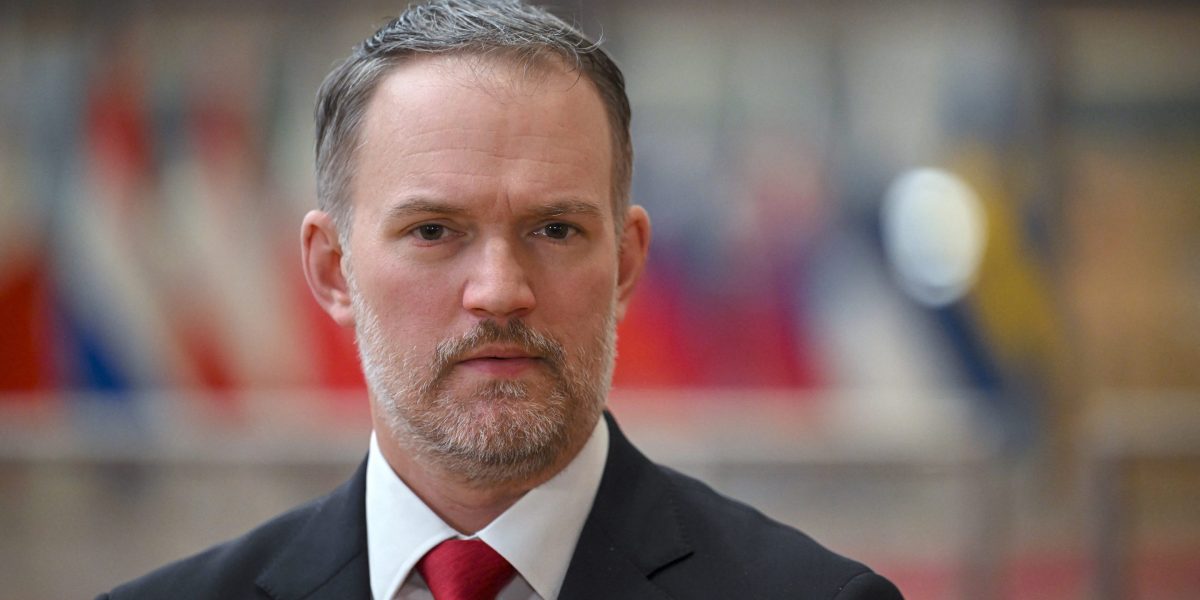
Trade Representative Jamieson Greer said China has been complying with the terms of the bilateral trade agreements and that the US is constantly monitoring commitments made by China in a bid to maintain a stable trade relationship.

“With China, it’s always we verify and we monitor and we watch the commitments. The commitments are quite specific,” Greer said Sunday on Fox News’ The Sunday Briefing. “So all of these things that we’ve agreed to with the Chinese recently are very concrete, we can monitor them with some ease, and so far, we’re seeing that they’re in compliance.”

Greer said China has gotten approximately “a third” of the way through its soybean purchase commitment for this growing season.

Bloomberg previously reported that after a series of orders placed in late October — the first of this season — China’s purchases of American soybeans appeared to have stalled. 

President Donald Trump and Chinese President Xi Jinping in late October agreed to extend a tariff truce, roll back export controls and reduce other trade barriers. But some elements of the deal — including the soybean purchases, sale of social media app TikTok and an increase in licenses to export critical rare earths from China — remain in progress.

US Treasury Secretary Scott Bessent and Greer held a video call with Chinese Vice Premier He Lifeng on Friday, according to China’s state-run news agency Xinhua, during which the officials had an “in-depth and constructive” discussion in which they vowed to keep stable ties and address “respective concerns” on trade and the economy, the outlet said.

Read More: Top US, Chinese Officials Pledge Cooperation on Trade Deal

Bessent on Sunday told CBS News’ Face the Nation that China will not speed up purchases, but they are still expected to take place this crop season and said soybean prices are up 12% to 15% since the agreement with China. He also said he divested from a soybean farm to comply with an ethics agreement

The Trump administration is expected to release its long-awaited farm aid plan this week, US Agriculture Secretary Brooke Rollins said in a cabinet meeting last Tuesday.

Asked whether chipmakers like Nvidia should give China advanced chips or if doing so would pose a security risk to the US, Greer expressed a need for the US to be cautious.

“My own view is we need to be very cautious about this,” Greer said on Fox News. “We want companies’ bottom lines to do well, but as policymakers, we need to make sure that the national security is placed first and foremost, and that’s why you’ve heard President Trump talk about the types of chips that maybe would be restricted and there’s always an open discussion on where that threshold lies, and it changes over time.”


Source link

Continue Reading

Business

Paramount rips Warner’s sale ‘process’ as it reveals 2-year-long pursuit and escalating bids before going hostile

Published

on


Paramount Skydance’s tender offer for Warner Bros. Discovery emerged from months of fitful courtship, a shifting media landscape, and a high‑stakes bidding war that ultimately pitted the studio behind “Top Gun: Maverick” against streaming giant Netflix for control of one of Hollywood’s crown jewels. The company’s tender offer regulatory filing with the Securities and Exchange Commission, filed hours after Paramount launched a hostile bid worth $108 billion (or $77.9 billion in equity), laid out a detailed chronology in which Paramount repeatedly tried to lure Warner Bros., to no avail. Netflix and Warner Bros. agreed a deal worth nearly $83 billion ($72 billion in equity) on Friday.

The filing revealed Paramount CEO’s last-ditch text message to WBD counterpart David Zaslav at roughly 4pm ET on December 4, the day before Netflix ultimately announced its deal, as previously reported by the Financial Times. Daivd [sic], I appreciate you’re underwater today so I wanted to send you a quick text. Please note when you next meet as a board we wanted to offer you a package that addressed all of the issues you discussed we [sic] me,” David Ellison wrote as he apparently felt his target slipping away.

“Also please know despite the noise of the last 24 hours I have nothing but respect and admiration for you and the company,” Ellison added. “It would be the honor of a lifetime to be your partner and to be the owner of these iconic assets. If we have the privilege to work together you will see that my father and I are the people you had dinner with. We are always loyal and honorable to our partners and hope we have the opportunity to prove that to you. Best, David.” Later that day, Paramount sent Zaslav a letter criticizing a “tainted” sale process.

Paramount told investors today that it continued to believe it was never taken seriously. “During the entirety of the sale ‘process’ undertaken by the Warner Bros. Board, representatives of Warner Bros. did not provide a single markup of a single transaction document, have a single meeting to go page-by-page through the documents, or engage in a ‘real time’ back-and-forth negotiation with Paramount or its advisors.”

Early outreach in 2023

In 2023 and 2024, Paramount’s predecessor, Paramount Global, and Warner Bros. held intermittent talks about a possible merger, but those conversations ended without a deal as Paramount Global moved instead to merge with Skydance, under the control of current CEO Ellison. After that transaction closed in August 2025, Paramount’s new leadership revisited the idea of combining with Warner Bros., concluding that a tie‑up could create a stronger, scaled competitor to streaming platforms and big technology companies, according to the SEC filing.​

The urgency increased in June 2025 when Warner Bros. publicly unveiled plans to split itself in two, targeting completion by mid‑2026, a strategy it continued to defend through early autumn. Paramount believed this breakup would destroy value and make any future full-company acquisition far harder, so it decided to move quickly, seeing a narrow window to buy all of Warner Bros. before the separation took effect.​

Paramount’s escalating proposals

By early September 2025, the filing noted, media reports surfaced that Paramount was preparing an offer, helping push Warner Bros.’ share price sharply higher from a pre‑rumor closing price of $12.54—it was trading at $19.46 by September 15, the day after Paramount offered $19 per share in cash and stock.​ (The New York Times reported on the secret bids from Paramount in October.)

Warner Bros. rejected that approach within days, saying the bid undervalued the company and that its own breakup plan promised better long‑term value. Paramount responded on September 30 with an improved offer worth $22 a share, primarily in cash, and went further on deal protections, including a $2 billion termination fee and a commitment to litigate to secure antitrust clearance, while also dangling roles for Zaslav as co-CEO and co-Chairman of the board of the combined company.​

Warner Bros. rebuffed this proposal as well, again calling it inadequate and insisting its planned separation remained superior, a stance that only hardened Paramount’s view that the board was underestimating the industrial logic of a combination. In October, Warner Bros. publicly announced a wider review of “strategic alternatives,” signaling that it would run a formal sale process and had received interest from multiple parties in both the whole company and specific assets such as its streaming arm.​

Paramount attempted to enter that process on more favorable terms, pushing back on an initial Warner Bros. confidentiality agreement that included a lengthy standstill, tight controls on financing contacts and waivers of potential legal claims about the sale. Its advisers negotiated for a shorter standstill, “most‑favored‑nation” treatment versus other bidders, and freedom to challenge the process if Warner Bros. ultimately retreated to its separation plan, underscoring deep mistrust over how the auction might be run.​

Due diligence and financing ramp-up

As the process unfolded, Paramount was granted limited access to a virtual data room, which it viewed as “sparsely populated” given the size and complexity of a potential deal. In mid‑November, Warner Bros. hosted an in‑person management presentation in California, while antitrust lawyers for both sides met to assess regulatory risks and lay out arguments that a Paramount–Warner Bros. merger would be pro‑competitive in a market dominated by tech‑backed streaming giants.​

Parallel to those talks, Paramount’s board set up a special committee of independent directors to vet a large equity infusion from the Ellison family and private‑equity firm RedBird. Paramount also locked in a $54 billion senior secured bridge facility led by Wall Street banks.

A bidding war with Netflix

On November 20, Paramount submitted another improved proposal, lifting its implied offer to $25.50 a share, heavily weighted to cash and backed by signed debt commitments and promised equity. That bid included a $5 billion regulatory reverse breakup fee and more aggressive litigation undertakings, signaling Paramount’s willingness to fight regulators if required to close the transaction.​ (Netflix committed to a $5.8 billion breakup fee in its winning bid, which Bloomberg reported is among the highest of all time.)

Even as Paramount sweetened its terms, public commentary suggested some influential Warner Bros. figures saw Netflix as a more attractive partner, particularly for its pure‑play streaming focus and global reach. During a particular November 13 interview on CNBC, WBD chairman emeritus John Malone questioned Paramount’s intervention and discussed the merits of a Netflix deal, adding to market speculation that Warner Bros. leadership might prefer a streaming‑first tie‑up over a legacy‑studio merger.​

Netflix deal and Paramount’s pivot to a tender

The process culminated on December 4, 2025, when Warner Bros. signed a merger agreement with Netflix that would see Netflix acquire Warner Bros.’ streaming businesses after a complicated internal reorganization and spin‑off of other assets. That deal offered cash and Netflix stock with headline value of about $27.75 per share but included adjustments tied to spin‑off net debt and a 21‑month outer closing date.​

Paramount responded the same day with what it calls its “Prior Proposal,” a merger agreement valuing Warner Bros. at $30 a share in straight cash, with what it argues are stronger regulatory commitments, a shorter outside date and no price haircut tied to balance‑sheet mechanics. When Warner Bros. nevertheless chose the Netflix deal, Paramount concluded that the board had opted for an “obviously financially inferior transaction with extraordinary regulatory risk and a longer timeline to a possible closing,” and decided its only route was to go directly to shareholders.​

Calls to Paramount, WBD, and Netflix to comment on the events as laid out in the filing were not immediately returned. We will update this post with any response.

Editor’s note: the author worked for Netflix from June 2024 through July 2025.

For this story, Fortune journalists used generative AI as a research tool. An editor verified the accuracy of the information before publishing.


Source link

Continue Reading

Business

Cursor internal AI Help Desk handles 80% of employees’ support tickets

Published

on


AI coding-assistant start-up Cursor isn’t just using artificial intelligence to help developers write code, it’s deploying AI across its own internal operations, CEO, Michael Truell, told the audience at Fortune’s Brainstorm AI in San Francisco.

Truell said the company had already automated roughly 80% of its customer support tickets with the help of the technology. He said the company had also implemented an internal AI-powered communication system that allows employees to query information across the organization. “We’ve actually done a lot of work internally on customizing that setup,” he said.

Cursor also uses AI for internal communications, he said. “We have a system where folks can ask any question about the company and get it answered by an AI,” Truell said, as well as an project with “a few forward deployed engineers internally embedded throughout, building custom tooling right now for operations, for sales and experimenting,” he said. 

Across the enterprise software landscape, some larger organizations are increasingly coming up against adoption challenges when attempting to integrate AI into workflows. 

Data silos—where information is trapped in disconnected systems—prevent AI tools from accessing the full context they need to be useful, and technical sprawl—the accumulation of disparate tools and platforms over years of growth— can create integration issues. Many organizations are finding they need more dedicated technical expertise to help tailor AI models to specific business needs.

Engineers are seeing productivity gains

Cursor, which is valued at $29.3 billion, said last month it had crossed $1 billion in annualized revenue and now has more than 300 employees. The company has seen rapid growth since it was founded by a team of four MIT graduates in 2022. The company’s AI coding tool, which first launched in 2023, has been popular with software who use it to help both generate and edit code. 

There has been some conflicting research about how helpful AI tools actually are for software engineering. A July 2025 study by the nonprofit research group METR found that experienced developers working on large, mature codebases actually took 19% longer to complete tasks when using AI tools such as Cursor and Claude, despite believing they had worked 20% faster. The researchers attributed the slowdown to time spent prompting AI, waiting for responses, and time reviewing generated code.

A recent study conducted by University of Chicago found that teams using Cursor’s AI coding assistant in large companies merged 39% more pull requests (PRs) compared to non-users. The research also showed that senior developers created more detailed plans before writing code and demonstrated greater skill working with AI agents.

“A lot of folks think that junior developers get the most out of AI,” Truell said. But “when these academics went in and looked at the data, it looked like senior engineers actually were more effective in using the tools and were accepting code at higher rates and were getting more value from that.”

Truell noted that this surprised him as well: “We want to dig into to understand exactly why that’s the case.”


Source link

Continue Reading

Business

Glean hits $200 million ARR, up from $100 million nine months back

Published

on


Glean, last valued at $7.2 billion, has hit $200 million in annual recurring revenue, CEO Arvind Jain revealed at Fortune Brainstorm AI San Francisco

“What’s driving all of this is the awareness from CEOs and executives that this is the time to invest in AI,” Jain said in an exclusive interview before the conference. “Everybody has been looking for a safe, secure, more appropriate version of ChatGPT for their employees. And we bring the capabilities that ChatGPT brings to consumers to business users, and in the context of their company.”

Jain founded Glean in 2019, and the company has made its name in enterprise search and AI applications. In June, Glean raised its $150 million Series F, sending its valuation over $7 billion, a leap from the $4.6 billion valuation the company fetched in 2024. 

“The biggest challenge that customers face with AI is the fact that AI technologies are actually not built for their companies,” said Jain. “Most of the AI technologies are built…on the data on the Internet, public data. And so when you bring those models…inside your company, and you try to actually make them do some work internally, they don’t really have any understanding of how your business works and your context.”

And in an AI landscape with lots of ARR numbers floating around, Jain is clear: This ARR number includes only subscription revenues from their software—no consulting or services revenue. Jain adds that Glean’s contracts range from one to three years, and that there’s “no sub-one-year contract in our model.”

Glean’s rise through the AI boom has been uniquely tied to the challenges that enterprises face when trying to apply AI. The much quoted MIT study from this summer—that 90% of generative AI pilots are failing—reflects the existential question for companies: Where does AI ROI actually come from?

“There are two narratives,” said Jain. “One narrative of AI is that nothing works, and then the other one is that it’s taking off. It’s getting more serious. Companies are able to actually do many, many, many useful things with AI. And we’re definitely generating success and excitement for customers.”


Source link

Continue Reading

Trending

Copyright © Miami Select.