Connect with us

Politics

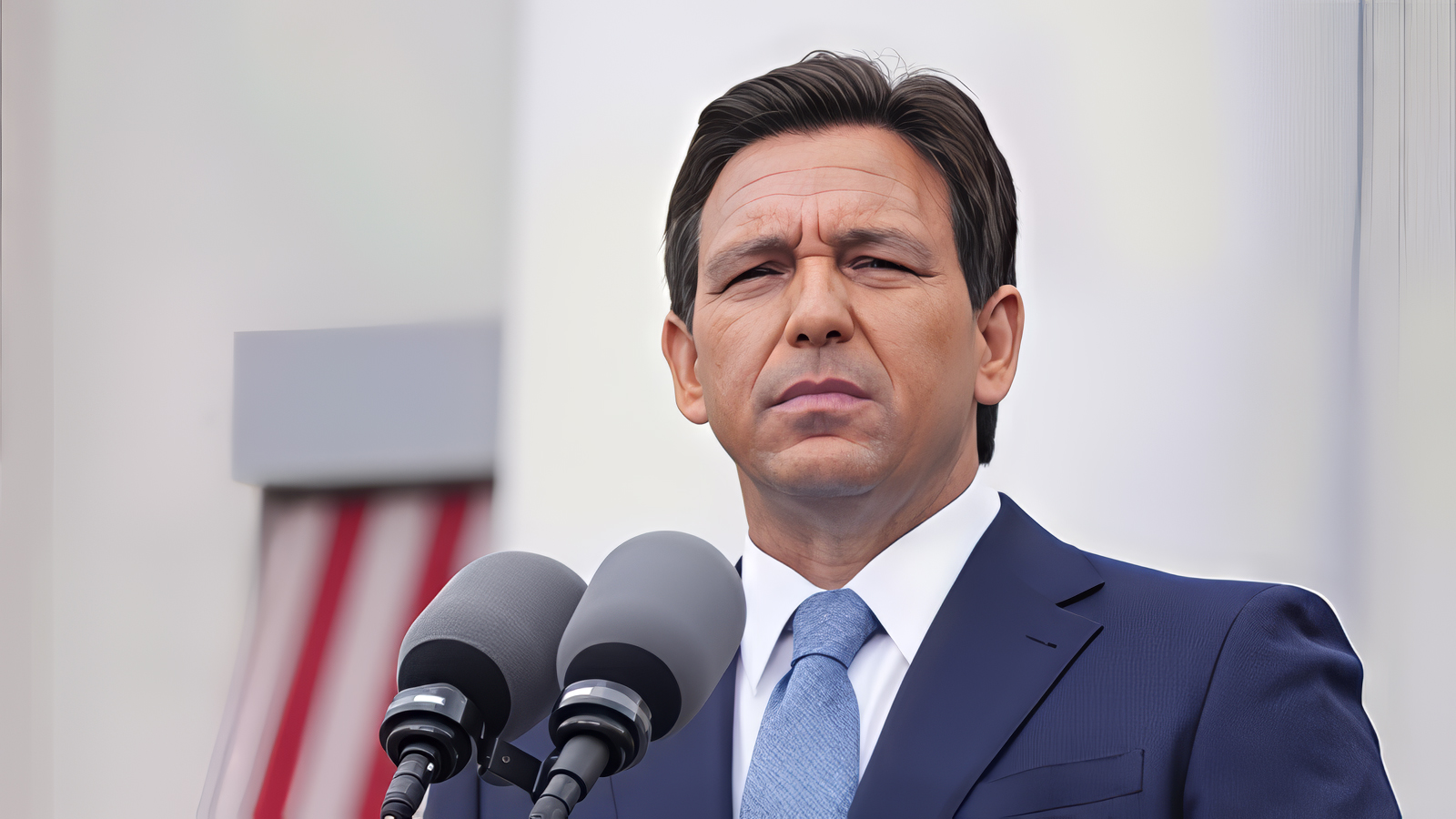
Ron DeSantis questions GOP down-ballot appeal after Tennessee Special Election
Published

on


‘Trump-specific voters’ are hard to mobilize.

This may be something to watch during next year’s Midterm Elections.

Gov. Ron DeSantis sees a difference between voters who supported Donald Trump in 2024 and the electorate at large, making fresh observations after a Special Election that saw a Republican Congressman-elect underperform the President.

DeSantis argues that “a chunk of voters who put them in power in 2024 are Trump-specific voters; they will vote GOP down ballot when Trump is running but won’t turn out to vote for a typical congressman in a midterm when Trump isn’t running.”

Republican Matt Van Epps defeated Democrat Aftyn Behn by roughly 9 points in a Nashville area seat Tuesday, less than half the margin by which Trump bested Kamala Harris in 2024.

The Governor attributes some of the attrition to voter motivation for opposition candidates.

“Special, off-year, and midterm elections historically benefit the party out of power because its voters are motivated to vote, while voters of the incumbent party become more complacent,” he said.

DeSantis wasn’t quite so dispassionate earlier this year when a recent nemesis of his, U.S. Rep. Randy Fine, underperformed Trump in a Special Election in Florida’s 6th Congressional District.

While Fine won by 14 points, DeSantis said Trump “really had to bail him out at the end because this race would have been much closer had the President sat on the sidelines.”

He also said the outcome shows Trump has “got the juice to be able to get Republicans to go out on Election Day and even vote for a candidate that they’re not crazy about.”

Trump did a tele-rally for Van Epps, which perhaps helped to shore up GOP votes.

DeSantis is an advocate of congressional redistricting. He argues that Florida deserves more seats because of in-migration in recent years. He says he wants a Special Session in 2026 to address that perceived inequity.

The House is also looking at drawing new maps.

Florida has 20 Republicans and 8 Democrats. DeSantis has credited the maps he pushed through ahead of the 2022 elections for providing the slim GOP majority in the House of Representatives.


Source link

Continue Reading

Politics

Roger Chapin, Mira Tanna battle in Orlando City Council runoff election

Published

on


Roger Chapin and Mira Tanna are going head-to-head in Tuesday’s Orlando City Council runoff after a margin of only 14 votes separated them in last month’s crowded General Election.

Chapin holds the big fundraising edge and the advantage of having name recognition as the son of former Orange County Mayor Linda Chapin. He also carries the support of the establishment, including Orlando Mayor Buddy Dyer and incumbent City Commissioner Robert Stuart, who didn’t seek re-election.

Tanna’s strengths are her grassroots campaign and the endorsements of popular Orlando Democrats like U.S. Rep. Maxwell Frost and state Rep. Anna Eskamani, who are lending their support to help her knock on doors and engage with voters.

Early voting at the Supervisor of Elections office, 119 W. Kaley St., runs 9 a.m. to 3 p.m. on Saturday and 11 a.m. to 3 p.m. on Sunday. Election Day precinct polls are open 7 a.m. to 7 p.m. Tuesday.

Chapin and Tanna are both Democrats, and the winner will be the first new City Commissioner to represent District 3 in 20 years. The four-year term currently pays $79,343 annually for the nonpartisan seat. District 3 spans College Park, Audubon Park, Baldwin Park, Coytown and other downtown area neighborhoods north of Colonial Drive.

Tanna works as the Orlando city grants manager. She commutes to work on the bus, and is focused on fixing Central Florida’s public transit.

Chapin is a public affairs and public relations consultant. He said his biggest client is Mears Transportation, his former employer. His priorities include the Main Street Districts on Ivanhoe Boulevard and Edgewater and Corrine drives.

In making his case to voters, Chapin pointed to his long résumé of public service. After a failed bid for Orlando City Council in 2002, he got involved on the Municipal Planning Board, Downtown Development Board, Orlando Utilities Commission and more.

Chapin argues he is the most experienced candidate in the race and would “govern from the middle” to work with both Republicans and Democrats, citing Dyer as an example of a politician who can work both sides of the aisle to get things done.

Tanna’s supporters say she is the right fit and has the vision to help make changes as Orlando faces big challenges in a lack of affordable housing and congested traffic. They also say bus routes and SunRail don’t meet enough people’s needs. Tanna also pointed to her city career, saying she knows City Hall and is ready to jump in on Day 1.

Tanna’s endorsements include the Young Democrats of Orange County, Ruth’s List, the Sierra Club, the Orange County Classroom Teachers Association and Ruth’s List Florida. Endorsements also include state Sens. LaVon Bracy Davis and Carlos Guillermo Smith, as well as state Reps. Johanna López, Rita Harris, RaShon Young. Orange County Commissioners Nichole Wilson and Mike Scott and Orange-Osceola State Attorney Monique Worrell are also backing Tanna.

Chapin won endorsements from the Orlando Sentinel, the Central Florida Hotel and Lodging Association, the Orlando Regional Realtor Association and unions representing police and fire. Orange County Sheriff John Mina also is backing Chapin.

Chris Durant, who placed third, just out of reach in the Nov. 4 General Election, has endorsed Chapin and is being paid $1,500 to join him on the campaign trail.


Source link

Continue Reading

Politics

Governor’s budget will propose state replacing property tax revenue for rural counties

Published

on


One man’s tax cut is another man’s socialism.

Gov. Ron DeSantis is embracing wealth redistribution as part of his final budget proposal as a way of sweetening his pitch to eliminate homestead property taxes.

He justifies it by saying he’s got the money to spend to help “rural counties” by paying to make up those lost tax revenues.

“We have 32 fiscally constrained counties. You know, Miami-Dade, Palm Beach, these are powerhouses. I’m putting in my budget the revenue to totally backfill every one of those rural counties. So they’re not going to miss a single thing,” the Governor said on “Fox & Friends.”

“I’ve got a big surplus. Why would I not do that to be able to help them?”

The Governor’s budget tease is intended to support his proposal — which, so far, is only in words — to put a constitutional amendment on the ballot next year to let voters get rid of the tax on homesteaded, owner-occupied houses and condos.

It comes as four separate tax abatement proposals are moving in the House.

One measure (HJR 201) would eliminate all non-school property taxes for residents with homestead exemptions.

Another (HJR 211) would allow homeowners to transfer their accumulated Save Our Homes benefits to a new primary residence, without portability caps or restrictions on home values.

Another proposal (HJR 205) would exempt Florida residents 65 and older from paying non-school homestead property taxes. In its current form, the measure has no long-term residency requirements for beneficiaries and no income threshold.

There’s also HJR 209, which would grant an additional $200,000 non-school homestead exemption to those who maintain multiperil property insurance, a provision that proponents say will link relief to insured, more resilient homes.

The Governor and his allies are decrying the House push, saying multiple ballot items would only confuse voters.

DeSantis’ suggestion that Miami-Dade and Palm Beach should shoulder burdens for towns like Melrose and Palatka is particularly provocative given that his appointed Chief Financial Officer Blaise Ingoglia has traveled to both big counties and alleged wasteful spending.

The executive branch budget proposal is always significantly modified in the legislative process, of course. But this pitch will force urban and suburban GOP lawmakers to decide whether their constituents should pay even more of the bills for parts of the state that haven’t figured out how to sustain themselves without state help, setting up a conflict between them and a lame-duck chief executive.


Source link

Continue Reading

Politics

Eatonville Mayor jumps into Orange County Commission race for District 7

Published

on


In what’s emerging as a crowded race next year, Eatonville Mayor Angie Gardner has filed to run for District 7 on the Orange County Commission — one of the new districts created in a recent redistricting process.

“Leadership isn’t about titles, it’s about trust. It’s about listening, preparing, and standing up for what’s right. That’s the leadership I’ve brought to Eatonville, and that’s the leadership I’ll bring to District 7,” Gardner said in a press release announcing her candidacy. 

Selina Carter, Framily Support Network co-founder Aaron Lewis, real estate agent Sonya Shakespeare and former Orlando City Commissioner Vicki Vargo also are seeking the seat.

Gardner made headlines last month for angering Eatonville Town Council members who accused her of blindsiding them by siding with Orange County Public Schools to advance a sale regarding the historic Hungerford property, the Orlando Sentinel reported this Fall.

“For someone to take it upon their authority to go ahead of the Council and not discuss this among the Council members and have us walking into something blind that we did not know, that was not right,” said Councilwoman Wanda Randolph, according to Spectrum News 13, as the Council voted to limit Gardner’s powers last month.

But Gardner said she stood by her decision because it was best to advance Eatonville, the oldest black-incorporated municipality in the United States.

“I didn’t break any of the rules in the charter. And the term ‘strong mayor’ is what we are, and that’s what we have to be sometimes,” Gardner said, according to the news station. “So, I’m glad they recognized the power of that charter.”

The controversial agreement centered around OCPS getting a $1 million payment from Dr. Phillips Charities so the former 117-acre high school campus can be developed with housing, spaces for education and health care, according to the Sentinel. Some of the land would be donated back to Eatonville for a grocery store, conference center hotel and retail.

Gardner, who spent two decades teaching, highlighted her accomplishments as Eatonville Mayor in helping secure millions to improve infrastructure, build affordable housing and support small businesses.

“Across District 7, from Pine Hills, Maitland, College Park, and Fairview Shores, families are feeling the strain of rising costs, outdated infrastructure, and leadership that doesn’t always listen,” Gardner said in her press release.

“I’m running for Orange County Commission because every neighborhood deserves a leader who shows up, respects its history, and fights for its future. Together, we can build a county that works for all of us, one that champions uncompromised neighborhoods, strengthens our communities, and ensures every resident has a fair shot at a better tomorrow.”

Orange County voters approved a 2024 referendum to expand the County Commission from six districts to eight. The Mayor also serves as an at-large vote.

The boundary lines of District 7 were heavily debated before the Orange County Commission approved a new map in October.

The Commission decided against putting Winter Park in District 7, which covers Maitland, Eatonville and Pine Hills.


Source link

Continue Reading

Trending

Copyright © Miami Select.