Connect with us

Business

Worldwide markets roiled by data-center snafu in Chicago suburb

Published

on


One of the first signs of trouble arrived at 9:41 p.m. Eastern time on Thursday, when most of Wall Street was shut and traders were still enjoying the Thanksgiving holiday in the US.

“Due to technical issues,” CME Group Inc. said in a one-line email to clients, its futures and options “markets have been halted.”

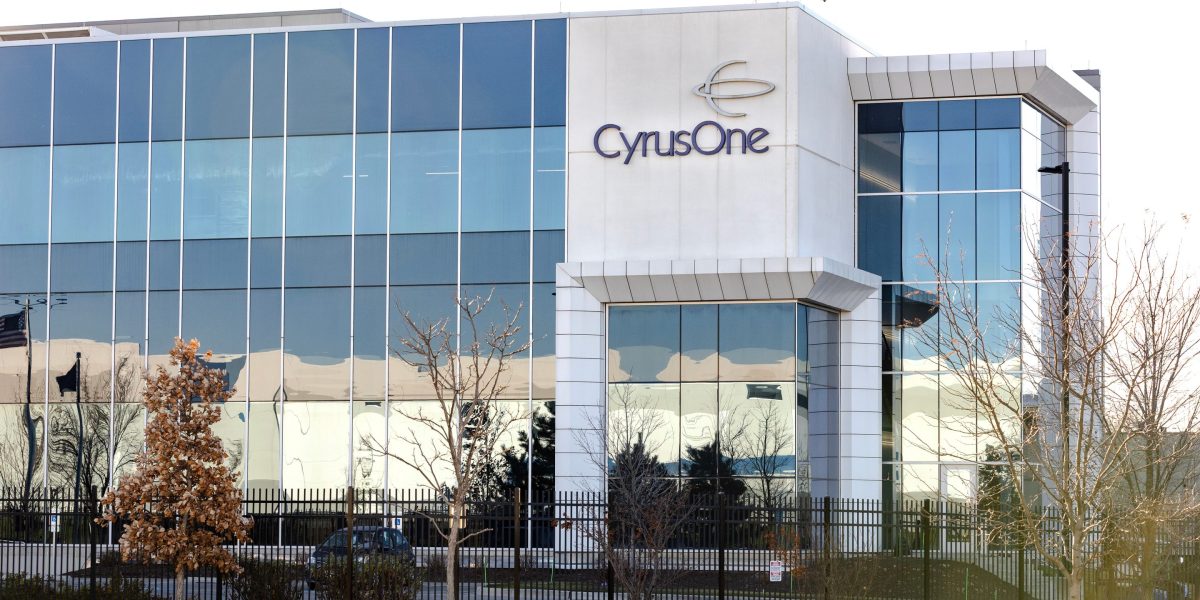
The problem, it turned out, was the cooling system at a data-center complex in the suburban town of Aurora, Illinois, some 50 miles (80 kilometers) from Chicago, which serves as the main hub for trillions of dollars of derivatives traded each day. Inside, temperatures soared past 100F (38C) despite the frigid weather, according to people familiar with the matter.

At the time, the CME’s information indicated the outage at the facility — run by private-equity owned CyrusOne — would be brief, according to a person with direct knowledge of the situation. As a result, it opted against switching over to a backup facility near New York City.

But before long, the magnitude of that fateful decision would become painfully clear. Despite a flurry of emails from CME assuring clients the problem would be fixed in the “near term,” the malfunction persisted and brought down vast parts of the global financial system for hours. From Tokyo to London, and eventually New York, trading in everything from gold and oil to wagers on the direction of US interest rates came to an abrupt halt.

Even after trading was largely restored on Friday, disruptions extended well into the US session, with CME Direct, a trading platform provided by the exchange, offline for most of the day. 

The outage underscored a vulnerability in increasingly integrated global markets that rely on a handful of dominant exchanges. It also raises questions about the contingency plans of CME, one of the world’s largest exchanges for derivatives contracts, and its heavy reliance on the data center it sold in 2016 to CyrusOne, a company now owned by KKR & Co. and Global Infrastructure Partners.

The shutdown “shows how concentrated futures markets really are — there just aren’t many alternative venues for the main products,” said Thomas Texier, group head of clearing at Marex Group Plc, a London brokerage.

The 10-hour outage surpassed the one that hit CME in 2019 and again underscored how much the exchange has become an integral part in the world’s markets. On average in October, derivatives trading volumes amounted to more than 26 million contracts every day, according to data from the group.

While it came during a day when US trading was expected to be subdued — due to the Thursday holiday — it still proved vexing to investors around the globe who needed to make month-end adjustments by rolling positions from one contract to another. 

In Singapore, one oil trader said when the initial alert was issued, they thought it was a hoax because the trades and quotes were still streaming in. But a few minutes later, the screen suddenly froze and they were booted out of the Nymex platform. A trader in London thought he had Wi-Fi connection issues. 

“We’ve had to trade some cash Treasuries today and it was noticeably thinner and wider,” said James Athey, a portfolio manager at Marlborough Investment Management Ltd. “Month-end, day after Thanksgiving, CME down. It’s not an ideal combo.”

By the end of the trading day Friday, CME had restored all of its trading operations, including CME Direct. A representative for the exchange declined to comment beyond the updates it had provided to clients throughout the day. 

CyrusOne said in a statement that problem was caused by a machinery failure that affected the systems used to cool its computer systems and it was “working around the clock to restore normal operations as quickly and safely as possible.” It said it had successfully restarted several chilling systems at limited capacity and deployed temporary cooling equipment to supplement its operations.

It’s unclear what exactly happened to CyrusOne’s cooling system. But the data center does have a redundancy system and offers free cooling when temperatures fall below 30F, according to information on CyrusOne’s website.

The 450,000-square-foot Aurora complex has served as the primary hub of digital operations for CME for nearly two decades. It’s famous among high-frequency traders and Wall Street firms, who’ve long jostled for positions around the site to get an edge on competitors by shaving fractions of a second off the time it takes for trades.

In 2016, CME decided it wanted to shift away from owning infrastructure and sold the site to Dallas-based CyrusOne. As part of the deal, CME agreed to rent space from CyrusOne for 15 years so it could continue to house the computers at the site that keep its markets running, essentially outsourcing its day-to-day operations. KKR and Global Infrastructure Partners agreed to buy CyrusOne in 2021. 

The center has continued to serve as a key node for traders across the globe, and the impact was felt broadly. In London hours, for example, the trading of US Treasury futures was halted, gold saw erratic moves and US crude and palm oil on the Bursa Malaysia exchange were also affected.

Even as the trading system was restored, some market makers remained hesitant to engage in trades until they could be assured the problem was fixed, according to people familiar with the matter. 

Others saw the occurrence during what’s typically a slow day in the US as one saving grace. 

“I woke up thinking my Wi-Fi was out,” said Ritik Katte, chief investment officer at MCD Capital, a London-based investment firm. “Liquidity is lower than usual, so it seems like the Thanksgiving holiday has been extended.”


Source link

Continue Reading

Business

Trump wants more health savings accounts. A catch: they can’t pay insurance premiums

Published

on


With the tax-free money in a health savings account, a person can pay for eyeglasses or medical exams, as well as a $1,700 baby bassinet or a $300 online parenting workshop.

Those same dollars can’t be used, though, to pay for most baby formulas, toothbrushes — or insurance premiums.

President Donald Trump and some Republicans are pitching the accounts as an alternative to expiring enhanced federal subsidies that have lowered insurance premium payments for most Americans with Affordable Care Act coverage. But legal limits on how HSAs can and can’t be used are prompting doubts that expanding their use would benefit the predominantly low-income people who rely on ACA plans.

The Republican proposals come on the heels of a White House-led change to extend HSA eligibility to more ACA enrollees. One group that would almost certainly benefit: a slew of companies selling expensive wellness items that can be purchased with tax-free dollars from the accounts.

There is also deep skepticism, even among conservatives who support the proposals, that the federal government can pull off such a major policy shift in just a few weeks. The enhanced ACA subsidies expire at the end of the year, and Republicans are still debating among themselves whether to simply extend them.

“The plans have been designed. The premiums have been set. Many people have already enrolled and made their selections,” Douglas Holtz-Eakin, the president of the American Action Forum, a conservative think tank, warned senators on Nov. 19. “There’s very little that this Congress can do to change the outlook.”

Cassidy’s Plan

With health savings accounts, people who pay high out-of-pocket costs for health insurance are able to set aside money, without paying taxes, for medical expenses.

For decades, Republicans have promoted these accounts as a way for people to save money for major or emergent medical expenses without spending more federal tax dollars on health care.

The latest GOP proposals would build on a change included in Republicans’ One Big Beautiful Bill Act, which makes millions more ACA enrollees eligible for health savings accounts. Starting Jan. 1, those enrolled in Obamacare’s cheapest coverage may open and contribute to HSAs.

Now Republicans are making the case that, in lieu of the pandemic-era enhanced ACA subsidies, patients would be better off being given money to cover some health costs — specifically through deposits to HSAs.

The White House has yet to release a formal proposal, though early reports suggested it could include HSA contributions as well as temporary, more restrictive premium subsidies.

Sen. Bill Cassidy — a Louisiana Republican who chairs the Senate Health, Education, Labor, and Pensions Committee and is facing a potentially tough reelection fight next year — has proposed loading HSAs with federal dollars sent directly to some ACA enrollees.

“The American people want something to pass, so let’s find something to pass,” Cassidy said on Dec. 3, pitching his plan for HSAs again. “Let’s give power to the patient, not profit to the insurance company.”

He has promised a deal can be struck in time for 2026 coverage.

Democrats, whose support Republicans will likely need to pass any health care measure, have widely panned the GOP’s ideas. They are calling instead for an extension of the enhanced subsidies to control premium costs for most of the nearly 24 million Americans enrolled in the ACA marketplace, a larger pool than the 7.3 million people the Trump administration estimates soon will be eligible for HSAs.

HSAs “can be a useful tool for very wealthy people,” said Sen. Ron Wyden of Oregon, the top Democrat on the Senate Finance Committee. “But I don’t see it as a comprehensive health insurance opportunity.”

Who Can Use HSAs?

The IRS sets restrictions on the use of HSAs, which are typically managed by banks or health insurance companies. For starters, on the ACA marketplace, they are available only to those with the highest-deductible health insurance plans — the bronze and catastrophic plans.

There are limits on how much can be deposited into an account each year. In 2026 it will be $4,400 for a single person and $8,750 for a family.

Flexible spending accounts, or FSAs — which are typically offered through employer coverage — work similarly but have lower savings limits and cannot be rolled over from year to year.

The law that established HSAs prohibits the accounts from being used to pay insurance premiums, meaning that without an overhaul, the GOP’s proposals are unlikely to alleviate the problem at hand: skyrocketing premium payments. Obamacare enrollees who receive subsidies are projected to pay 114% more out-of-pocket for their premiums next year on average, absent congressional action.

Even with the promise of the government depositing cash into an HSA, people may still opt to go without coverage next year once they see those premium costs, said Tom Buchmueller, an economics professor at the University of Michigan who worked in the Biden administration.

“For people who stay in the marketplace, they’re going to be paying a lot more money every month,” he said. “It doesn’t help them pay that monthly premium.”

Others, Buchmueller noted, might be pushed into skimpier insurance coverage. Obamacare bronze plans come with the highest out-of-pocket costs.

An HHS Official’s Interest

Health savings accounts can be used to pay for many routine medical supplies and services, such as medical and dental exams, as well as emergency room visits. In recent years, the government has expanded the list of applicable purchases to include over-the-counter products such as Tylenol and tampons.

Purchases for “general health” are not permissible, such as fees for dance or swim lessons. Food, gym memberships, or supplements are not allowed unless prescribed by a doctor for a medical condition or need.

Americans are investing more into these accounts as their insurance deductibles rise, according to Morningstar. The investment research firm found that assets in HSAs grew from $5 billion 20 years ago to $146 billion last year. President George W. Bush signed the law establishing health savings accounts in 2003, with the White House promising at the time that they would “help more American families get the health care they need at a price they can afford.”

Since then, the accounts have become most common for wealthier, white Americans who are healthy and have employer-sponsored health insurance, according to a report released by the nonpartisan Government Accountability Office in September.

Now, even more money is expected to flow into these accounts, because of the One Big Beautiful Bill Act. Companies are taking notice of the growing market for HSA-approved products, with major retailers such as Amazon, Walmart, and Target developing online storefronts dedicated to devices, medications, and supplies eligible to be purchased with money in the accounts.

Startups have popped up in recent years dedicated to helping people get quick approval from medical providers for various — and sometimes expensive — items, memberships, or fitness or health services.

Truemed — a company co-founded in 2022 by Calley Means, a close ally of Health and Human Services Secretary Robert F. Kennedy Jr. — has emerged as one of the biggest players in this niche space.

A $9,000 red cedar ice bath and a $2,000 hemlock sauna, for example, are available for purchase with HSA funds through Truemed. So, too, is the $1,700 bassinet, designed to automatically respond to the cries of a newborn by gently rocking the baby back to sleep.

Truemed’s executives say its most popular products are its smaller-dollar fitness offerings, which include kettlebells, supplements, treadmills, and gym memberships.

“What we’ve seen at Truemed is that, when given the choice, Americans choose to invest their health care dollars in these kinds of proven lifestyle interventions,” Truemed CEO Justin Mares told KFF Health News.

Means joined the Department of Health and Human Services in November after a stint earlier this year at the White House, where he worked when Trump signed the One Big Beautiful Bill Act into law in July. Truemed’s general counsel, Joe Vladeck, said Means left the company in August.

Asked about Means’ potential to benefit from the law’s expansion of HSAs, HHS spokeswoman Emily Hilliard said in a statement that “Calley Means will not personally benefit financially from this proposal as he will be divesting from his company since he has been hired at HHS as a senior advisor supporting food and nutrition policy.”

Truemed is privately held, not publicly traded, and details of how Means will go about divesting have not been disclosed.

KFF Health News is a national newsroom that produces in-depth journalism about health issues and is one of the core operating programs at KFF — the independent source for health policy research, polling, and journalism.


Source link

Continue Reading

Business

Netflix lines up $59 billion of debt for Warner Bros. deal

Published

on


Netflix Inc. has lined up $59 billion of financing from Wall Street banks to help support its planned acquisition of Warner Bros. Discovery Inc., which would make it one of the largest ever loans of its kind.

Wells Fargo & Co., BNP Paribas SA and HSBC Plc are providing the unsecured bridge loan, according to a statement Friday, a type of financing that is typically replaced with more permanent debt such as corporate bonds.

Under the deal announced Friday, Warner Bros. shareholders will receive $27.75 a share in cash and stock in Netflix. The total equity value of the deal is $72 billion, while the enterprise value of the deal is about $82.7 billion.

Bridge loans are a crucial step for banks in building relationships with companies to win higher-paying mandates down the road. 

A loan of $59 billion would rank among the biggest of its type, Anheuser-Busch InBev SA obtained $75 billion of loans to back its acquisition of SABMiller Plc in 2015, the largest ever bridge financing, according to data compiled by Bloomberg.


Source link

Continue Reading

Business

Stocks: Facing a vast wave of incoming liquidity, the S&P 500 prepares to surf to a new record high

Published

on


The S&P 500 index ticked up 0.3% yesterday, its eighth straight upward trading session. It is now less than half a percentage point away from its record high, and futures were pointing marginally up again this morning. Nasdaq 100 futures were even more optimistic, up 0.39% before the open in New York. The VIX “fear” index (which measures volatility) has sunk 12.6% this month, indicating that investors seem to have settled in for a calm, quiet, risk-on holiday season.

They have reason to be happy. Washington is preparing a wave of incoming liquidity that is likely to generate fresh demand for equities.

For instance, the CME FedWatch index shows an 87% chance that the U.S. Federal Reserve will deliver an interest rate cut next week, delivering a new round of cheaper money. Further cuts are expected in 2026.

Furthermore, Wall Street largely expects President Trump to announce that Kevin Hassett will replace Fed chairman Jerome Powell in May—and Hassett is widely regarded as a dove who will lean in favor of further rate cuts.

Elsewhere, the Fed has begun a series of “reserve management purchases,” a program in which the central bank will buy short-term T-bills—a move that will add more liquidity to markets generally.

Banks, brokers and trading platforms are also lining up to handle ‘Trump Accounts,’ into which the U.S. government will deposit $1,000 for every child. The trust fund can be invested in low-cost stock index trackers—a new source of investment demand coming online in the back half of 2026.

So it’s no surprise that nine major investment banks polled by the Financial Times expect stocks to rise in 2026; the average of their estimates is by 10%.

The Congressional Budget Office also estimates that the One Big Beautiful Bill Act will add 0.9% to U.S. GDP next year largely because it allows companies to immediately deduct capital expenditures from their taxes—spurring a huge round of corporate spending. 

With all that fresh money on the horizon, it’s clear why markets have shrugged off their worries about AI and Bitcoin. The only shock will be if the S&P fails to hit a new all-time high by the end of the year.

Here’s a snapshot of the markets ahead of the opening bell in New York this morning:

  • S&P 500 futures were up 0.2% this morning. The last session closed up 0.3%. 
  • STOXX Europe 600 was up 0.3% in early trading. 
  • The U.K.’s FTSE 100 was up 0.14% in early trading. 
  • Japan’s Nikkei 225 was up 2.33%. 
  • China’s CSI 300 was up 0.34%. 
  • The South Korea KOSPI was down 0.19%. 
  • India’s NIFTY 50 is up 0.18%. 
  • Bitcoin was flat at $93K.


Source link

Continue Reading

Trending

Copyright © Miami Select.