Connect with us

Business

The man behind Google Meet went from being ‘the only Indian kid in my class’ to connecting 3 billion users worldwide. He test-drives the product every day

Published

on


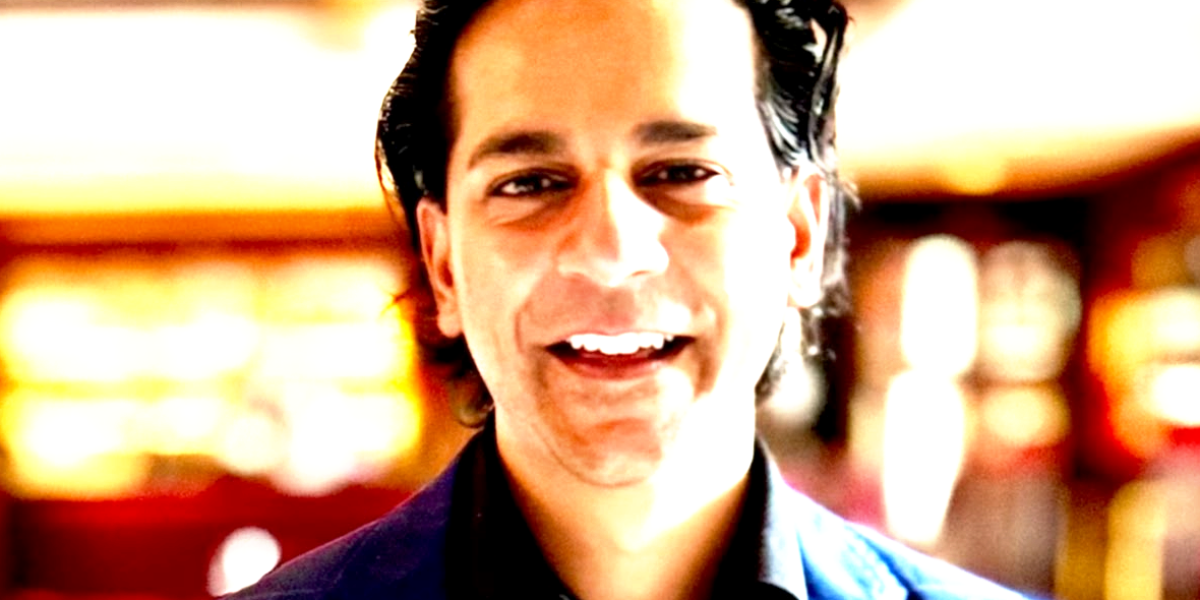
Awaneesh Verma leads Google Meet, Google Voice, and other real-time communication products at Alphabet, overseeing a massive network reaching about 3 billion users and 11 million companies worldwide.

However, his drive to eliminate communication friction and ensure people are “truly understanding each other” is rooted in a personal journey that stretches back before his time at Uber and Duolingo—to when he learned how barriers can keep people from communicating.

Born in the UK to parents who had immigrated from India, Verma spent his young childhood in the midlands city of Sheffield. He recalled in a recent interview with Fortune that, for the longest time, he was “the only Indian kid in my class.”

While his hometown is “a great place,” he couldn’t help but wonder “what the rest of the world felt and looked like.” He recalled how he was fascinated with a physical atlas in the days before Google Maps. “I’m like just looking at maps and drawing places based on that.”

Years later, when Verma was an engineering major at Carnegie Mellon University in Pittsburgh, he heard Google’s head of engineering, Alan Eustace, give a talk about ongoing projects, including Google Translate. “I was like, ‘Wow, this is the future of connecting people.” Within a few years, Verma was working on Google Translate, part of a journey that took him to Duolingo as its first ever head of product, before a stop at Uber, also as head of project, and a return to Google.

Verma told Fortune that he loves his work because he has always loved the idea of something having to do with travel, saying he wanted to be a travel show host when he was a kid.

“I really liked the appeal of meeting people in different cultures and then truly understanding each other,” he said, adding that he’s been lucky to do a job that lets him do the same thing.

Beta-testing while driving the machine

As head of Google Meet, Verma told Fortune that he is always beta-testing his product, which billions of users depend on to do business. (Although more specifically, he said he’s always testing the product internally, from early research proof-of-concepts to end-user prototypes and beta.) He said the beauty of Google Meet is that it’s part of Google Workspace, which means that all the notes you take on it become part of your Google Drive.

Verma said he uses Take Notes with Gemini in “pretty much all of my meetings.” With a single click, this tool instantly creates a live Google document of meeting notes, which become the team’s “decision of record,” transforming discussions into something “durable and sticky.”

He noted that this reliability has made distributed collaboration easier, recalling a time when a third of his team in Stockholm felt confident skipping an inconvenient meeting, a huge change from just a few years ago. The team was trying to get some feedback from some Bay Area-based executives, but the timing just wasn’t right. Nevertheless, they felt confident in the meeting going on without them. “We trust that you’ll represent our point of view well and we’ll read the notes and we’ll read the transcript later on.”

The Google Meet chief also relayed that he often debriefs on projects, and he asks team members what went well and what could have gone differently. Once all of those are written on a whiteboard, he cross-references them with what the Gemini AI notetaker thought of the meeting. “When in doubt, you can go back and read the transcript,” he said, noting that Gemini includes citations, so the minute anything is in doubt, “there’s a one click to that part of the transcript where you can then just read what happened there.”

The goal is to use AI to facilitate the high fidelity of human conversation, including tone and emotion, allowing teams to reach resolutions faster than asynchronous communication. Verma illustrated this by recounting a 60-minute discussion with an engineering counterpart. By using Ask Gemini to summarize, they immediately produced a 15-bullet product specification.

Real-time translate

The innovations from Verma and his team spring to life when Fortune talks to Niklas Blum, a native German speaker based in Google’s aforementioned Stockholm office. He demonstrates Google’s real-time speech translator, a very different product from Google Translate.

“Don’t you hear me, Nick? I’m speaking German to you now,” Blum said, as this journalist could hear him speaking in the background in something that sounded Germanic, while, with a few seconds delay, his voice came through the speakers in English, somewhat uncannily.

Blum explained that AI technology has now progressed to the point where it clones his voice in real time to make it sound like he is talking in English.

He added that Verma’s team worked closely with Google’s DeepMind on the various technologies, with multiple layers of AI working: the translation plus the generation of the translated voice. To some extent, he said, the lag is very dependent on the language being translated, since the AI has to account for the grammar and complexity of the language being used. German often puts the verb toward the end of the sentence, for instance, so there is a lag as the AI makes sure it has the correct meaning.

This real-time translation tool came together over the course of about two years, Blum said, adding that it began as an exploration without a certain deadline. But the more they communicated with global companies that do business across language barriers, they saw a need in the marketplace.

He said it was “really hard” for team conversations across different languages to be held while making sure that everyone received all the correct information. “We want Google Meet to not only be a tool to connect people, but [something] that creates value in the conversation,” he added.

“The beauty of technology is not just the fact that it can automate and make it easier,” Verma said, but that you can trust “that it truly is neutrally representing everything that was said.”

There’s an imperative behind this, of course, somehow providing a fix to the post-pandemic onslaught of endless meetings that define most workdays.

Verma notes that these are often ineffective, leaving participants unsure of what was decided and what comes next. He said he feels a real need to address “meeting fatigue” that comes from meetings just not being run well.

Verma affirms that every improvement is filtered through the question, “how could we have helped them do this better?”


Source link

Continue Reading

Business

‘This species is recovering’: Jaguar spotted in Arizona, far from Central and South American core

Published

on


The spots gave it away. Just like a human fingerprint, the rosette pattern on each jaguar is unique so researchers knew they had a new animal on their hands after reviewing images captured by a remote camera in southern Arizona.

The University of Arizona Wild Cat Research and Conservation Center says it’s the fifth big cat over the last 15 years to be spotted in the area after crossing the U.S.-Mexico border. The animal was captured by the camera as it visited a watering hole in November, its distinctive spots setting it apart from previous sightings.

“We’re very excited. It signifies this edge population of jaguars continues to come here because they’re finding what they need,” Susan Malusa, director of the center’s jaguar and ocelot project, said during an interview Thursday.

The team is now working to collect scat samples to conduct genetic analysis and determine the sex and other details about the new jaguar, including what it likes to eat. The menu can include everything from skunks and javelina to small deer.

As an indicator species, Malusa said the continued presence of big cats in the region suggests a healthy landscape but that climate change and border barriers can threaten migratory corridors. She explained that warming temperatures and significant drought increase the urgency to ensure connectivity for jaguars with their historic range in Arizona.

More than 99% of the jaguar’s range is found in Central and South America, and the few male jaguars that have been spotted in the U.S. are believed to have dispersed from core populations in Mexico, according to the U.S. Fish and Wildlife Service. Officials have said that jaguar breeding in the U.S. has not been documented in more than 100 years.

Federal biologists have listed primary threats to the endangered species as habitat loss and fragmentation along with the animals being targeted for trophies and illegal trade.

The Fish and Wildlife Service issued a final rule in 2024, revising the habitat set aside for jaguars in response to a legal challenge. The area was reduced to about 1,000 square miles (2,590 square kilometers) in Arizona’s Pima, Santa Cruz and Cochise counties.

Recent detection data supports findings that a jaguar appears every few years, Malusa said, with movement often tied to the availability of water. When food and water are plentiful, there’s less movement.

In the case of Jaguar #5, she said it was remarkable that the cat kept returning to the area over a 10-day period. Otherwise, she described the animals as quite elusive.

“That’s the message — that this species is recovering,” Malusa said. “We want people to know that and that we still do have a chance to get it right and keep these corridors open.”


Source link

Continue Reading

Business

MacKenzie Scott tries to close the higher ed DEI gap, giving away $155 million this week alone

Published

on


MacKenzie Scott has arguably been the biggest name in philanthropy this year—and has nonstop been making major gifts to organizations focused on education, DEI, disaster recovery, and many other causes.

This week alone, several higher education institutions announced major gifts from the billionaire philanthropist and ex-wife of Amazon founder Jeff Bezos—donations totaling well over $100 million. In true Scott fashion, many of these donations are the largest single donations these schools have ever received.

The donations announced this week include: 

  • $50 million to California State University-East Bay
  • $50 million to Lehman College (part of the City University of New York system)
  • $38 million to Texas A&M University-Kingsville
  • $17 million to Seminole State College

All four institutions are public, access-oriented colleges that enroll large shares of low‑income, first‑generation, and racially diverse students and function as minority‑serving institutions or similar engines of social mobility. They fit MacKenzie Scott’s broader pattern of directing large, unrestricted gifts to colleges that serve “chronically underserved” communities rather than already wealthy, highly selective universities.

Scott, who is worth about $40 billion and has donated over $20 billion in the past five years, has doubled down this year on causes that the Trump administration has cut deeply, such as education, DEI, and disaster recovery.

“As higher education, in general, works to find its way in an uncertain environment, this gift is a major source of encouragement that we are on the right path,” Lehman College President Fernando Delgado said in a statement. 

Scott also made one of the largest donations in HBCU Howard University’s 158-year history with an $80 million gift earlier this fall, and a $60 million donation to the Center for Disaster Philanthropy after Trump administration’s cuts to the Federal Emergency Management Agency (FEMA)—an organization Americans rely on for help during and after hurricanes, wildfires, tornadoes, and floods.

“All sectors of society—public, private, and social—share responsibility for helping communities thrive after a disaster,” CDP president and CEO Patricia McIlreavy previously told Fortune. “Philanthropy plays a critical role in providing communities with resources to rebuild stronger, but it cannot—and should not—replace government and its essential responsibilities.”

Trust-based philanthropy

Scott accumulated the vast majority of her wealth from her 2019 divorce from Bezos, but is dedicated to giving away most of her fortune. She’s considered a unique philanthropist in today’s environment because her gifts are typically unrestricted, meaning the organizations can use the funding however they choose. 

“She practices trust-based philanthropy,” Anne Marie Dougherty, CEO of the Bob Woodruff Foundation previously told Fortune. Scott has donated $15 million to the veteran-focused nonprofit organization in 2022, and made a subsequent $20 million donation this fall.

Scott is also considered one of the most generous philanthropists, and credits acts of kindness for inspiring her to give back.

“It was the local dentist who offered me free dental work when he saw me securing a broken tooth with denture glue in college,” Scott wrote of her inspiration for philanthropy in an Oct. 15 essay published to her Yield Giving site. “It was the college roommate who found me crying, and acted on her urge to loan me a thousand dollars to keep me from having to drop out in my sophomore year.”


Source link

Continue Reading

Business

Netflix’s bombshell deal to buy Warner Bros. brings Batman and Harry Potter to the streamer, infuriates theater owners and the Ellisons

Published

on


Netflix’s agreement to buy Warner Bros. in a $72 billion deal marks a seismic shift in Hollywood, handing the streaming giant control of iconic franchises such as Batman and Harry Potter and triggering an immediate backlash from theater owners and the jilted Ellison family behind Paramount. The bombshell transaction, struck after a bidding war that ensued after David Ellison’sunsolicited bids several months ago, positions Netflix ever more at the center of the Southern California entertainment business that the Northern California company disrupted so famously decades ago.

The deal will see Netflix acquire Warner Bros. Discovery’s film and TV studios and its streaming operations, including HBO Max, in a deal with an equity value of roughly $72 billion, or about $27.75 per share in cash and stock, valuing Warner Bros. at $82.7 billion. The agreement followed a heated auction in which Netflix’s bid edged out offers from Paramount Skydance and Comcast, both of which had pushed to keep the storied Warner assets in more traditional hands.

Two days before Netflix won the bidding, Paramount hinted at its fury with a strongly worded letter to WBD CEO David Zaslav, arguing the process was “tainted” and Warner Bros. was favoring a single bidder: Netflix. Paramount called it a “myopic process with a predetermined outcome that favors a single bidder,” Bloomberg reported, although Netflix’s bid is understood to be the highest of the three.

Another angry group is theater owners, who have famously warred with Netflix for years over the big red streamer’s reluctance, even refusal to follow traditional theatrical-release practices. Netflix Co-CEO Ted Sarandos has adamantly defended Netflix’s streaming-forward distribution, saying it’s what consumers really want. At the Time 100 event in April of this year, Sarandos called theatrical release “an outmoded idea for most people” and said Netflix was “saving Hollywood” by giving people what they want: streaming at home.

Cinema United, the trade association which represents over 30,000 movie screens in the U.S. and 26,000 internationally, immediately announced its opposition to Netflix acquiring a legacy Hollywood studio. The organization’s chief, Michael O’Leary, said it “poses an unprecedented threat to the global exhibition business” as Netflix’s states business model simply does not support theatrical exhibition. He urged regulators to look closely at the acquisition.

Deadline reported that other producers are warning of “the death of Hollywood” as a result of this deal. Several days earlier, Bank of America Research’s analysts had surveyed the landscape and concluded that as a defensive move, Netflix would be “killing three birds with one stone,” as its ownership of Warner Bros’ would be a daunting blow to Paramount and Comcast, while taking the Warner legacy studio out of the running. The bank calculated that a combined Netflix and Warner Bros. would comprise roughly 21% of total streaming time—still shy of YouTube’s 28% hold on the market, but far greater than Paramount’s 5% and Comcast’s 4%.

What’s known and what’s still at play

As part of the deal, Netflix will retain the studio that controls the superheroes of DC, the Wizarding World of Harry Potter, and HBO’s prestige brands. Other details on what will happen to the standalone streaming service HBO Max were scant, with the companies saying only that Netflix will “maintain” Warner Bros. current operations. The companies expect the transaction to close after regulatory review, with Netflix projecting billions in annual cost savings by the third year after completion.

​The deal will not include all of Warner Bros. Discovery, according to the press release announcing the acquisition, which said the previously announced plans to separate WBD’s cable operations will be completed before the Netflix deal, in the third quarter of 2026. The newly separated publicly traded company holding the Global Networks division will be called Discovery Global, and will include CNN, TNT Sports in the U.S., as well as Discovery, free-to-air channels across Europe, plus digital products such as Discovery+ and Bleacher Report.  

On a conference call with reporters Friday morning, Sarandos said Netflix is “highly confident in the regulatory process,” calling the deal pro-consumer, pro-innovation, pro-worker, pro-creator and pro-growth. He said Netflix planned to work closely with regulators and was running “full speed” ahead toward getting all regulatory approvals. He added that Netflix executives were “tired” after “an incredibly rigorous and competitive process.” Alluding to Netflix’s traditional resistance to big M&A, Sarandos added that “we don’t do many of these, but we were deep in this one.”

Influential entertainment journalist Matt Belloni of Puck previewed the likely deal on Bill Simmons’ podcast on Spotify’s Ringer network (which recently struck a deal to bring some video podcasts to Netflix), and they speculated about potential problems inside Netflix that brought the deal to a head. In conversation about how defensive the move is, Belloni said Netflix is “doing this for a reason” and may have reached a “stress point” because it hasn’t been getting traction with its own moviemaking efforts after 10 years of trying. (Netflix has also been agonizingly close to an elusive Best Picture Oscar, with close calls on Roma and Emilia Perez, the latter of which was derailed in a bizarre social-media controversy.) Belloni also acknowledged the criticism that Netflix has struggled to create its own franchises, also after years of trying.

Sarandos highlighted Netflix’s homegrown franchises while announcing the deal, arguing that Netflix’s ” culture-defining titles like Stranger Things, KPop Demon Hunters and Squid Game” will now combine with Warner’s deep library including classics Casablanca and Citizen Kane, even Friends.

The biggest losers in the bidding war may be David Ellison and his father, Oracle co‑founder (and long-time Republican donor)Larry Ellison, whose Paramount‑Skydance empire had been widely seen as a front‑runner to acquire Warner Bros. Discovery. David Ellison, has since reportedly been pleading his case around Washington, meeting Trump administration officials as allies float antitrust and national‑interest concerns about giving Netflix control of such a critical studio.

While Netflix has tried to calm regulators by arguing that a combined Netflix–HBO Max bundle would increase competition with Disney and others, the Ellisons and their supporters are signaling they will continue to press for tougher scrutiny or even intervention. Large M&A has made a big comeback in 2025 as the Trump administration has been notably friendlier to big deals than the deep freeze of the Biden administration, making this deal an acid test for just how true that is when a company with deep ties to the White House gets jilted.​

[Disclosure: The author worked internally at Netflix from June 2024 through July 2025.]


Source link

Continue Reading

Trending

Copyright © Miami Select.