Business
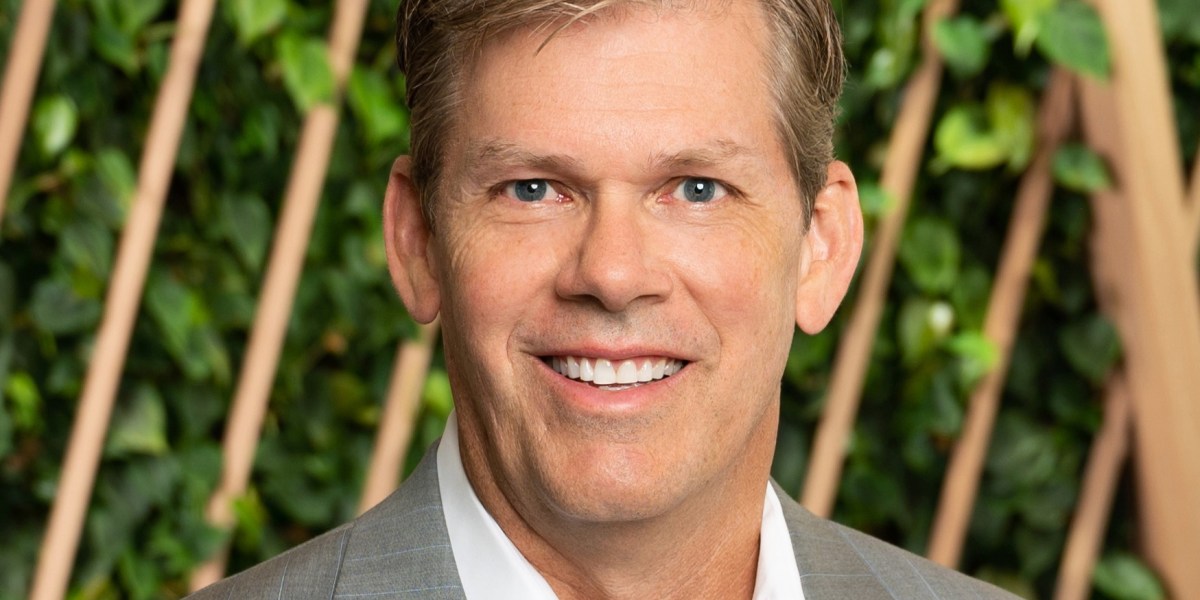
$90 billion Waste Management CEO worked trash routes at 1 a.m. with workers—here’s why
Published
5 days agoon
By
Jace Porter
For a night owl like Waste Management CEO Jim Fish, waking up for 1 a.m. safety briefings could make for a brutally long day. But Fish did it because his late father-in-law, a union pipefitter, told him if he showed up to those meetings—not just once, but regularly—he would learn a lot and build a rapport with line workers.
Fish’s father-in-law hit the nail on the head.
“It was so valuable to me in terms of learning the business and learning the people,” Fish told Fortune. “Part of what I learned—I was always a finance guy—was that it’s not always just dollars and cents.”
Waste Management has named safety as a cornerstone of the company’s operations and has set a goal to reduce its total recordable injury rate (TRIR) by 3% annually with a TRIR target of 2.0 by 2030. If the company hits the target, that means workers would have suffered two recordable injuries per 100 employees per year or per 200,000 hours worked. Last year, the company reduced overall injuries by 5.8%, according to its sustainability report, and lost-time injuries by 2.4%.
“You make investments in safety or investments in people and they don’t necessarily show up on the bottom line—at least not immediately,” Fish said. “Safety tends to show up in longer terms, and if you do have a safe organization, that will eventually show up on your income statement—but it takes a while.”
Waste Management, with $22 billion in revenue in 2024, is the U.S. and Canada’s largest provider of trash and recycling transfer and disposal services. With a market cap of about $90 billion, the Houston, Tex.-based company counts more than 60,000 employees. Fish, 63, has served as president and CEO since November 2016 but has been with the company for two decades. Prior to taking the top job, Fish held roles including chief financial officer, senior vice president of the eastern group, and area VP for Pennsylvania and West Virginia.
Up until halfway through his time as CFO, Fish would go out about every four to six weeks and haul trash with crews—generally about every time he went to a middle-of-the-night safety meeting. Eventually, the board told him they weren’t crazy about the idea of him throwing trash, but he could still ride along in the trucks with workers. Now, Fish said he visits about 20 to 30 sites a year, and takes about five to 10 trips to ride along with drivers. He tells them any subject is fair game, including sports, politics, safety, or pay, but they have to make sure to chat because Fish might fall asleep otherwise.
“Most drivers are a little nervous when I get in the cab but after about 10 minutes they kind of loosen up and tell me what they’re thinking,” said Fish.
That’s why, he said, those early morning meetings were so valuable, and his learnings went far beyond injury stats and safety briefings.
He picked up on why Boston’s productivity plummeted during winter months, said Fish. He couldn’t see why there would be such a difference between winter and summer but then going out in below-zero temperatures where his hands and feet were freezing changed his mind completely, he said. It’s the kind of issue that might only show up as a data fluctuation in a corporate office but becomes clearer and more meaningful after riding through icy routes covered with snow-engulfed trash and recycling cans.
“It makes a huge difference if there’s ice and snow on the road or if the can is iced in,” said Fish. “And that sounds kind of simple, but it wasn’t something that I really, fully even understood sitting in a corporate office until I actually went out into the field.”
Another key learning came from witnessing the diversity of Waste Management’s workforce and making small tweaks to make sure employees were clearly informed.
While visiting a district in Rhode Island where about 95% of the drivers in the company’s residential business line were either Puerto Rican or Dominican, Fish attended a 1 a.m. briefing. The safety results in that line of business were pretty “terrible,” Fish admitted, and he wanted to understand why. He picked up on the fact that most of the workers spoke English but their first language was Spanish. The manager there didn’t speak any Spanish, so he used another driver to translate for him while he delivered safety information.
Fish decided to look into promoting somebody from the district who wanted to be a manager—and who was bilingual. The company made the promotion to a driver.
“Magically, or probably not magically, their safety results turned around immediately,” said Fish. “There was something being lost in the translation.”
The change also addressed an inadvertent signal that was being sent to workers, which was that they might never have an opportunity to move up in the company because they were native Spanish speakers, he said. The inadvertent message was that the managers there would likely always be “a white guy like Jim,” said Fish, who has also been working regularly on his Spanish.
Explicitly addressing that narrative improved safety results and empowered people to apply for positions they might not have thought they were qualified for previously, he said. The company also hired someone at the site to teach Spanish to other workers so they could become conversant.
“Their safety results absolutely turned around and I don’t think that was a coincidence at all,” he said. “Nothing was lost in translation anymore and the drivers couldn’t say, ‘Well, I didn’t understand what my manager was saying’ because the manager was saying it in both English and Spanish.”
The bilingual manager Waste Management hired at the site became one of the company’s best, said Fish. He unfortunately passed away from a heart attack, said Fish, but he continued up the ladder from driver to route manager, district manager, and then senior district manager. He likely would have continued moving up if he hadn’t tragically passed away. Fish noted the manager was also singled out to go on a trip for the top 200 employees to the Ritz Carlton in Hawaii with his wife.
Ultimately, in Fish’s view, the core of the company and where Waste Management differentiates itself from competitors, is at the critical field level—not the C-suite. Better understanding the workforce and how it can be more productive and efficient could best be gleaned by showing up to the grueling early mornings every month early in his executive career.
“I know my title is important, but I’m not more important than anybody else at this company,” said Fish. “I’m not a better employee or better father… we just have different level positions.”
You may like
Business
Lonely staff at a major pharmacy chain are being paid $100 to take time off and text a friend—welcome to Sweden’s ‘friendship hour’
Published
2 hours agoon
January 7, 2026By
Jace Porter
Loneliness is wearing down so many workers that it’s been deemed an “epidemic” by U.S. healthcare professionals. Across the pond in Europe, employees are grappling with the same issue; that’s why one Swedish employer is piloting a paid “friendship hour” to combat isolation.
Apotek Hjärtat, one of Sweden’s largest pharmaceutical chains, is trialing a “friendcare” program (“vänvård” in Swedish), where staff are allotted one hour per month, or 15 minutes every week during working hours, to connect with old or new friends.
The year-long scheme was first launched last April, according to reporting from BBC. Volunteers could register for the initiative if they were lonely, or simply wanted to get closer to people struggling with isolation—just 11 out of 4,000 employees opted in
The business has not only set aside work hours to test the initiative, it’s also been footing the bill for connection.
All participants are paid 1,000 kronor (around $100) to cover activities with their companions. But the “friendship hour” doesn’t have to be spent dining out for lunch, or biking around town; staffers can use the time for the simplest relationship pastimes, such as chatting on the phone or catching up over text.
Improving workers’ wellbeing is actually a tax benefit for the company
Monica Magnusson, the CEO of Apotek Hjärtat, told BBC the “friendship hour” scheme came about out of genuine curiosity: the company wanted to see if this allotted employee time would improve staff wellbeing.
“We try and see what the effects are from having the opportunity to spend a bit of time every week on safeguarding your relationships,” Magnusson told the BBC.
The program is likened to Sweden’s broader “friskvård” benefit: an annual tax-exempt stipend covering employee wellness activities, such as fitness classes and massages. Magnusson said the “friendship hour” is “a reflection on that, but targeting loneliness and relationships instead.”
But even Apotek Hjärtat employees not participating in the pilot can still benefit emotionally from another initiative; the business provides online training for all its staffers on how to recognize and handle loneliness.
Fortune reached out to Apotek Hjärtat for comment.
The $154 billion employee loneliness problem
Loneliness has swept through offices across the U.S.; around 79% of white-collar employees have felt lonely as a result of their role within the past month, according to a 2024 study from BSG in partnership with TheLi.st and Berlin Cameron. The issue not only leads to higher turnover, weakened company culture, and sluggish employee morale—it’s also costing businesses billions of dollars every year.
It’s estimated that loneliness among U.S. staffers results in a $154 billion loss annually, or about $4,200 in lost workdays per staffer each year, according to a 2022 study from Project Connect.
However, there’s hope that these employer-led initiatives could help turn the tide on loneliness—and there’s a business imperative to do so. Employees are 3.5 times more likely to reach their full potential when they feel connected, according to a 2019 study from the Harvard Business Review. When staffers are connected, they also perform better on the job: around eight in 10 workers believe a sense of community would help them be better at work, according to a 2025 Randstad report.
If employers choose to turn a blind eye to their isolated staffers, it could hurt them in the long run. About 55% of professionals would consider quitting if they didn’t feel a sense of belonging on the job, a massive increase from 37% who said the same in 2024, according to the Randstad report.
Are you a CEO intentionally combating post-pandemic workplace loneliness? Fortune wants to hear from you! Reach out at emma.burleigh@fortune.com
Business
More Americans will die than be born in 2030, CBO predicts—leaving immigrants as the only source of population growth
Published
2 hours agoon
January 7, 2026By
Jace Porter
For the first time in modern history, the United States is on the brink of losing its most basic engine of growth: more births than deaths.
According to the Congressional Budget Office’s (CBO) Demographic Outlook, released Tuesday, the year 2030 marks a tipping point that will fundamentally reshape the economy and social fabric. That’s the year the “natural” U.S. population—the balance of births over deaths—is projected to vanish.
“Net immigration (the number of people who migrate to the United States minus the number who leave) is projected to become an increasingly important source of population growth in the coming years, as declining fertility rates cause the annual number of deaths to exceed the annual number of births starting in 2030,” the CBO writes. “Without immigration, the population would begin to shrink in 2030.”
From that point on, every additional person added to the U.S. population will come from immigration, a demographic milestone once associated with aging countries like Italy and Japan.
The shift is striking not only for what it says about America’s rapidly aging society, but also for how soon it is expected to arrive. Just a year ago, many demographic forecasts—including the CBO’s own forecast—placed this crossover well into the late 2030s or even the 2040s. The updated outlook from CBO moves the timeline forward by nearly a decade.
This rapid acceleration, the CBO said, is driven by the “double squeeze” of declining fertility and an aging populace, combined with recent policy shifts on immigration. CBO analysts have drastically lowered their expectations for the total fertiility rate, now projecting it to settle at just 1.53 births per woman — well below the 2.1 “replacement rate” needed for a stable population. At the same time, the massive “Baby Boomer” generation is reaching ages with higher mortality rates, causing annual deaths to climb.
The timeline further compressed following the passage of the 2025 Reconciliation Act, which increased funding for more ICE agents and immigration judges to process cases faster, resulting in approximately 50,000 immigrants in detention daily through 2029, CBO said. The office calculated that these provisions will result in roughly 320,000 fewer people in the U.S. population by 2035 than previously estimated.
The new projections show that U.S. population growth will steadily decelerate over the next three decades until it finally hits zero in 2056. For most of the 20th century, the population grew at close to 1% a year: a flat population would represent a historic break from that norm.
The economic consequences of this shift are hard to overstate. While the number of retirees swells, the pool of workers funding the social safety net — and caring for the aging population — is narrowing. Americans aged 65 and older are the fastest-growing segment of the population, pushing the “old-age dependency ratio” sharply higher. In 1960, there were about five workers for every retiree. Today, that ratio is closer to three-to-one. By the mid-2050s, the CBO projects it will fall to roughly two workers per retiree. The contraction will have “significant implications” on the federal budget, including outsized effects on Social Security and Medicare, placing pressure on those trust funds which rely on a robust base of payroll taxes that a stagnant population cannot easily provide.
Further, because national GDP is essentially the product of the number of workers multiplied by their individual productivity, the loss of labor force growth means the American economy will have to rely almost entirely on technological breakthroughs and AI to drive future gains. This may be happening ahead of schedule, as continued weak employment growth in December showed a “jobless expansion,” in the words of KPMG chief economist Diane Swonk, as Fortune previously reported.
This story was originally featured on Fortune.com
When President Donald Trump entered his second term, he renewed his 2019 vow to take over Greenland. But what started as a seemingly quixotic proposal to purchase the Arctic island has now morphed into an unprecedented threat against a NATO ally—one that experts told Fortune could cost hundreds of billions of dollars, destroy the Western alliance, and yield minimal economic benefit for decades.
Days after invading Venezuela to capture President Nicolas Maduro, Trump doubled down on his proposed plans for the small arctic nation, declaring yesterday that “we need Greenland from a national security situation.” Accomplishing this goal, the White House now says, could include using the U.S. military.
Fortune contacted the White House for comment.
“People need to understand that he is serious. He wants Greenland to be a part of the United States,” Alexander Gray, who served in Trump’s first administration and testified before the Senate on Greenland acquisition mechanisms, told Fortune. “How that happens is subject to discussion, but the overall aim is not changing.”
The Venezuela operation that saw U.S. forces capture Maduro last week has “galvanized” the administration’s focus on the western hemisphere. “It has given new impetus for people in government, at the very senior level, to say the President’s reiterated that the hemisphere is our number one priority. Greenland is very important to him. Let’s actually go about coming up with a realistic plan for making that happen,” Gray said.
But as experts parse Trump’s motivations and examine the feasibility of his territorial ambitions, a murky reality emerges: the economic case weak, the security rationale is questionable, and the geopolitical costs could be catastrophic.
The shaky economic case
Trump officials have repeatedly pointed to Greenland’s mineral wealth as justification for U.S. control. The island is estimated to hold 36-42 million metric tons of rare earth oxides—potentially the world’s second-largest reserve after China. With the global rare earth elements market projected to reach $7.6 billion in 2026, and China controlling 69% of production, securing alternative sources seems like a strategically sound idea.
Administration officials told Reuters in May that the U.S. was assisting Greenland diversify its economy to achieve greater economic independence from Denmark. They pointed to the Tanbreez Project, which seeks to extract rare earths on the island to be processed in the U.S. as part of this plan.
But Anthony Marchese, chairman of Texas Mineral Resources Corporation who also testified before Congress, gave Fortune a sobering assessment of the mining reality in Greenland: “If you’re going to go to Greenland for its minerals, you’re talking billions upon billions upon billions of dollars and extremely long time before anything ever comes of it.”
The obstacles are formidable. According to Marchese, the northern part of Greenland is only mineable six months out of the year, due to the harsh climate. Mining equipment and fuel, he said, would have to be stored outside in the harsh winter elements for months.
Infrastructure costs compound the challenge. Greenland has virtually no roads connecting its settlements, which are often located on small islands or remote coastal spits of land. It has a limited number of ports. Greenland does not produce enough energy, nor does it have the energy infrastructure to support industrial-scale mining.
CARSTEN SNEJBJERG—Bloomberg/Getty Images
The nation has a population of roughly 56,000 people, most of whom live in southern coastal settlements, including the capital Nuuk. In terms of mining specifically, only one mine in the country is fully operational and the practice itself is widely unpopular among locals and environmental groups. Greenland’s mineral industry generates close to zero revenues. Most operations are still in the exploratory stage. Environmental concerns have made getting mining projects approved in the country especially difficult, Marchese says. And even if a mining operation were to be approved, there is no guarantee it would be lucrative.
“You’re going to have hundreds of millions of dollars of drilling to do in order to determine first, is this a deposit that’s worth mining?” Marchese says. “Even if I had all the money in the world, it’s not like I’m just going to go into Greenland next month and start drilling.”
More fundamentally, the minerals identified so far are largely uncharacterized. Mineral sampling maps of the island, he says, are almost certainly very lightly sampled, Marchese said. “Sampling means I go in, I look at a small area, I take a few samples. What it doesn’t tell you is how large is the deposit? What grade is the deposit?”
His timeline estimate? “My opinion, 10 to 15 years. No question, given the infrastructure you have to overcome, given the local political situation there.”
Rebecca Pincus, a senior fellow at the Foreign Policy Research Institute and Arctic specialist who testified before Congress in March 2025, agrees the economic argument collapses under scrutiny. While she concedes that Greenland has rare earth minerals, the island’s conditions make mining these resources economically irrational. she says. “That doesn’t change if Greenland becomes an American territory. There’s just not a lot of infrastructure there. The climate is really super harsh. Those barriers aren’t going to magically go away.”
The hundreds of billions question
Gray acknowledges the astronomical costs but dismissed them as secondary. His Senate testimony referenced estimates of “hundreds of billions of dollars” to acquire and support Greenland—costs stemming from replacing Denmark’s annual $600 million subsidy to the nation, massive infrastructure investments, and replicating the safety net Greenlanders currently enjoy.
“The cost is actually not the most important piece of this,” Gray insists. “This is not an economic issue for the United States. This is not a question of dollars and cents. This is not about mineral resources. I see this as a strategic issue, a national security issue with a lot of continuity across centuries.”
Gray points to U.S. relationships with the Freely Associated States in the Pacific—Marshall Islands, Micronesia, and Palau—as a template. “We basically provide for their entire defense and we have unlimited access to their land, air and sea. If you look at those relationships, the math has never added up, and those will always be a net deficit from a math perspective for the United States. But they are incalculably valuable from a strategic standpoint.”
There’s a significant problem with this comparison, however. According to research by the Danish Institute for International Studies, the U.S. currently pays the Compact of Free Association (COFA) states approximately $2,025 per capita, while Denmark provides Greenland roughly $12,500 per capita—more than six times as much.
Gray’s solution involves creative financing: a minerals and oil trust fund modeled on Alaska’s Permanent Fund, and distributing universal basic income to every Greenlander. “I think that’s a way, an innovative way, that can help take some of the pressure off the U.S. Treasury for funding this whole thing.”
But this assumes viable mineral extraction—an assumption experts like Marchese consider highly optimistic.
The security rationale under scrutiny
Trump claims “Greenland is covered with Russian and Chinese ships all over the place,” framing its acquisition as essential to national security. But experts like Pincus dispute this characterization.
“The idea of the U.S. purchasing or annexing or conquering Greenland is a really maximalist solution to a set of problems that’s much more modest,” she told Fortune.
The U.S. already operates the Pituffik Space Base in northwestern Greenland, housing critical early warning radar systems for homeland missile defense. “The U.S. has had this base there since the Cold War, decades and decades. It’s super important to Homeland Defense,” Pincus notes. “The Greenlanders and Danes have made it very clear that they are open to the U.S. making requests for additional presence on Greenland.”

JULIETTE PAVY—Bloomberg/Getty Images
Regarding Russian threats, Pincus is skeptical: “I just don’t see any likelihood of Russia trying to seize Greenland. Why? For what purpose? There’s been no indication from Russia that they’re even considering some sort of design on Greenland.”
On Chinese influence, Pincus acknowledges that the nation has attempted investments in Greenland infrastructure—most notably bidding on airport construction projects. But “Greenland is not high on China’s list of priorities,” she argues. “Greenlanders are smart and savvy, and they recognize that in the current climate, you can play the U.S. and China off against each other to maximize your benefits.” When China expressed interest in the airports, “Copenhagen swooped in and said they would cover it.”
Gray offers a different perspective, warning that an independent Greenland—which has been on a path toward sovereignty for 45 years—would be vulnerable. “The question is, what’s greeting them when they become independent? Is it Russia? Is it China? Both of those powers will pounce on Greenland and take advantage of them. They will be absorbed and coerced and lose their sovereignty within hours of becoming an independent country.”
An ego play masquerading as strategy?
Lin Mortensgaard, an international politics of the Arctic specialist at the Danish Institute for International Studies, sees Trump’s motivations as shifting constantly. “On Mondays, Trump wants resources. On Tuesdays it’s for national security, and on Wednesday, it’s for international security. I think that explicit motivation changes all the time, but I’m starting to read it more and more as it’s an ego thing about expanding the American territory,” she told Fortune.
She points to the administration’s “Donroe Doctrine“—a merger of Trump’s name with the Monroe Doctrine—as evidence of “hemisphere thinking” where “there’s a US hemisphere, or sphere of interest. There’s a Russian sphere of interest, and it’s a Chinese sphere of interest.”
Mujtaba Rahman, Managing Director for Europe at Eurasia Group, frames it more starkly: “The question for the Europeans is: what is it that the Americans want to do that they can’t already do given the existing governance arrangements that are in place?” The U.S. already exercises de facto military sovereignty over Greenland through the 1951 Defense Agreement. “There’s no Danish opposition to more U.S. bases,” he told Fortune. “That’s why there is a belief that the goals are different. It’s real estate, it’s predatory, it’s ideology. It’s about territorial expansion.”
The NATO nightmare
The gravest concern among the majority of experts who spoke with Fortune, however, isn’t financial—it’s the potential destruction of NATO. “This is completely unprecedented, that not only a NATO ally, but the biggest, most powerful state within the NATO alliance threatens another with annexation,” Mortensgaard says. “That would really be the end of NATO if there is real fighting between NATO allies.”
Rahman goes further, arguing that “Greenland represents a bigger risk to NATO cohesion than Russia’s invasion of Ukraine.” His logic: “Russia is an adversary that European countries understand. But if you have the most important country in NATO, the country responsible for European security, now seeking to annex the territory of another NATO member and ally, all of the assumptions that have underpinned the way Europe thinks about the world are completely upended.”
Put more simply: “It involves dealing with America, and America is meant to be a friend, not an enemy,” he says.
U.S. allies have already begun voicing concern and even condemnation. Seven major European nations issued a rare joint statement on January 6 declaring that “Greenland belongs to its people” and warning that “security in the Arctic must be achieved collectively” while “upholding the principles of the UN Charter, including sovereignty, territorial integrity and the inviolability of borders.”
Danish Prime Minister Mette Frederiksen also warned bluntly: “If the United States chooses to attack another NATO country militarily, then everything stops—that is, including NATO.”
What happens next?
Mortensgaard believes actual military action would be symbolically simple but strategically catastrophic. “In practical terms, it’s about taking over a few government buildings in Nuuk, which has 20,000 inhabitants, and then hoisting the stars and stripes. So in that sense, it’s easily done. But the bigger damage of this in NATO terms would be completely unprecedented and actually difficult to compute.”
Rahman sees a more sophisticated approach emerging: “A political influence operation that involves political and economic coercion.” The administration narrative would be “America is going to liberate you, Greenland, from Denmark,” targeting “sympathetic pockets within the population and among the elites that are willing to work with America.”
He notes that opposition parties in Greenland are already saying “we should talk to Trump directly”—precisely the opening the administration seeks. “Trump is deeply unpopular in Greenland today. The question is, does he remain unpopular over the medium term if the administration brings to bear economic incentives and attempts to work with local partners to change public opinion over time?”
For businesses eyeing Greenland’s resources, the uncertainty creates what Rahman calls “a very substantial chilling effect on investment. The Greenland question is now the central question informing the future of the Transatlantic Alliance. As long as that question remains unresolved, I can imagine it would have a chilling effect.”
Pincus worries the aggressive approach undermines U.S. interests: “Greenlanders are very proud of their democracy, and they are in pursuit of independence, and the U.S. is acting scary right now. That doesn’t necessarily help us.”
Gray remains confident the administration will find a path forward, modeling it on Pacific island relationships that prioritize strategic value over economic return. “Frankly, the intangible security value to the United States is worth a lot more than any social services calculation,” he argues.
But as Marchese pointedly asks about the Chinese, who have scoured the globe for rare earth deposits for three decades: “Why aren’t they in Greenland? I believe they’re not stupid people. They’re all over the world. Why don’t you see any of that there? I think it’s just an infrastructure issue. How much money do you want to spend in the billions, and how long is it going to take?”
The answer, experts agree, is measured not in months or single-digit years, but in decades and hundreds of billions of dollars—assuming Greenland’s people, Denmark, Europe, and the foundations of the Western alliance survive the attempt intact.
Chiefs Aware of Domestic Violence Allegations Made By Rashee Rice’s Ex
Jennifer Garner Gets Raw About Ben Affleck Divorce In Rare Comments
‘Heated Rivalry’ Star Hudson Williams Says Closeted Pro Athletes Message Him
Trending
-
Politics8 years agoCongress rolls out ‘Better Deal,’ new economic agenda
-
Entertainment8 years agoNew Season 8 Walking Dead trailer flashes forward in time
-
Politics8 years agoPoll: Virginia governor’s race in dead heat
-
Entertainment8 years agoThe final 6 ‘Game of Thrones’ episodes might feel like a full season
-
Politics8 years agoIllinois’ financial crisis could bring the state to a halt
-
Entertainment8 years agoMeet Superman’s grandfather in new trailer for Krypton
-
Business8 years ago6 Stunning new co-working spaces around the globe
-
Tech8 years agoHulu hires Google marketing veteran Kelly Campbell as CMO