Connect with us

Business

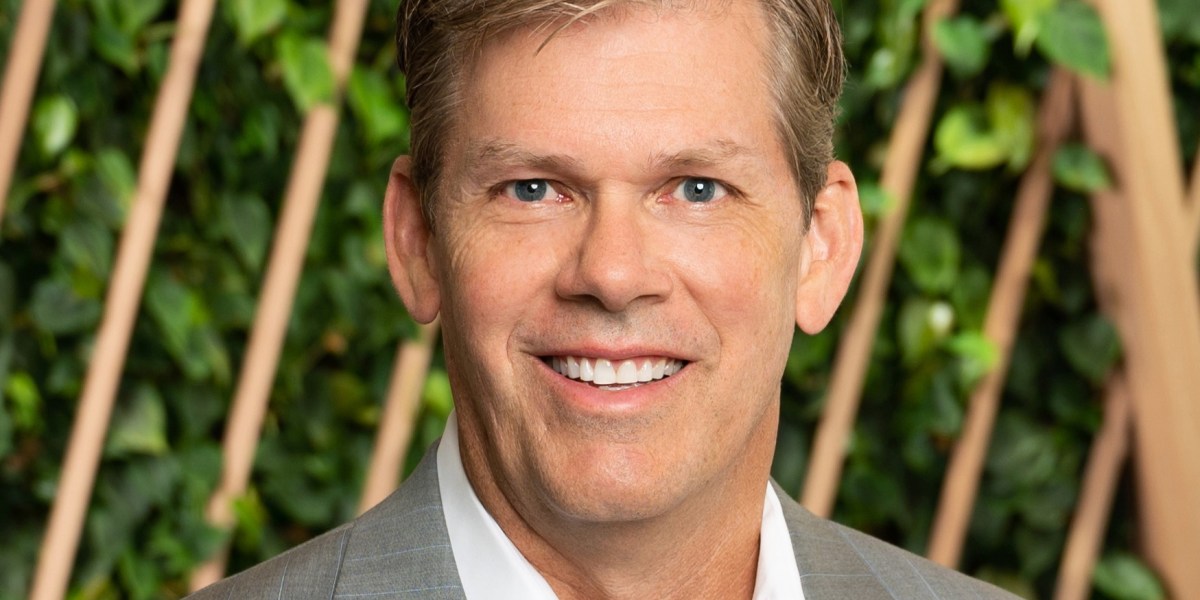
$90 billion Waste Management CEO worked trash routes at 1 a.m. with workers—here’s why

Published

on


For a night owl like Waste Management CEO Jim Fish, waking up for 1 a.m. safety briefings could make for a brutally long day. But Fish did it because his late father-in-law, a union pipefitter, told him if he showed up to those meetings—not just once, but regularly—he would learn a lot and build a rapport with line workers. 

Fish’s father-in-law hit the nail on the head.

“It was so valuable to me in terms of learning the business and learning the people,” Fish told Fortune. “Part of what I learned—I was always a finance guy—was that it’s not always just dollars and cents.”

Waste Management has named safety as a cornerstone of the company’s operations and has set a goal to reduce its total recordable injury rate (TRIR) by 3% annually with a TRIR target of 2.0 by 2030. If the company hits the target, that means workers would have suffered two recordable injuries per 100 employees per year or per 200,000 hours worked. Last year, the company reduced overall injuries by 5.8%, according to its sustainability report, and lost-time injuries by 2.4%.

“You make investments in safety or investments in people and they don’t necessarily show up on the bottom line—at least not immediately,” Fish said. “Safety tends to show up in longer terms, and if you do have a safe organization, that will eventually show up on your income statement—but it takes a while.”

Waste Management, with $22 billion in revenue in 2024, is the U.S. and Canada’s largest provider of trash and recycling transfer and disposal services. With a market cap of about $90 billion, the Houston, Tex.-based company counts more than 60,000 employees. Fish, 63, has served as president and CEO since November 2016 but has been with the company for two decades. Prior to taking the top job, Fish held roles including chief financial officer, senior vice president of the eastern group, and area VP for Pennsylvania and West Virginia. 

Up until halfway through his time as CFO, Fish would go out about every four to six weeks and haul trash with crews—generally about every time he went to a middle-of-the-night safety meeting. Eventually, the board told him they weren’t crazy about the idea of him throwing trash, but he could still ride along in the trucks with workers. Now, Fish said he visits about 20 to 30 sites a year, and takes about five to 10 trips to ride along with drivers. He tells them any subject is fair game, including sports, politics, safety, or pay, but they have to make sure to chat because Fish might fall asleep otherwise. 

“Most drivers are a little nervous when I get in the cab but after about 10 minutes they kind of loosen up and tell me what they’re thinking,” said Fish. 

That’s why, he said, those early morning meetings were so valuable, and his learnings went far beyond injury stats and safety briefings. 

He picked up on why Boston’s productivity plummeted during winter months, said Fish. He couldn’t see why there would be such a difference between winter and summer but then going out in below-zero temperatures where his hands and feet were freezing changed his mind completely, he said. It’s the kind of issue that might only show up as a data fluctuation in a corporate office but becomes clearer and more meaningful after riding through icy routes covered with snow-engulfed trash and recycling cans. 

“It makes a huge difference if there’s ice and snow on the road or if the can is iced in,” said Fish. “And that sounds kind of simple, but it wasn’t something that I really, fully even understood sitting in a corporate office until I actually went out into the field.”

Another key learning came from witnessing the diversity of Waste Management’s workforce and making small tweaks to make sure employees were clearly informed.  

While visiting a district in Rhode Island where about 95% of the drivers in the company’s residential business line were either Puerto Rican or Dominican, Fish attended a 1 a.m. briefing. The safety results in that line of business were pretty “terrible,” Fish admitted, and he wanted to understand why. He picked up on the fact that most of the workers spoke English but their first language was Spanish. The manager there didn’t speak any Spanish, so he used another driver to translate for him while he delivered safety information. 

Fish decided to look into promoting somebody from the district who wanted to be a manager—and who was bilingual. The company made the promotion to a driver.

“Magically, or probably not magically, their safety results turned around immediately,” said Fish. “There was something being lost in the translation.”

The change also addressed an inadvertent signal that was being sent to workers, which was that they might never have an opportunity to move up in the company because they were native Spanish speakers, he said. The inadvertent message was that the managers there would likely always be “a white guy like Jim,” said Fish, who has also been working regularly on his Spanish. 

Explicitly addressing that narrative improved safety results and empowered people to apply for positions they might not have thought they were qualified for previously, he said. The company also hired someone at the site to teach Spanish to other workers so they could become conversant. 

“Their safety results absolutely turned around and I don’t think that was a coincidence at all,” he said. “Nothing was lost in translation anymore and the drivers couldn’t say, ‘Well, I didn’t understand what my manager was saying’ because the manager was saying it in both English and Spanish.”

The bilingual manager Waste Management hired at the site became one of the company’s best, said Fish. He unfortunately passed away from a heart attack, said Fish, but he continued up the ladder from driver to route manager, district manager, and then senior district manager. He likely would have continued moving up if he hadn’t tragically passed away. Fish noted the manager was also singled out to go on a trip for the top 200 employees to the Ritz Carlton in Hawaii with his wife. 

Ultimately, in Fish’s view, the core of the company and where Waste Management differentiates itself from competitors, is at the critical field level—not the C-suite. Better understanding the workforce and how it can be more productive and efficient could best be gleaned by showing up to the grueling early mornings every month early in his executive career.

“I know my title is important, but I’m not more important than anybody else at this company,” said Fish. “I’m not a better employee or better father… we just have different level positions.”


Source link

Continue Reading

Business

Why a CFO’s top skill isn’t capital allocation—it’s influence

Published

on


Good morning. Happy New Year! Today’s CFOs are expected not only to own the numbers, but also to act as core strategists, digital leaders, and enterprise change agents.

I recently talked about this topic with Robinhood CFO Jason Warnick and his successor, Shiv Verma, SVP of finance and strategy and treasurer. At Robinhood, the Menlo Park, Calif.–based fintech and asset trading platform, Verma is stepping into the top finance job. Warnick is retiring and moving into an advisory role this quarter, remaining with the company until Sept. 1.

Earlier in his career, Warnick—who joined Robinhood in late 2018 after two decades at Amazon—said he was once asked by a mentor, “What do you think is the most important aspect of a CFO’s job?” Warnick answered, “capital allocation.”

“That’s important; that’s what drives future returns for the company,” he recalls his mentor telling him. “But you don’t get to allocate the capital yourself.” The most important skill a CFO has, Warnick said, is influencing the ultimate decision-maker—the CEO. “So our job is to bring data and finance into the discussion and influence the outcome,” he said.

Verma has spent a lot of time with Robinhood CEO Vlad Tenev, the board, and cross-functional leaders in engineering, legal, compliance, and risk, focusing on the decisions that matter most for Robinhood’s long-term trajectory, he said.

While both roles are critical on their own, the quality of the CEO–CFO partnership often matters more than what either leader can achieve individually. CEOs are leaning on their CFOs as strategic thought partners as businesses confront rapid technological change and evolving stakeholder expectations. In that context, finance chiefs provide enterprise-wide visibility and help turn ambiguity into concrete scenarios, trade-offs, and decisions.

Verma, now Tenev’s strategic partner, describes Robinhood’s past seven years as a compressed Silicon Valley life cycle: early build-out, pandemic-era hypergrowth, the GameStop frenzy, and an IPO, followed by a sharp selloff. In 2022, Robinhood cut roughly 30% of its workforce and shifted to a general manager model intended to cut excessive management layers and give managers broader responsibility for their businesses. “We’ve come a long way,” Verma said, “to a very skilled public company.” In 2024, the company earned $2.95 billion in total net revenue and annual net income of $1.41 billion. In September, it joined the S&P 500.

Robinhood has also managed to create a model of corporate governance and succession planning. To find out how the company handled the CFO transition, you can read more here.

Sheryl Estrada
sheryl.estrada@fortune.com

Leaderboard

Jason Chung was promoted to CFO of Riot Platforms, Inc. (Nasdaq: RIOT), effective March 1, 2026. Chung succeeds Colin Yee, who has served as the company’s CFO since 2022. Chung currently serves as Riot’s EVP and head of corporate development and strategy, and brings two decades of experience in investment banking and corporate finance to the CFO role. He will assume leadership of Riot’s finance organization while continuing to oversee corporate development and investor relations. 

Dan Moorhead was appointed CFO of Beyond Air, Inc. (Nasdaq: XAIR), a commercial stage medical device and biopharmaceutical company, effective Jan. 5. Duke Dewrell, the company’s controller, who served as interim CFO, will resume his prior role as of that date. Moorhead brings more than 20 years of finance leadership experience. He previously served as CFO of Zynex, Inc. Before that, Moorhead spent 10 years at Evolving Systems, Inc. (acquired by PartnerOne, Inc.), serving as CFO following earlier roles as VP of finance and administration and corporate controller.

Big Deal

Elon Musk’s electric vehicle company Tesla (No. 43 on the Fortune 500) released its fourth-quarter 2025 production, deliveries, and deployments report on Friday. 

In Q4, Tesla produced over 434,000 vehicles, delivered over 418,000 vehicles, and deployed 14.2 GWh of energy storage products, which is a record for deployments, according to the company. Tesla sales totaled 418,227 vehicles in Q4, short of analysts’ expectations of around 440,000 vehicles, including a FactSet consensus of roughly 440,000. Sales were impacted in part by the expiration of a $7,500 tax credit for EV purchases that was ended by the Trump administration at the end of September. 

For the full year 2025, the company delivered 1.64 million vehicles, down about 9% from 1.79 million in 2024. In comparison, Chinese competitor BYD sold about 2.26 million electric vehicles in 2025, now making it the world’s biggest EV maker.

Going deeper

“5 takeaways on Venezuela in the aftermath of Maduro: A memo to CEOs” is a new Fortune opinion piece by Jeffrey Sonnenfeld, the Lester Crown Professor of Leadership Practice at the Yale School of Management and founder of the Yale Chief Executive Leadership Institute.

Three of the key themes Sonnenfeld argues every CEO should think about are:

—”Consider an immediate, temporary moratorium on executive travel between the U.S. and Latin America, and take care in Lower Manhattan.”

— “Hold off on public statements of support or condemnation until the justice process in the U.S. unfolds, Venezuelan streets and government processes are stable, succession is clear, and public statements emerge from Latin American nations.”

—”Prepare for prospective Latin American backlash against U.S. enterprises with major market engagement and trade relations.”

You can read his complete opinion piece here.

Overheard

“You make investments in safety or investments in people, and they don’t necessarily show up on the bottom line—at least not immediately.”

—Waste Management CEO Jim Fish told Fortune in an interview. “Safety tends to show up in longer terms, and if you do have a safe organization, that will eventually show up on your income statement—but it takes a while,” Fish said.


Source link

Continue Reading

Business

Trump needs to calm the GOP after saying he’s not afraid to put troops in Venezuela

Published

on


President Donald Trump’s military intervention in Venezuela will pose a fresh test of his ability to hold together a restive Republican coalition during a challenging election year that could be defined by domestic concerns like health care and affordability.

While most Republicans lined up behind the president in the immediate aftermath of the stunning U.S. mission to capture Venezuelan leader Nicolás Maduro and bring him to New York to face criminal charges, there were signs of unease across the spectrum within the party. In particular, Trump’s comments about the U.S. positioning itself to “run” Venezuela have raised concerns that he is abandoning the “America First” philosophy that has long distinguished him from more traditional Republicans and helped fuel his political rise.

“This is the same Washington playbook that we are so sick and tired of that doesn’t serve the American people, but actually serves the big corporations, the banks and the oil executives,” said Rep. Marjorie Taylor Greene of Georgia, a former Trump ally who is resigning on Monday, in an interview with NBC’s “Meet the Press” on Sunday.

Those concerns were shared by some who are not associated with the party’s far-right flank.

Rep. Brian Fitzpatrick of Pennsylvania, a moderate who is one of the most vulnerable Republicans in the November midterms, said in a statement that “the only country that the United States of America should be ‘running’ is the United States of America.”

Those comments reflect the sensitive dynamics between Trump and his fellow Republicans at the outset of an election year in which their party risks losing control of Congress. While the president’s dominance remains undisputed, the ironclad grip that he has held over the party has faced unusual challenges in recent months. Blocs of Republicans have banded together to pressure Trump to release the Jeffrey Epstein files. Others have been vocal in encouraging Trump to take concerns about affordability more seriously.

Trump’s aggressive vision of U.S. dominance

Few issues are as central to Trump’s political brand as ensuring that the U.S. does not get entangled in seemingly endless foreign conflicts at the expense of domestic goals. During a 2016 Republican presidential debate, for instance, he described the war in Iraq as a “big, fat mistake.”

But on Saturday, Trump said he was “not afraid of boots on the ground” in Venezuela if that was deemed necessary, and he framed his actions as prioritizing the safety and security of Americans. He articulated an aggressive vision of U.S. dominance in the Western Hemisphere, and he told reporters it was important to “surround ourselves with good neighbors.”

However, much like the Iraq War, a president’s early confidence after a dramatic military action can sometimes meet more sobering realities that drain domestic political support.

In Venezuela, U.S. troops could be placed in harm’s way again as Trump warns that more military operations may be in the works. An ongoing conflict could worsen the hemisphere’s refugee crisis, something the White House has tried to tamp down with stricter border controls. In addition, there are questions about how much cooperation the U.S. will receive from officials still in Venezuela or how easily the country’s oil reserves could be tapped to fulfill Trump’s goal of extracting more energy with Maduro out of the picture.

Trump’s comments this weekend about revitalizing the oil industry in Venezuela are in line with some of the earliest critiques he made of the handling of the Iraq War. During a 2013 speech before the Conservative Political Action Conference, Trump said the U.S. should “take” oil from Iraq and “pay ourselves back.”

Frustration with the handling of the Iraq War contributed to major gains for Democrats in the 2006 election and helped create the conditions for Barack Obama to be elected to the presidency two years later. Given the baggage surrounding those wars, Trump allies insist that the actions this weekend in Venezuela are different.

“Venezuela looks nothing like Libya,” Secretary of State Marco Rubio said on “Meet the Press. “It looks nothing like Iraq. It looks nothing like Afghanistan. It looks nothing like the Middle East other than the Iranian agents that are running through there plotting against America, okay?”

Senate Intelligence Committee Chairman Tom Cotton argued that the 1989 ouster of Manuel Noriega in Panama is a better comparison.

“That was a successful operation,” Cotton said on CNN’s “State of the Union.” “I believe, in the long run, this will be too.”

Still, amid some of the pushback about the U.S. taking expansive responsibility for managing Venezuela, Rubio suggested a more limited role. He said that Washington would not handle day-to-day governance of the South American country other than enforcing an existing “oil quarantine” on Venezuela.

There’s not much organized GOP opposition to the strikes

It is not clear that any forceful, organized opposition to Trump’s Venezuela policy is emerging within the GOP. Instead, many lawmakers appear to be giving the Republican administration some room and, at most, offer some warnings.

Sen. Susan Collins of Maine, who faces a potentially challenging reelection campaign this year, called Maduro a “narco-terrorist and international drug trafficker” who should stand trial even, as she said “Congress should have been informed about the operation earlier and needs to be involved as this situation evolves.”

Even Sen. Rand Paul of Kentucky, who often criticizes military interventions, did not specifically oppose Trump’s actions. He wrote on social media that “time will tell if regime change in Venezuela is successful without significant monetary or human cost.”

Many Democrats denounced Trump’s actions in Venezuela and the Democratic National Committee quickly sought to raise money by blasting “another unconstitutional war from Trump.”

Rep. Alexandria Ocasio Cortez, D-N.Y., rejected the administration’s argument that it was combating drug crimes, saying on X that the White House is instead focused on “oil and regime change” while seeking to “to distract from Epstein + skyrocketing healthcare costs.” Former Transportation Secretary Pete Buttigieg said the strike was part of an “old and obvious pattern” where an “unpopular president — failing on the economy and losing his grip on power at home — decides to launch a war for regime change abroad.”


Source link

Continue Reading

Business

Crude oil prices rise after Maduro ouster as Wall Street braces for jobs data

Published

on


Stock futures and oil prices edged higher on Sunday evening as investors began to digest the implications of the U.S. military raid on Venezuela that captured Nicolas Maduro.

While the country has the world’s largest proven oil reserves, production has been waning for years amid U.S. sanctions, mismanagement by the Maduro regime, and underinvestment.

President Donald Trump said Saturday that Maduro’s removal will unleash a surge of investment in Venezuela’s oil industry and revive output, though analysts have said that could take years.

Meanwhile, Venezuela’s shrinking influence in the world’s oil landscape has Wall Street downplaying much near-term effects from U.S. intervention there.

“The physical global oil market situation remains the same. Oil prices have declined due to an oversupplied global oil market,” said Rob Hummel, senior portfolio manager at Tortoise Capital Management, said in a note. “The current events in Venezuela don’t change this dynamic.”

U.S. oil futures rose 0.19% to $57.43 a barrel, and Brent crude climbed 0.28% to $60.92 a barrel, with both benchmarks reversing earlier losses.

OPEC+ also backed plans to keep production steady through the first quarter and hold off on any further hikes, as oil markets still face a supply glut.

Futures tied to the Dow Jones industrial average were essentially flat, down 5 points. S&P 500 futures were up 0.10%, and Nasdaq futures added 0.32%.

The yield on the 10-year Treasury was unchanged at 4.191%. The U.S. dollar was up 0.14% against the euro and up 0.22% against the yen. 

Gold rallied 1.7% to $4,403.70 per ounce, and silver jumped 5.4% to $74.86. Bitcoin edged up 2.3% to $92,265.

After the successful Venezuela raid, Trump said he is still eyeing Greenland and warned Cuba is “very similar” to the Maduro regime.

But the economic calendar may bring his focus back on the U.S. economy rather than more foreign adventures. The upcoming batch of numbers is also highly anticipated as they will largely be free from distortions related to the government shutdown.

On Monday, the Institute for Supply Management will release its manufacturing activity index. On Wednesday, ADP puts out its private-sector payroll report, and the Labor Department publishes job opening and turnover report.

And on Friday, the Labor Department will issue its monthly jobs report, with Wall Street expecting a gain of just 54,000 and another increase in the unemployment rate to 4.7%.


Source link

Continue Reading

Trending

Copyright © Miami Select.