Connect with us

Business

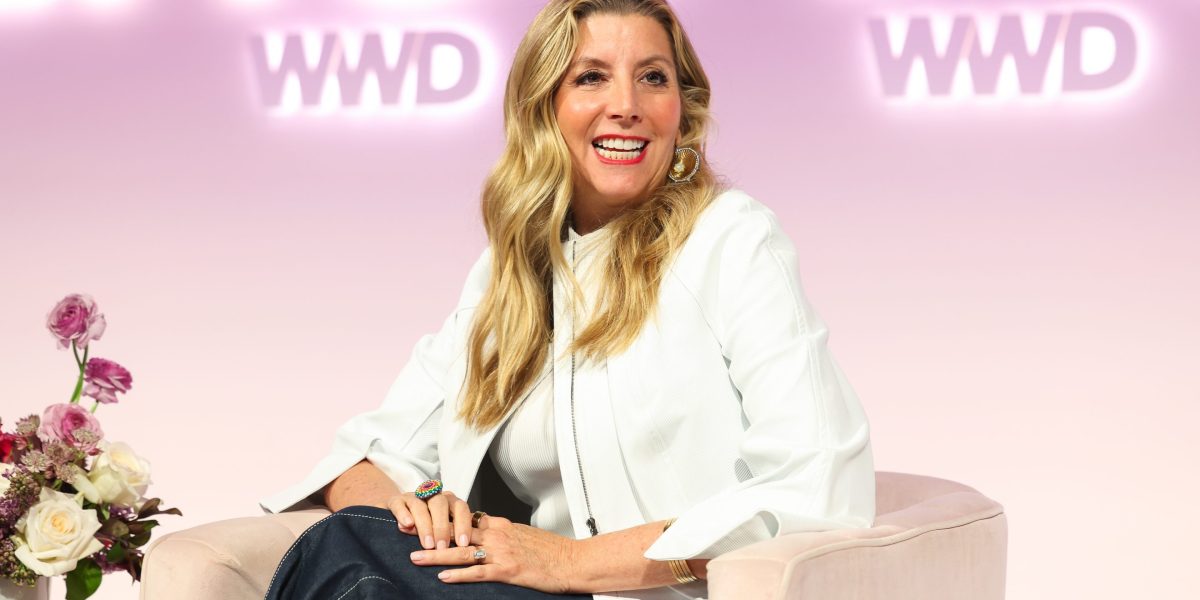
6 ‘unhinged’ things Spanx founder Sara Blakely did that ultimately shaped her $1.2 billion empire

Published

on


Sara Blakely ideated Spanx while she was a fax machine salesperson in the late 1990s. She was getting dressed for a party and wanted to wear her white pants that had hung in her closet for months—but she didn’t have the right undergarment to wear with them.

She wanted a “smooth look” without the bulk of a classic girdle, so she cut off the feet of her control-top pantyhose—and Spanx was born. 

“I wanted my clothes to fit better, and so my own butt was the inspiration,” Blakely said during Fortune’s 2014 Most Powerful Women Summit. “I might be the only woman in the world grateful to my cellulite.”

That moment is eventually what would make her a billionaire, but her success story didn’t happen overnight. 

In an Instagram post, Blakely shared six “unhinged” things she did while starting Spanx, where she served as CEO until 2021. Her company—which she launched with just $5,000 in savings—is worth $1.2 billion today. Blakely became a billionaire in 2012, and was named the youngest self-made female billionaire by Forbes that year. Forbes estimates her current net worth at $1.2 billion.

Spanx license plate

Blakely said she bought a Spanx license plate as a means of advertising, according to her Instagram post. She said women started following her home asking her for free Spanx, which can now cost up to $148 depending on the product. 

Now, Spanx relies heavily on celebrity endorsements and influencer marketing. It wasn’t until 2024 that the brand launched its first global brand campaign, “We Live In Spanx,” which featured track star Allyson Felix, social-media star Nadia Caterina Munno, and women’s rights advocate and model Charli Howard.

Reality star

Against the advice of her parents, boyfriend, and lawyer, Blakely signed up for a reality TV show, The Rebel Billionaire: Branson’s Quest for the Best. From 2004-2005, Blakely starred on the show hosted by British entrepreneur and philanthropist Sir Richard Branson. 

She finished second, but still won $750,000, and used that money to start her own philanthropic organization. The Sara Blakely Foundation has donated more than $5 million in scholarships and grants to aspiring female entrepreneurs.

“20 years ago, I started Spanx with $5,000 in savings and I see this as a time to pay it forward. Small business is the backbone of our culture,” Blakely wrote in a 2020 LinkedIn post. “I know what it’s like to be a small business owner, and I want to provide some relief to these entrepreneurs during this time.”

Writing to Oprah

Blakely says she mailed her Spanx prototype and a handwritten note to media mogul Oprah Winfrey, telling her how much Winfrey had inspired her and asked her to try her invention. 

In 2006, Oprah praised Blakely’s invention, and even named it as her favorite product of the year.

“Spanx really changed the way I wore clothes,” Oprah said on her show in 2006. “When Sara first came on The Oprah Show to tell us about her idea for Spanx, I knew it was brilliant. We’d all been cutting off our pantyhose for years! So from the moment I wore my first pair, they became a staple in my wardrobe.”

Paying her friends

Blakely also admitted she paid all of her friends to go into Neiman Marcus department stores and buy her product so “it wouldn’t tank.” The product launched at Neiman Marcus in 2000. Blakely said she had just 10 minutes to first pitch Neiman Marcus and she had to buy her own flight from Atlanta to Dallas to visit the company’s buying office.

“The buying rep immediately said ‘Oh I get it. It’s brilliant—and I’m gonna put it in seven stores,” Blakley said during the Fortune MPW interview. “It was unbelievable.”

Shipping with no tracking

While Spanx was still in startup mode, Blakely said she shipped out orders in regular envelopes with “absolutely no tracking numbers.” Now, Spanx has its own sophisticated e-commerce site and is sold across many department stores in more than 50 countries.

Sneaking into stores

Blakely also admitted she would sneak into stores where Spanx were being sold and would move the products from the back corner to right by the cash registers. 

“You gotta do what you gotta do,” Blakely wrote.

More from Most Powerful Women:


Source link

Continue Reading

Business

The average worker would need to save for 52 years to claw their way of of the middle class

Published

on


The exact number of years of saving it’d take for the average worker to claw out of the middle class bracket has been revealed—and it’s nearly half a century.

Sobering new research from the think tank Resolution Foundation shows that for aspirational Brits looking to move up the wealth ladder, not even a lifetime of savings would be enough. 

In fact, the average worker would need to save their earnings for 52 years, to raise £1.3 million ($1.7 million), the amount needed to move from the middle and become as wealthy as the richest 10%.

And it gets worse: That’s with zero outgoings.

“Wealth gaps in Britain are now so large that a typical full-time employee saving all their earnings across their entire working life would still not be able to reach the top of the wealth ladder,” Molly Broome, senior economist at the Resolution Foundation and the lead author of the report, wrote.

And for those who happen to be born in the working class, the odds are increasingly stacked against them. 

“Wealth mobility in Britain is low—people that start life wealthy tend to stay wealthy, and vice versa,” Broome added.

As the saying goes, money makes money. The report revealed that the key driver of widening inequality is the so-called “passive” gains. Essentially, those who bought property and invested their money in pensions have seen their wealth balloon since 2010.

Workers in the U.S. would need to save for 70 years to unlock the American dream 

As inflation squeezes workers in a cost-of-living vise, paired with a job crisis that’s not been this bad since the financial crisis, and AI threatening to make it even worse, the salary it takes to be considered rich keeps climbing further out of reach. And the issue is transatlantic.

Even in the U.S., workers say they’d need at least $2.3 million to feel rich (up $100k from two years ago). Meanwhile, separate research highlights they’d need a staggering $4.4 million to achieve the American Dream—the house in the suburbs, two children, an annual vacation, and a new car in the drive.

In fact, Investopedia did the math and calculated that achieving those milestones would cost over $1 million more than most Americans will make in their lifetime.

With median weekly earnings of full-time workers averaging at $1,214, according to the Bureau of Labor Statistics, it would take 36 years of full-time work to feel rich with $2.3 million in the bank. That’s before a single bill is paid, and still $2.1 million short of affording the American Dream.

It would take the average American worker nearly 70 years without a single outgoing to reach that $4.4 million benchmark—far longer than most people will work in a lifetime, and that’s without even considering automation’s impact on the future of work, inflation, or any unexpected financial shocks.


Source link

Continue Reading

Business

Why restricting graduate loans will bankrupt America’s talent supply chain

Published

on


Federal Reserve Chair Jerome Powell said at his December 10 press conference that the U.S. labor market is becoming increasingly K-shaped: growth, opportunity, and resilience accrue to those with assets, while everyone else absorbs volatility.

What’s becoming clear is that this divide is no longer confined to the labor market. It’s now embedded in its foundation: education.

When access to advanced degrees depends not on ability or workforce demand, but on whether a household can absorb six figures of upfront cost, stratification accelerates. The upper branch compounds advantage through credentialed mobility. The lower branch absorbs risk, debt, and stalled progression.

That dynamic isn’t neutral. It’s destabilizing.

That is exactly what the restructuring of federal graduate student lending under the One Big Beautiful Bill Act (OBBBA) does. Framed as fiscal discipline, it quietly rewires who gets to advance in the American economy—and who pays more just to try.

A Two-Tiered Talent System

Beginning July 1, 2026, the OBBBA eliminates the Graduate PLUS loan program and replaces it with lifetime federal borrowing caps. Students in a narrow set of “professional degrees” may borrow up to $200,000. Everyone else, regardless of licensure requirements or labor-market demand, is capped at $100,000.

This distinction isn’t grounded in labor force need. It’s grounded in academic prestige.

Medical and law degrees qualify for the higher cap. Advanced nursing, social work, education, and public-health degrees do not, despite requiring licensure, despite severe labor shortages, and despite being the backbone of the care economy.

For many students, that $100,000 cap isn’t theoretical. It’s binding. Especially for those who already carry undergraduate debt, it can mean running out of federal aid before finishing a required degree.

That’s not cost containment. It’s credit rationing.

And when the federal backstop disappears, students don’t stop needing capital. They’re pushed into the private market, where interest rates are higher, protections are weaker, and access depends on credit history or family wealth.

From Merit to Capital

Yale Law Professor Daniel Markovits, author of The Meritocracy Trap, argues that our modern systems of advancement have created a new aristocracy, where the elite maintain dominance not through titles, but through the monopolization of expensive human capital.

Graduate education has now been folded directly into that system. In my recent discussion with Karen Boykin-Towns, Vice Chair of the NAACP National Board of Directors, and Keisha D. Bross, the NAACP’s Director of Opportunity, Race, and Justice, we identified how the OBBBA accelerates this dynamic, creating a capital-versus-merit system.

By capping federal loans while eliminating Grad PLUS, the government isn’t discouraging debt. It’s outsourcing access to private capital. Families with liquidity pay tuition directly. Everyone else pays interest, often at double the rate. This creates a sharp bifurcation:

  1. The Upper Branch: Students with “Capital” (generational wealth or family assets) can bypass the cap using private resources, continuing their upward trajectory into high-value careers.
  2. The Lower Branch: Students with only “Merit” (talent and drive but no family wealth), disproportionately Black women, are shut out.

The result isn’t meritocracy. It’s capital-screened mobility.

And when capital, not capability, determines who becomes a nurse practitioner, a clinical social worker, or a public-health leader, the economy doesn’t get leaner. It gets weaker.

The Intersectional Cost of ‘Money Out

These loan changes don’t hit all workers equitably.

Women dominate the fields most affected by the lower cap. At least 80% of degree holders in nursing, social work, and elementary education are women. These are precisely the programs now classified as “non-professional.”

Even within the same occupations, women earn less than men. Forcing them to finance advanced degrees with higher-cost private loans raises debt-to-income ratios at career entry, increasing default risk and long-term financial strain.

For Black women, the impact is sharper still.

Black women who attended graduate school hold approximately $58,000 in federal student debt on average, more than white women or Black men. Nearly half of the Black–white student debt gap is driven by graduate borrowing, reflecting how essential advanced degrees are for upward mobility in the absence of intergenerational wealth.

Black women are also heavily concentrated in healthcare and social services, fields now subject to the $100,000 cap. Remove Grad PLUS, and the math changes fast.

Federal graduate loans currently carry fixed rates under 9%. Private loans can soar as high as 18%, particularly for borrowers without prime credit or co-signers. That gap isn’t abstract. It’s interest compounding over decades. 

Consider a Black woman pursuing an MSW who needs $30,000 beyond the new federal cap to finish her degree. Forced into the private market, she trades a federally protected 9% rate for a predatory 18% rate.

This shift actively destroys the capacity to build generational wealth. This is also a multigenerational risk: Black women are the breadwinners in 52% of Black households with children. When we financially hobble the primary earner, we are not just restricting her mobility; we are capping the economic future of the 9 million children relying on those households.

We are cannibalizing future retirement security to pay for today’s policy experiment.

Educated, and Still Locked Out

Economic policy is never gender-neutral, and it is rarely race-neutral. The OBBBA financing caps disproportionately target Black women, a demographic that serves as a linchpin in both the educated workforce and the Care Economy.

There’s a persistent myth that student debt reflects low completion or poor outcomes. The data tells a different story. In interviews conducted with NAACP leadership, they shared job-fair data showing that more than 80% of applicants held a bachelor’s degree or higher. These are educated workers, many with advanced training, struggling to access stable, well-paid roles.

They did what the system asked. They earned credentials. They pursued licensure. And now the rules are changing underneath them. That isn’t a failure of effort. It’s a failure of policy design.

The $290 Billion Macroeconomic Bill

The consequences don’t stop at individual balance sheets. The sectors pushed into the lower loan cap, nursing, social work, and public health, are already facing acute shortages. The U.S. currently has an estimated 1.8 million vacant care jobs.

Failure to address these shortages is projected to cost the economy roughly $290 billion per year in lost GDP by 2030.

When the talent pipeline narrows:

  • Employers compete harder for fewer workers, driving wage and signing-cost inflation.
  • Turnover rises. During the pandemic alone, excess nursing turnover cost between $88 billion and $137 billion.

This is how a student-loan rule becomes a productivity drag.

What a Smarter System Looks Like

If the goal is fiscal responsibility and economic growth, there is a better path.

First, the definition of “professional degree” must reflect labor-market reality, not academic hierarchy. Licensed, high-shortage fields like advanced nursing and clinical social work should qualify for the higher cap. We must value the labor that sustains society as highly as the labor that litigates it.

Second, we need non-debt investment in critical workforce education. Grants and fellowships targeted to shortage fields reduce long-term risk while maximizing return. A graduate degree delivers an estimated net lifetime value of over $300,000 for women. That value should accrue to the economy, not be siphoned off by interest payments.

Third, employers must recognize this as a supply-chain issue. Talent doesn’t appear by accident. Corporate co-investment in education, through tuition support and loan forgiveness, offers one of the highest returns available. Global research suggests health workforce investments can generate returns of up to 10-to-1.

The OBBBA was designed to manage debt. In its current form, it manufactures fragility. It hardens the K-shaped economy at its foundation. It substitutes capital for merit. And it weakens the very labor force the economy depends on to grow.

If we care about productivity, competitiveness, and long-term stability, this is the wrong place to cut. America doesn’t have a talent shortage problem. It has an access problem. And this policy just made it worse.

The opinions expressed in Fortune.com commentary pieces are solely the views of their authors and do not necessarily reflect the opinions and beliefs of Fortune.

This story was originally featured on Fortune.com


Source link

Continue Reading

Business

Sam Altman says in 10 years college graduates will be working in space

Published

on


Now, even OpenAI CEO Sam Altman—one of Silicon Valley’s biggest leaders driving the AI revolution—is admitting the elephant in the room is true: AI will wipe out some jobs entirely. However, the tech billionaire insists the coming decade could be the most exciting time in history to start a career, especially for anyone who’s ever dreamed of working in space.

Not only will they be reeling in sky-high salaries, but Altman says they’ll also be “feeling so bad for you and I that we had to do this really boring, old work and everything is just better.”

“In 2035, that graduating college student, if they still go to college at all, could very well be leaving on a mission to explore the solar system on a spaceship in some completely new, exciting, super well-paid, super interesting job,” Altman told video journalist Cleo Abram.

Though it’s unclear how widespread space exploration will expand in the coming years—considering NASA’s broad goal of getting to Mars in the 2030s—aerospace engineers are growing faster than the national average of all jobs, according to data from the U.S. Bureau of Labor Statistics. And they bring home an envy-inducing annual paycheck of over $130,000.

How AI will reshape the workplace 

Other tech pioneers have AI predictions that are more grounded on Earth—but still alluring to workers. For example, billionaire Microsoft cofounder Bill Gates said that the technology might dramatically reduce the length of the workweek, thanks to humans no longer being needed “for most things.”

“What will jobs be like? Should we just work like two or three days a week?” the tech billionaire told Jimmy Fallon on The Tonight Show.

Nvidia CEO Jensen Huang echoed that AI has already given his workers “superhuman” skills—something that will only increase as the technology advances.

“I’m surrounded by superhuman people and super intelligence, from my perspective, because they’re the best in the world at what they do. And they do what they do way better than I can do it. And I’m surrounded by thousands of them. Yet it never one day caused me to think, all of a sudden, I’m no longer necessary,” he separately told Cleo Abram on her Huge Conversations podcast series.

While Altman admitted that his crystal ball remains foggy—and that the true direction of AI is unclear—he is actually envious of Gen Z professionals starting off their careers: “If I were 22 right now and graduating college, I would feel like the luckiest kid in all of history,” he added to Abram.

Fortune reached out to OpenAI for comment.

AI will make one-person, billion-dollar companies

After the launch of OpenAI model, GPT-5, Altman declared the world has access to technology equivalent to a “team of PhD-level experts” right in their pocket. And as a result, the CEO said it will be easier than ever for one person to create a business that used to take “hundreds” of people—all it takes is coming up with a great idea and mastering AI tools.

“It is probably possible now to start a company, that is a one-person company that will go on to be worth more than a billion dollars, and more importantly than that, deliver an amazing product and service to the world, and that is like a crazy thing,” he said.

Billionaire Mark Cuban has gone even further with his prediction, saying that AI could give Elon Musk a run for his money as the world’s richest person. 

“We haven’t seen the best or the craziest of what [AI is] going to be able to do,” Cuban told the High Performance podcast. “And not only do I think it’ll create a trillionaire, but it could be just one dude in the basement. That’s how crazy it could be.”

A version of this story originally published on Fortune.com on August 11, 2025.

More on the future of work:

  • ‘Godmother of AI’ says degrees are less important in hiring than how quickly you can ‘superpower yourself’ with new tools
  • Forget the four-day workweek, Elon Musk predicts you won’t have to work at all in ‘less than 20 years’
  • Amazon founder Jeff Bezos says ‘millions of people’ will be living in space by 2045—and robots will commute on our behalf to the moon
Join us at the Fortune Workplace Innovation Summit May 19–20, 2026, in Atlanta. The next era of workplace innovation is here—and the old playbook is being rewritten. At this exclusive, high-energy event, the world’s most innovative leaders will convene to explore how AI, humanity, and strategy converge to redefine, again, the future of work. Register now.


Source link

Continue Reading

Trending

Copyright © Miami Select.