
Politics
6 ideas Legislature can’t afford to ignore in 2026

Florida enters 2026 with momentum most states would trade for in a heartbeat. The economy is growing. In-migration is cooling to a sustainable pace. State debt has been reduced dramatically. The property insurance market is finally showing signs of stability.
That is precisely when Florida tends to get sloppy.
When things are going well, Tallahassee has a habit of governing by headline instead of homework. Victory gets declared early. The hard work gets deferred. And a few years later, we are back in crisis mode wondering how it happened.
Before offering six ideas, there is one principle Florida should keep firmly in mind in 2026: Do no harm. Sweeping proposals, particularly around property taxes, can feel attractive in the abstract while quietly shifting costs onto renters, small businesses, and local services. Reform should be careful, modeled, and honest about tradeoffs. Florida does not need a fiscal sugar high followed by a hangover.
With that guardrail in place, here are six ideas the Legislature should take seriously if it wants this period of stability to last.

1. Build the housing Florida actually needs.
Florida’s housing problem is not mysterious. We have made it illegal in much of the state to build the kind of housing working families can afford. Minimum lot sizes, single-use zoning, discretionary approvals, and outdated parking requirements have turned land scarcity into official policy.
There is no silver bullet for housing. This is not a problem solvable with money alone. No single program, tax break, or mandate fixes a supply problem created over decades. It takes bold policy built on best practices. The fix is not more subsidies or press conferences. It is legalizing modest density the right way: duplexes, triplexes, accessory dwelling units, smaller minimum lot sizes, and lot splits in urbanized areas. Smaller homes on smaller lots reduce land costs, shorten commutes, and help retain the workforce on which Florida depends.
Distance should not be Florida’s primary housing subsidy.
In response to this growing crisis, the Florida Policy Project convened more than 30 organizations to form the Sunshine State Housing Alliance. The Alliance provides data, benchmark research, and policy solutions. For more than a year, the Alliance has delivered actionable, best practice recommendations to decision-makers. To date, leaders in the Florida Senate, including Sens. Stan McClain and Don
2. Future-proof Florida’s insurance solutions.
Florida’s insurance market is stabilizing because capital is returning and litigation reform is working. That progress is real, but it will not last on autopilot. Global disasters that drive reinsurance prices come and go, while the lawsuit industry never sleeps.

Citizens was designed as a temporary shock absorber, not a permanent warehouse for risk. The long-term goal should be clear: A shrinking Citizens portfolio that moves steadily toward zero policies, except where risk is truly uninsurable. Citizens has taken meaningful steps to depopulate, and the Legislature should ensure it does not grow by default.
To avoid that drift, Florida should require regular, independent studies examining which policies persist in Citizens and why and identifying creative pathways to move additional policies into the private market. That analysis should explicitly evaluate tools such as quota share arrangements, reverse auctions of bundled policies, and other risk-transfer mechanisms that attract private capital at scale. Are remaining policies mispriced, trapped by regulation, or genuinely beyond market capacity? Without that feedback loop, Citizens risks becoming permanent by inertia rather than necessity.
At the same time, the Florida Hurricane Catastrophe Fund should be operated at peak efficiency. Properly structured, the Cat Fund is the single most powerful tool the state has today to reduce insurance rates. By providing predictable, well-priced layers of risk transfer, it strengthens insurers’ negotiating position with global reinsurance markets and lowers the cost of capital flowing into Florida. Used correctly, the Cat Fund does not crowd out private capital, it attracts it. Optimizing the Cat Fund alongside a shrinking Citizens portfolio ensures Florida’s insurance risk ultimately rests with diversified global markets, not the state balance sheet.
Florida lowers insurance costs not by denying risk, but by managing it better than anyone else.
3. Fix the condo market with transparency, not just mandates.
Post-Surfside reforms were necessary, but they were not sufficient. Inspections alone do not restore confidence if buyers, lenders, and insurers cannot clearly see an association’s financial health and governance practices.
To stabilize and grow the condominium market, Florida needs a transparent framework for buyers, sellers, seniors, realtors, board members, vendors, and lenders. The state should move toward standardized financial disclosures, reserve adequacy metrics, and independent certification frameworks that reward responsible boards and expose those kicking the can. Well-run associations should benefit from lower borrowing and insurance costs, while poorly governed ones face clear market signals to improve.
Transparency reduces uncertainty. Reduced uncertainty lowers risk. And lower risk ultimately lowers costs. Markets heal faster when good behavior is visible and rewarded.
4. Treat roads like safety systems, not just asphalt.
Florida loses thousands of lives each year to traffic fatalities, yet transportation is still managed as if technology stopped evolving decades ago. That needs to change.
In collaboration with the Tampa-Hillsborough Expressway Authority (THEA) and the Center for Urban Transportation Research (CUTR) at the University of South Florida, the Florida Policy Project released a best-practice report outlining safety challenges and data-driven solutions. Sen. Nick DiCeglie and Rep. Fiona McFarland deserve recognition for filing legislation to modernize Florida’s traffic signalization and improve safety for residents and visitors alike.
AI-enabled traffic signals, sensors, and connected corridors are already reducing crashes and congestion in pilot programs across the country. This is not about chasing buzzwords or futuristic hype. It is about acknowledging that roads are data systems as much as physical ones.
Smart roads save lives, move people more efficiently, and prepare Florida’s infrastructure for what comes next.
5. Create real accountability in Florida’s corrections system.
Chronic understaffing in Florida’s prisons is not a surprise. It is the predictable result of ignoring workforce policy, facilities, and governance year after year. Mandatory overtime and burnout are not a staffing strategy, and crisis budgeting is not oversight.
Florida should establish an independent Corrections Oversight Commission, paired with competitive pay, a long term facilities plan, and technology that reduces staffing pressure. Professionalizing the system costs less and protects public safety far better than perpetual emergency fixes.
Accountability is not optional in a system entrusted with lives and liberty. Sen. Darryl Rouson has filed legislation to create such a best practice Commission.
6. Put Florida’s universities to work before laws are passed.
Florida has world-class universities, yet too many major policy decisions are made after the research window has already closed. That is backward.
Major housing, insurance, transportation, and public safety proposals should be stress-tested by Florida’s public universities before votes are cast. Time-limited Centers of Excellence focused on applied research, not theory, can provide Florida-specific modeling, pilot programs, and transparent data to lawmakers. Governing by evidence consistently beats governing by instinct. Homework should come before headlines.
Florida should establish a two-year John Thrasher Economic Fellowship, placing Florida university economists directly inside the Florida House and Senate at the senior staff level. These embedded analysts would model fiscal impacts, stress-test major proposals, and surface unintended consequences before votes are cast.
For lawmakers, the value is immediate: Independent analysis and better information when decisions matter most. For professors, the benefit is lasting: A deep, practical understanding of how Tallahassee works, how ideas become law, and how policy is shaped in the real world. It would honor John Thrasher’s legacy not with a plaque, but with better policymaking, something he valued deeply.
Florida’s recent success was not accidental. It came from hard choices, market discipline, and a willingness to challenge bad assumptions. The danger now is not decline, but complacency.
Florida’s momentum is not self-sustaining. The state’s most underutilized advantage remains the depth of expertise inside its universities, and 2026 should be the year that changes.
___
Jeff Brandes is a former Florida Senator, founder and President of The Florida Policy Project. a non-profit, non-partisan research institute dedicated to improving policy outcomes across Florida’s most pressing challenges, including housing affordability, insurance reform, criminal justice, and transportation. Guided by evidence-based research and best practices from other states and contexts, FPP strives to equip policymakers and the public with rigorous analysis that leads to better decisions and measurable results. https://floridapolicyproject.
Universal and SeaWorld have announced the details on one of the best theme park deals of the year: concerts that are included in regular park admission during their annual food festivals.
Both theme parks are bringing in major artists as part of Universal Mardi Gras: International Flavors of Carnaval and SeaWorld’s Seven Seas Food Festival.
Disney World also welcomes well-known artists and nostalgic favorites to play for theme park guests. But the Mouse has not officially released the 2026 schedule for the Garden Rocks concerts at the Epcot International Flower & Garden Festival. The festival runs March 4 to June 1.
Universal’s Mardi Gras concerts kick off Feb. 7 through March 28 on select nights. This year’s lineup features Grammy-winning DJ and producer Zedd, Bebe Rexha, and The All-American Rejects, who are returning for the second year in a row as the concert series’ finale.
The nightly concerts take place following Universal’s Mardi Gras parade featuring elaborate floats and plenty of bead throwing.
At SeaWorld, the music includes KISS rocker Gene Simmons, the Beach Boys, Flo Rida, Fitz and the Tantrums, the Fray and Boyz II Men during the concert series running on select nights from Jan. 31 to May 17.
“This is the biggest and most diverse concert lineup we’ve ever presented as part of Seven Seas Food Festival,” said SeaWorld Orlando Park President Jon Peterson in a statement. “With chart-topping artists, throwback favorites, and every concert included with park admission, we’re delivering one of the best entertainment values in Central Florida.”
The majority of the dates have been announced, although SeaWorld said a few additional acts will be announced later in the year.
Orlando has deep ties to boy band history, which you’ll find at the theme parks’ festival concerts.
You won’t see Justin Timberlake anytime soon playing behind a backdrop of roller coasters. But Chris Kirkpatrick of NSYNC performs Feb 22 at the Pop 2000 Tour night at SeaWorld. Meanwhile, Kirkpatrick’s former bandmate Joey Fatone teams up with the Backstreet Boys’ AJ McLean at Universal Orlando Feb. 21.

Politics
Tampa Bay Lightning arena agreement worth up to $358.5M heads to Hillsborough County Commission
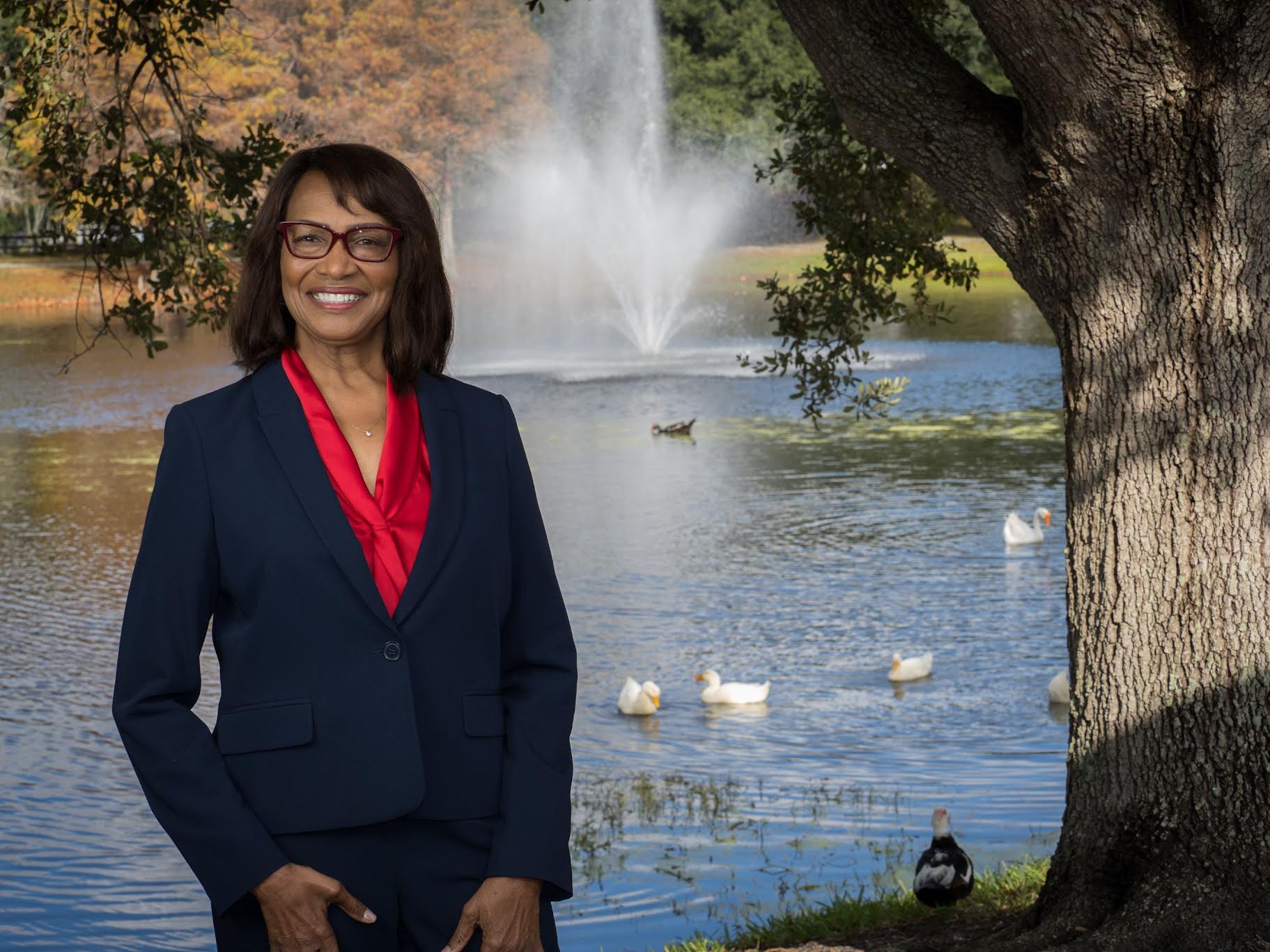
Patricia Rumph, a retired state corrections department employee, is running for Orange County Commission’s District 7 in August.
“I am running for County Commission because service is not something I talk about, it is something I have lived every day of my life,” Rumph said.
Rumph’s campaign priorities are public safety, investing in strong infrastructure, affordability, and environmental stewardship, she said in a statement to announce her candidacy.
Rumph is joining a crowded field for a two-year term representing District 7 in the nonpartisan race. The other candidates are Selina Carter, Eatonville Mayor Angie Gardner, Stacey Gordon-Ali, Framily Support Network co-founder Aaron Lewis, Sonya Shakespeare, and former Orlando City Commissioner Vicki Vargo.
A County Commissioner’s current annual salary is $130,262.
District 7, which covers Maitland, Eatonville, Pine Hills, Orlovista and Fairview Shores in the northern part of Orange County, is one of the two new County Commission seats added after last year’s redistricting.
“As District 7 is formed, this is a moment to build something new and to do it the right way,” Rumph said. “Our residents deserve a commissioner who is present, accountable, and deeply invested in the people who call this district home.”
Rumph’s 30-year career in the Florida Department of Corrections included jobs as Correctional Probation Senior Officer, Human Resources Specialist, and Fiscal Assistant. She retired in 2017.
She received a Bachelor of Science in Business Administration from the University of Central Florida.
“In 2020, Rumph was appointed Orange County’s Inaugural Community Ambassador, a role created to build trust between law enforcement and residents and to lead initiatives focused on reducing gun violence and violent crime,” she said in a press release.

“Prior to that appointment, she served for three years as President of the Pine Hills Community Council and has held leadership roles on numerous county boards and advisory committees.”
She was also named the League of Women Voters of Orange County Grassroots Champion of the Year, noted a press release highlighting her public service.
“From Pine Hills to neighborhoods across District 7, I have worked side by side with residents to make our communities safer, stronger, and more connected,” Rumph said in a statement. “This new district deserves leadership that knows our neighborhoods, listens to our families, and fights for opportunity in every zip code. I am ready to bring proven, community-rooted leadership to the County Commission.”


SeaWorld, Universal announce musical acts ahead of annual food festivals

Brooklyn Beckham Breaks Silence on Family Drama in Savage IG Posts

Beauty and fashion demand helps Landsec’s Golden Quarter performance to sparkle
-

 Politics8 years ago
Congress rolls out ‘Better Deal,’ new economic agenda
-
Entertainment9 years ago
New Season 8 Walking Dead trailer flashes forward in time
-
Politics9 years ago
Poll: Virginia governor’s race in dead heat
-
Politics8 years ago
Illinois’ financial crisis could bring the state to a halt
-
Entertainment8 years ago
The final 6 ‘Game of Thrones’ episodes might feel like a full season
-
Entertainment9 years ago
Meet Superman’s grandfather in new trailer for Krypton
-
Business9 years ago
6 Stunning new co-working spaces around the globe
-
Tech8 years ago
Hulu hires Google marketing veteran Kelly Campbell as CMO