When parts of China entered rolling lockdowns during the country’s zero‑COVID campaign, PepsiCo factory workers in some “bubbles” stayed on site for up to 30 days at a time to keep production running. A case could halt operations and send workers into quarantine—as happened in June 2020, when confirmed COVID infections at one of PepsiCo’s Beijing factories forced nearly 500 employees into quarantine.
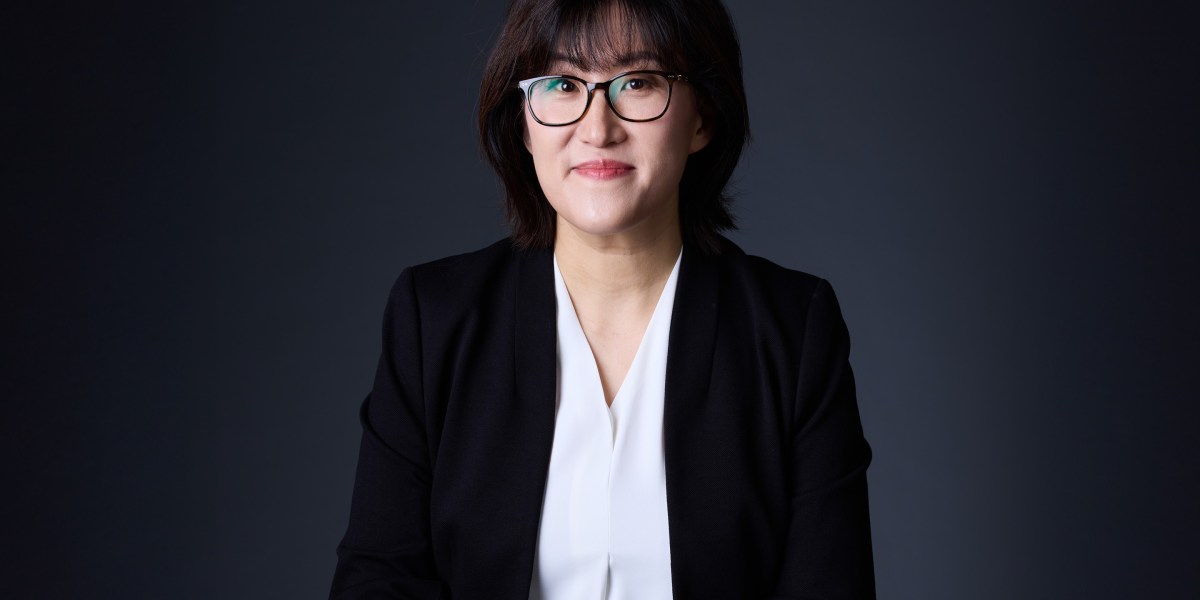
Anne Tse, who helped run the company’s China operations during the country’s three years of COVID-zero, remembers how they had to change the way they did business.
“We had to pivot,” Tse told Fortune, “by grouping our markets not by their ‘market development’ stage, but by their ‘COVID development’ stage.” In just 12 hours, her team abandoned the traditional model that grouped Chinese cities by the maturity of their consumer markets instead mapped operations around the pandemic: which provinces were entering lockdown, at peak restrictions, or reopening.
“It was a crucible,” she remembers, “but I think about how it trained the character and muscle of our associates,” she says.
That muscle is now being tested by a new set of pressures after Tse took over PepsiCo’s Asia-Pacific Foods division in early 2025.
Her mandate spans what she calls three different Asias: emerging markets such as Vietnam and Indonesia, where consumers are buying packaged snacks for the first time; mid-range markets like China and Thailand, where consumers are starting to demand differentiated products; and mature markets including Japan and Australia, where demand centers on health, convenience, and aging populations.
PepsiCo is pressing ahead in Asia as the food and beverage giant resets in the U.S, following a battle with activist investor Elliott Investment Management, which is pushing for cost cuts and higher margins.
“By 2030, two‑thirds of the global middle class is going to be in Asia,” Tse points out. “We’re going to add another 700 million of these new middle‑class members into our part of the world.”
Three Asias, three playbooks
Tse joined PepsiCo in 2010 after stints at McKinsey and Mannings, the health and beauty chain owned by Hong Kong’s Dairy Farm Group. She became CEO for Greater China in 2021, APAC chief consumer officer in 2024, and CEO of APAC Foods in 2025.
PepsiCo’s Asia-Pacific Foods division generated $4.6 billion in revenue last year, up 2%. While it is PepsiCo’s smallest segment, compared with more than $93 billion in companywide revenue, it is the fastest-growing by volume, rising 4% even as other divisions reported declines.
Tse oversees a diverse region spanning markets at very different stages of development: Greater China, a vast consumer market with intensifying local competition; developed economies such as South Korea, Japan, Australia and New Zealand, where tastes are mature; and emerging markets across Southeast and South Asia, where incomes are rising quickly.
“It’s definitely not one market,” she says, dividing the region into three segments.
The first is the emerging cohort—including the Philippines, Vietnam and Indonesia—where consumers are crossing the $10,000 annual income threshold and entering the snack category for the first time. “From a consumer standpoint, they’re exploring the category, trying different things,” Tse says.
PepsiCo has recently invested $90 million in a snack plant in Vietnam’s Ha Nam province, with annual capacity of more than 20,000 tons, and $200 million in a factory in Cikarang, Indonesia, marking its return to the country after exiting in 2021.
The second is a cohort of countries, including China and Thailand, where “things are getting more sophisticated,” leading to a proliferation of new snack options. For example, in China, PepsiCo mines restaurant reviews for insights into what consumers want, turning viral dishes into limited-edition flavors.
Finally, there are mature markets such as Japan, South Korea, Australia and Singapore, where snacks are already “a way of life.” But consumers are also looking for products that meet broader needs, including health and wellness. Demographic change is also shaping demand. “Aging populations need more functional nutrition,” she says.
Some markets have proved trickier to navigate than others: China is going through a consumer slump and intense price competition, which is bringing down prices even as volume grows. Australia, a more mature market, is also going through a cost-of-living crisis that’s hitting snacking. ASEAN, however, is proving to be a “very robust” market for PepsiCo’s snacks.
The local-brand threat
Last September, activist investor Elliott Investment Management revealed it held a 4% stake in PepsiCo and demanded changes at the company. Eliott pointed out that the company had become a “deep underperformer,” and argued that it needed to renew its focus on the critical North American market.
In December, PepsiCo agreed to one of its most aggressive restructurings in years, including eliminating 20% of its U.S. brands, cutting jobs, and lowering prices on flagship products. PepsiCo shares have risen about 23% since their low last July.
Elliott’s arguments only briefly touched on PepsiCo’s international business, citing the company’s global brand strength and the possibility of “continued expansion” in overseas markets, due to rising consumer populations and a lower prevalence of GLP-1 weight loss drugs.
Still, PepsiCo—like many foreign brands—faces intensifying domestic competition. Across sectors from cars to coffee, multinational companies are finding it harder to compete with local products that offer comparable quality at lower prices and better match local tastes. In China, snack brands such as Three Squirrels have challenged global players with fast product cycles and aggressive pricing.
“News outlets say the number one challenge of operating in China is tepid consumer sentiment,” Tse says. “But everybody in the market will tell you local competition is by far the biggest challenge.”
Last November, PepsiCo released a version of Quaker Oats that combined microbes friendly to gut-health through a fermentation process. The new product combined “China’s long tradition of fermentation and PepsiCo’s capabilities in modern food science,” Tse wrote in a Linkedin post at the time.
“Competition is good—we welcome competition because a lot of times competition makes us better,” she says to Fortune. “We need to play both games: learn from the locals to be agile, but also preserve what makes us unique and able to transcend business cycles.”