
Fashion
24th Altagamma Observatory says luxury industry revenue flat in 2025, recovery to start in 2026
Translated by
Nicola Mira
Published
November 20, 2025
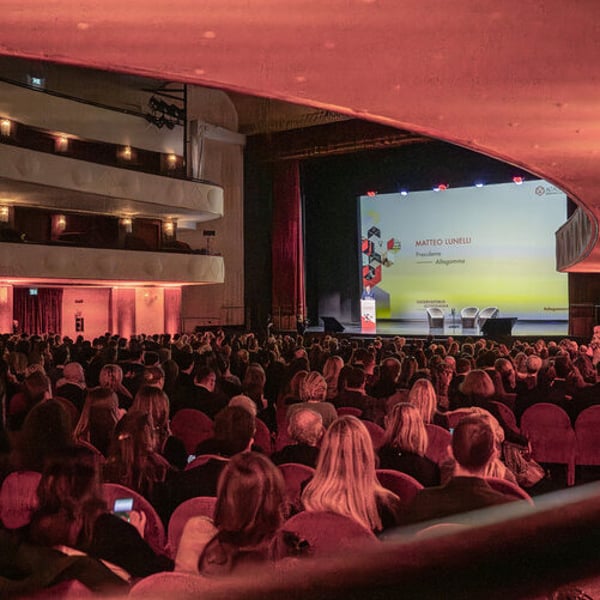
The outlook for the global market for luxury products and services was presented at the 2025 Altagamma Observatory, the annual event organised by Altagamma, the association of Italy’s top luxury brands, held on November 20 in Milan. The global market for luxury products and services is forecast to be worth approximately €1.440 trillion in 2025, on par with last year, despite economic and geopolitical uncertainty and different performances between sectors. The shift towards experiential consumption will continue, while long-term forecasts remain broadly positive.
The personal luxury goods market is set to perform along the same lines, with a 2025 forecast of €358 billion (down 2% at current exchange rates, but flat at current rates, like the overall market).
Luxury sector estimates for 2026, and the outlook for the current year, emerged from the two studies presented at the event: Altagamma Consensus 2026, a study drawn up with the help of 19 Italian and international financial analysts, presented by Stefania Lazzaroni, managing director of Altagamma; and the Altagamma-Bain Worldwide Luxury Market Monitor 2025, curated by Claudia D’Arpizio and Federica Levato, senior partners at Bain & Company.
Both studies painted the picture of a resilient market, despite the major structural transformations taking place, which are mainly driven by changes in the purchasing behaviour of luxury consumers, who continue to prioritise experiences over products, and by the increasingly crucial relationship between price and value.
The picture shows there are regional differences, with the Middle East steadily expanding at a 4%-6% rate and the Americas recovering (with a growth rate between 0% and 2%), thanks to domestic spending and rising average purchase values. Europe is slowing down (losing between 3% and 1%), China is still weak (down between 8% and 6%), while Japan is slumping (also down between 8% and 6%) after an exceptional 2024.
There are performance differences among categories, influenced by the polarisation between high-end and more affordable market segments. In personal luxury, jewellery is growing between 4% and 6%, and eyewear between 2% and 4%, while leather goods and footwear are losing between 7% and 5%. Sales volumes for cars are falling across all price ranges, with higher-end sports cars doing better; the yacht-building sector is growing vigorously, while furniture design is stable; premium wines and spirits are struggling, with the exception of premium champagne and Italian red wines.
The Altagamma Consensus study for 2026 has estimated a growth rate for the broader luxury sector of approximately 5%, in line with a longer-term growth forecast between 4% and 6%. Sector EBITDA is expected to rise by 5%, due to cost optimisation measures and the resilience of the US, European and Middle Eastern markets. Renewed Chinese consumer confidence could be a positive development in this scenario. The impact of the dollar’s foreign exchange performance, currently generally weak, could penalise exports from other countries.
However, the US will remain a solid market anchor, beyond the impact of tariffs. The Middle East is expected to be equally solid, benefiting from steady tourism flows and real estate investments from all over the world. The European market, with France and Germany in crisis, will remain resilient, while Asia and China will grow moderately. Physical retail will continue to be the channel of choice for personal luxury goods in 2026, and will grow significantly, alongside e-tail, while the wholesale channel will further reduce its importance.
One exception is outlet stores (both physical and online) for luxury products, which are expected to perform extremely well, tapping unsold inventory from previous seasons. Category-wise, 2025 has created room for moderate, generalised volume growth, which will consolidate in 2026. Jewellery is expected to do very well, confirming the category’s role as safe-haven asset.

Matteo Lunelli, president of Altagamma, said that “The luxury market has remained stable in 2025 at a value of €1.44 trillion, despite going through a complex phase, marked by more selective consumption and China’s subdued momentum. Experiential consumption is growing, especially when linked to well-being and longevity, while aspirational consumers are struggling. Price dynamics require brands to be extremely careful, as they face tariffs, a weak dollar, and high energy prices.”
Lunelli went on to say that “we’re expecting 5% organic growth in 2026. In this scenario, Italy’s high-end sector, which accounts for over 7% of national GDP, continues to show its resilience, thanks to the entire industry’s creativity and manufacturing excellence. It is a sector that, now more than ever, must be defended in the name of legality, transparency and rule of law, in order to protect its worldwide reputation. We’re active with the government and other associations to establish a new industry-wide pact, confident that our companies are working diligently and responsibly. Italy must continue to drive the luxury sector, safeguarding a virtuous ecosystem that combines entrepreneurship, craftsmanship, innovation and culture: A true economic and cultural heritage that must be valued.”
D’Arpizio and Levato, senior partners at Bain & Co. and authors of the Luxury Market Monitor 2025, said that “after the era of unbridled shopping, a new season is starting for the luxury sector, one in which experiences, emotions and values are the genuine engine for growth.” They went on to say that “the market remains robust, but it’s moving within an increasingly complex and interdependent global context. The next phase will be driven by quality, ethics and innovation: Less expansion, more relevance. Brands are redefining their boundaries, expanding into adjacent territories – from food to wellness – and are being called upon to re-establish a genuine bond with aspirational consumers, while preserving consistency and meaning.”
D’Arpizio and Levato added that “the future of luxury will belong to those who’ll be able to evolve from scale to precision, from following trends to dictating them. This is a moment of truth: Luxury is at a crossroads between exclusivity and inclusivity, between profit and purpose. Only those able to combine creativity and responsibility will manage to transform the transition into long-term performance. The industry’s fundamentals are solid: the expected annual growth rate of 4% to 6% for personal luxury goods, bolstered by expanding demand, means the market could be worth between €525 billion and €625 billion by 2035, while total overall luxury spending could be worth from €2.2 trillion to €2.7 trillion.”
Altagamma was founded in 1992 as the association of Italy’s leading companies in the high-end cultural and creative industries, promoting Italy’s excellence, uniqueness and lifestyle worldwide. Altagamma has a unique cross-sectional membership, comprising 124 brands from the fashion, design, jewellery, food, hospitality, automotive and yacht-building industries. Altagamma’s mission is to contribute to the growth and competitiveness of Italy’s cultural and creative industries, helping the country’s economic development. The luxury products and services sector in Italy is worth €144 billion, and contributes 7.4% to national GDP. Over 70% of the sector’s revenue comes from exports. The sector has a direct and indirect workforce of 1,922,000, equivalent to 8.2% of total jobs in Italy.
Copyright © 2025 FashionNetwork.com All rights reserved.