
Politics
11 candidates vie for two Miami Commission seats as city grapples with growth, affordability

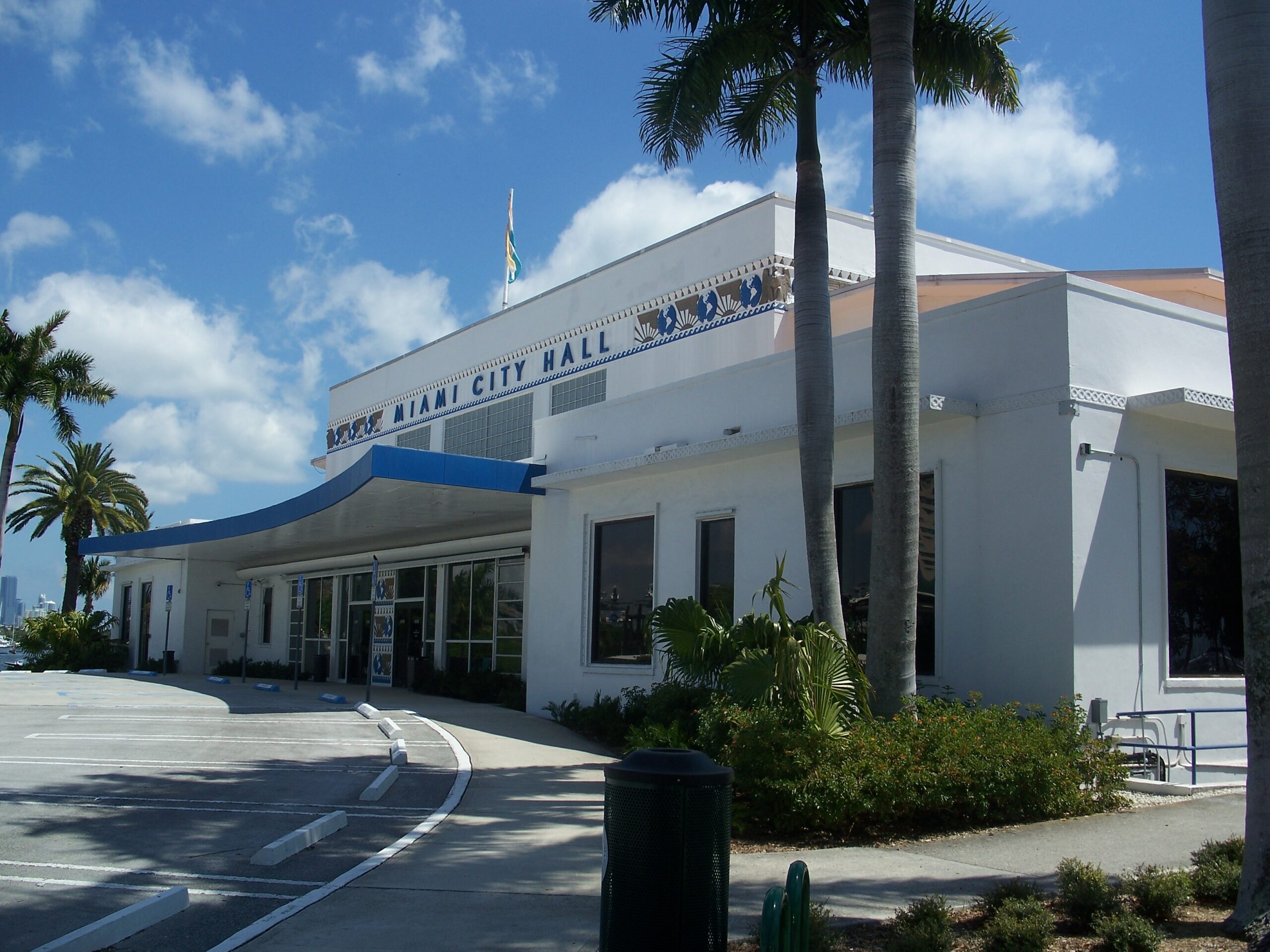
Eleven candidates with varying political backgrounds are vying for two seats on the Miami Commission this year.
In District 3, eight people are competing to replace Joe Carollo, who is running to become Mayor again after he reaches term limits on the Commission.
In District 5, incumbent Christine King is seeking a second and final term. Two challengers hope to deny her.
Both districts and the city at large face myriad issues, many of which have worsened in recent years, from a dearth of affordable housing to flooding because of sea-level rise and traffic congestion.
Those and other matters are top-of-mind for many of the candidates running, though some have done a better job at getting their message out than others.
Here’s a look at who’s running, in order of funds raised through Oct. 3.
District 3
Miami’s third Commission district sits smack dab in the center of the city, containing the neighborhoods of Little Havana, East Shenandoah, West Brickell and parts of Silver Bluff and the Roads.
No candidate is more familiar with the ins and outs of its governance than Frank Carollo, who represented the district at City Hall until 2017, when his older brother Joe won a race to succeed him.
Now the younger Carollo wants his old job back. If he wins and serves a full four-year term, the family’s grip on the District 3 seat would extend to two decades.
In terms of funding, Carollo, a 55-year-old accountant, outraised his next-closest opponent by nearly fourfold, stacking $243,600 between his campaign account and political committee, Residents First, through Oct. 3.
His biggest single gain was a $60,000 contribution from Committee Supporting Voters’ Wishes Over Public Land, a county-level political committee chaired by Ed Torgas, who also chairs Residents First.
Other notable donations came from companies associated with the Rickenbacker Marina in Key Biscayne and developer Melo, former state Rep. José Félix Díaz, gasoline magnate Maximo Alvarez, Magic City Casino, developer Terra, Tampa-based TECO Energy and six firefighter unions between Coral Gables and Orlando.
He spent about $86,000 on ads, marketing, polling, mailers, consulting, voter data, checks, food, legal fees and “website and digital marketing” services — an odd expenditure descriptor, considering Carollo has no discernible campaign website other than an ultra-basic one for his political committee.
As such, he’s relied on local media to get his campaign message out. He told the Miami Herald, through a questionnaire sent to all Miami candidates, that he wants to address the city’s issues, from speeding and flooding to affordability, by improving its budget management.
He carries an endorsement from the Miami Fraternal Order of Police.
Real estate broker and restaurateur Rolando Escalona, who manages Sexy Fish in Brickell, is running on something of a “greatest hits” platform. He wants to improve public safety, support economic development, enhance communities, provide more affordable housing, lower taxes and advocate for better fiscal responsibility in government.
He told the Herald that if elected, he’d fight to restore public trust by addressing public corruption while increasing transparency and re-engaging residents who feel unheard by current officials.

Escalona, 33, raised $69,000, including a $5,000 self-loan and 170 outside contributions, overwhelmingly from South Florida residents, most of whom are from Miami. About 70% of the $55,500 he spent went to Miami-based campaign consultancy Dark Horse Strategies for ads, mailers, texts and emails. The rest covered postage, accounting, voter data, ads and donation processing fees.
Notably, there are legitimate questions about Escalona’s District 3 residency. He told the city he has lived continuously in the district since June 2024, after residing for just five months in neighboring District 4, where he owns a duplex.
The address attached to his broker’s license is still that of the District 4 property, almost 16 months after he says he moved. He told Political Cortadito last week that redistricting pushed him out of District 3, so he moved into the apartment while his wife remained at the duplex with his mother for a short span before joining him.
Public relations pro and Latinas for Trump co-founder Denise Galvez Turros, 50, also has a lot on her to-do list if elected. She wants to institute traffic-calming initiatives in collaboration with the county and state, re-establish neighborhood enhancement offices in high-traffic areas like Little Havana and Brickell, fix up city infrastructure and create a neighborhood ambassadors program.
She also wants to cut red tape in the city’s Building Department that delays housing projects, incentivize more naturally occurring affordable housing in the district, revamp the Miami Parking Authority and rewrite the city’s “outdated” historic preservation guidelines.

Galvez Turros, who previously ran for the Commission in 2017, raised about $46,000 through her campaign account and political committee, Public Service Not Self-Service. Nearly all of it came from Miami and Coral Gables businesses and residents.
The Little Havana Arts Building, owned by real estate company Barlington Group, gave $5,000. Coral Gables-based hotel and restaurant management company Coury Hospitality gave $4,000.
Miami-Dade Commissioner René García chipped in $1,000 through his political committee.
She also spent $23,000, a significant chunk of which went to Coral Gables-based Eclipse Consulting for campaign management, Delaware-based Inroads Consulting for printing and canvassing, and Tallahassee-based PAC Financial Management for Treasury Services.
As reported by Political Cortadito and the Miami New Times, Galvez Turros was arrested in 1994 on credit card theft charges and in 2010 for disorderly intoxication charges, both of which were later dropped or dismissed.
She has also since corrected a LinkedIn entry that wrongly claimed she held a journalism degree.
Brenda Betancourt, a 48-year-old real estate broker, is mounting a run for the City Commission after a decade of unelected service. That includes past membership to Miami’s Code Enforcement and Noise Abatement Boards, and Miami-Dade County’s Community Action Agency and Commission for Women.
She currently serves on the county’s International Trade Consortium, appointed by Miami-Dade Commissioner — and former Miami Commission Chair — Keon Hardemon.

Betancourt’s campaign website, which features photos of her with House Speaker Daniel Perez and Miami-Dade Commission Chair Anthony Rodriguez, says she wants to help develop more affordable housing, enhance community policing and disaster preparedness and boost job-creation programs.
She supports “sustainable” real estate development, promoting “green initiatives,” improving public transit, expanding health care access and combating food insecurity. Other priorities include increasing government transparency, encouraging citizen involvement, improving fiscal responsibility in government, and improving youth and education programs.
She raised about $36,000, including a $2,000 self-loan and 49 outside contributions, mostly from local businesses. A sizable share of her gains came from construction and real estate interests, including $9,000 from companies under the corporate umbrella of Miami-headquartered Adonel Concrete.
She also spent about $27,000 through Oct. 3, with the majority of it going to advertising.
Yvonne Bayona, a 61-year-old paralegal, hopes to bring her professional experience, insights from serving as President of the Miami Historic East Shenandoah Homeowners Association and the know-how she’s gained as a current member of the city’s Code Enforcement Board to the five-member Commission.
She’s running on a platform that prioritizes improving government accountability and transparency, increasing police presence and supporting first responders, boosting neighborhood safety and helping small businesses.

She raised $13,000 through 33 donations, spent close to $10,000 and reported receiving about $1,200 worth of in-kind aid for food and drink expenses at a fundraiser and for database work.
At 26, U.S. Navy veteran Oscar Alejandro is the youngest candidate seeking office in Miami this cycle. But he’s not lacking ideas, as shown by his detailed campaign platform.
Among other things, Alejandro wants to create a “District 3 Transparency Portal” for residents to track budgets, projects and progress; develop an always-open reporting platform for residents to register infrastructure, service and flooding complaints; establish a multilingual text messaging program to inform residents further; and implement community land trusts to lock in permanent affordable housing.

Of $5,326 he raised, $5,000 came through a self-loan that is refundable if he doesn’t spend the money. Through early October, he reported no campaign spending and $185 worth of in-kind contributions from a local business owner for business cards.
Like Escalona, Alejandro appears to lack residency bona fides. Florida Politics found that he’s only lived in Miami continuously since November 2023, after moving from near Kendall-Tamiami Executive Airport in the county’s unincorporated area.
Rob Piper, a 53-year-old Marine Corps veteran well-versed in politicking, raised slightly less than Alejandro: $5,200, of which more than 70% came from his bank account.
He also spent about $4,000 on web hosting, shirts, campaign promotional materials, food for volunteers and donation processing fees.
Piper’s background includes six months of work as a House legislative aide in 2023, before he earned a doctoral degree in international relations and affairs from Florida International University, according to his LinkedIn page.

In 2020, he led a recall PAC targeting Joe Carollo. He told the Herald he’s worked as a community volunteer since he retired in 2016.
Piper is running on a seven-pillar plan he’s dubbed his “RESPECT Platform”: revenue (raise it to pay for resident needs), ethics (pass legislation to stop corruption), sovereignty (protect Miami from state and federal preemption), public safety, engagement tools (to boost civic participation and government responsiveness), climate resiliency, and traffic and transit expansion.
SAVE Action PAC, the political arm of South Florida’s longest-running LGBTQ rights group, has endorsed him.
In last place, funding-wise, is Fayez Tanous, a 32-year-old with virtually no online campaign footprint who did not respond to the Herald’s questionnaire.
His LinkedIn page says he’s been a “Special Aide to the City of Miami Mayor” since January 2021. Before that, he worked for Bank of America and as a salesperson for the home tech company Vivint.

On his Instagram page, Tanous has expressed compassion for Miami’s unhoused residents, particularly seniors experiencing homelessness. He has also criticized Commissioners Carollo and Miguel Gabela for squabbling at City Hall and bashed Carollo and Commissioner Ralph Rosado for self-promoting through Farm Share food distribution notices.
Tanous reported raising $25 — his money — and spending nothing.
Bayona, Betancourt, Carollo, Escalona, Tanous and Galvez Turros are Republicans, while Alejandro and Piper are Democrats.
City races are technically nonpartisan, but party politics are frequently still a factor.
District 5
King, the 59-year-old incumbent, won by a landslide in 2021, when she unseated then-Commissioner Jeffrey Watson and beat five others with 65% of the vote.
Four years later, she’s poised to coast back into office after no well-funded candidate filed to challenge her.
Meanwhile, she’s been a fundraising juggernaut.

A lawyer and former CEO of the nonprofit Martin Luther King Jr. Economic Development Corp., King has amassed more than $1.6 million to defend her seat representing District 5, a Black-majority district that includes Liberty City, Little Haiti, Overtown, Wynwood, Edgewater and the Upper East Side.
That includes close to $121,000 collected through her campaign account and more than $1.5 million through her state-level political committee, Community First, which she opened in August 2023.
She’s accepted scores of significant donations from real estate companies in and around Miami. Among them: $136,000 from Boca Raton-headquartered apartment builder Atlantic Pacific Companies and $100K from Housing Trust Group, a multifamily residential developer headquartered in the city.
Both companies have projects in King’s district that received tens of millions of dollars in bond investments funded by the Southeast Overtown/Park West Community Redevelopment Agency, whose Board has the same composition as the Miami Commission, which King chairs.
Compared to her fundraising, King spent conservatively: $139,000 on consulting, marketing, checks, catering and donation processing.
One notable expenditure missing is the web fees, as King does not have a new campaign website. Her old one from 2021 is still up. She said when launching her re-election campaign last month that Miami needs more affordable housing and financial initiatives. This includes the city’s First-Time Homebuyer Program, which she spearheaded and offers up to $200,000 in forgivable subsidies. She also wants to continue park renovations in the district while expanding youth programs and provisions.
King has won praise for spearheading the city’s First-Time Homebuyer Program, which offers up to $200,000 in forgivable subsidies, and for supporting initiatives like the Miami Forever plan to make the city carbon-neutral by 2050.
She also allocated investments to employment opportunities, housing assistance and community beautification efforts in her district.
But she hasn’t escaped criticism. This year, she was among those at City Hall condemned for advancing legislation to delay Miami’s elections by a year, a move that would have granted current officials an extra year in office without voter approval. Mayoral candidate Emilio González, a former City Manager, successfully sued the city to stop the change.
King also made the news last year for steering hundreds of thousands of dollars from her district’s coffers to her old nonprofit through no-bid grants.
Two repeat candidates are mounting long-shot bids to supplant her. Neither crossed the $1,000 fundraising mark by early October nor reported any spending.

Marion Brown, a 60-year-old construction executive who ran for the Miami-Dade County Commission last year, told the Miami Times he wants to tackle homelessness, food insecurity and housing unaffordability while working to support skill upscaling and refurbish homes for the city’s elderly residents.
Frederick Bryant, a 72-year-old retired teacher and longtime community activist, is also running.
Politically, the District 5 race is akin to Neapolitan ice cream: King is a Democrat, Brown is a Republican and Bryant has no party affiliation.
The General Election is Nov. 4. If no candidate tops 50% in a race, the top two advance to a Dec. 9 runoff.

Disney is suing over what it calls “excessive” property tax assessments for its four theme parks, the failed Star Wars hotel and a slew of other properties from the company’s vast real estate portfolio in Orange County.
The multibillion-dollar entertainment giant filed about 15 lawsuits late last week in Orange Circuit Court.
Disney wants to cancel the original 2025 tax bills, be issued new ones for reassessed amounts, then get reimbursed for its legal fees for contesting the property taxes. The Mouse is also asking the court to award “general relief as may be just and equitable,” according to the complaints.
The lawsuits accused Orange County Property Appraiser Amy Mercado’s Office of failing to use “professionally accepted appraisal practices,” although Disney’s complaints don’t provide details about its allegations.
“The assessments do not represent the just value of the Subject Property as of the lien date because they exceed the market value and therefore violates article VII, section 4 of the Florida Constitution,” the lawsuits said.
Disney has sued regularly over its property taxes for years. This time, however, the lawsuits come as state leaders are actively pushing to repeal or lower property taxes for residents.
Some state lawmakers are concerned about senior citizens and average Floridians struggling to afford their property taxes — although so far, officials aren’t specifically advocating for Disney to save money on its property tax bills in the ongoing debate for property tax relief.
The Walt Disney Co. is the most successful theme park operator in the world. Orlando’s Magic Kingdom is the crown jewel as the No. 1 most popular theme park on the planet, with an estimated 17.8 million visitors last year.
The Orange County Tax Collector did not immediately respond to questions from Florida Politics about how much Disney pays in property taxes or provide a breakdown of how much of that money funds local government, schools and the library system.
Disney said Magic Kingdom’s assessed value was at about $622 million, with Epcot at $795 million, Hollywood Studios at $639 million and Animal Kingdom at $495 million.

The site of the ill-fated Star Wars: Galactic Cruiser hotel was assessed at $38 million this year. Disney plans to turn the property into offices for Imagineers after the company shut down the hotel in 2023.
Other hotels being litigated over include the Grand Floridian Resort, accessed at $333 million, the Contemporary, at $243 million, and Coronado Springs, at $350 million.
Disney also did not immediately respond to requests for comment Monday for this story.


“Pudge controls the weather,” is a semi-famous and entirely adorable line from Lilo and Stitch, in which the cartoon little girl feeds Pudge, a fish, a peanut butter sandwich every Thursday to ensure favorable conditions.
As endearing a moment that was in what has become a modern Disney classic, it’s also understood to be complete fiction.
But don’t tell that to CBS, whose team of reporters apparently think it’s actually Erika Donalds who controls the weather.
At issue is a report published last week by CBS reporters Michael Kaplan, Mark Strassmann, and Emma Nicholson, with help from several other CBS reporters, outlining the delayed opening of Optima Classical Academy in Fort Myers. It was supposed to open in late 2024, but didn’t because of ongoing impacts from Hurricane Ian, which struck the area as a Category 5 hurricane, causing catastrophic devastation throughout the community from both wind and flood damage. Recovery efforts led to delays in opening the school this year, too, though it is still authorized under law to open next year.
The CBS piece has the look and feel of a hard-hitting investigative piece — it’s long and has catchy sub-heads — but its findings don’t uncover much.
The headline points to “parents scrambling” after the school didn’t open on time. The main sub-headline says Donalds “defended millions paid to vendors she was tied to.”
But the story itself is mostly just commentary from a couple of parents frustrated with their kids’ lack of options giving the Optima Classical Academy delay, one of whom even acknowledges she “had all our eggs in that basket.” This doesn’t project a problem with choice. Instead, it only punctuates the need for more choice programs — including charter schools like the ones Donalds launches.
Donalds, wife of U.S. Rep. Byron Donalds, has become a leading voice in the school choice movement not just in Florida, but across the nation. She has successfully opened four classical charter schools in the state, a growing trend of schools that emphasize Eurocentric education that begins allowing students to explore primary documents such as the U.S. Constitution much earlier than traditional public curricula allows.
It’s become a popular choice among parents who worry about what many describe as “woke” education in public schools. And yes, it sucks that the early 300 parents in Fort Myers who selected Optima Classical Academy for their children are left waiting.
But assigning blame for that to Donalds rather than to the act of God that created the delay is a stretch at best.

“It is sexist — but not surprising — that CBS would choose to attack an accomplished businesswoman with a strong record of starting successful charter schools and providing thousands of students with an excellent education. Erika Donalds has been a leading voice in advancing school choice nationwide, both through policy and helping launch new schools. Her leadership has helped make Florida’s education landscape a national model for education freedom and innovation, her expertise continues to be sought by policymakers across America, and her dedication and lifelong commitment have expanded access to quality educational opportunities for children who need and deserve them,” said Danielle Alvarez, senior advisor to U.S. Rep. Byron Donalds’ campaign for Governor.
While Hurricane Ian made landfall near Fort Myers in late 2022, the Category 5 storm caused one of the longest and most complex disaster recoveries in U.S. history. Even three years after the storm, news coverage in Southwest Florida was still highlighting recovery challenges and progress, with numerous rebuilding efforts still underway. As anyone with experience recovering from hurricane devastation will tell you, the large-scale recovery affects areas far outside of landfall, with construction resources spread thin and exacerbating timelines.
But despite the CBS story’s failure to accurately portray what has happened with Optima’s delay, the piece actually does get some facts right, even if not in context.
For example, the story notes that “state data shows when it came to academic performance, one of the schools (Donalds opened) quickly excelled.” It also includes important context that the Fort Myers school “had yet to receive any taxpayer funding,” though it is still operating under the parameters of its approved charter agreement allowing it to open by 2026. Even in an example cited outlining areas of concern in academic performance at one Optima-run school, the CBS story correctly notes that academic performance improved after the independent audit, which was commissioned specifically to uncover areas of continued opportunity.
The piece cites a spokesperson for Donalds, who said the school’s improvement shows “how a supportive environment, committed teachers, and high expectations can help children thrive.”
But perhaps worst of all in what amounts to a cleverly disguised hit piece against Donalds, the story attempts to lead readers to believe Donalds made improper financial gain from the charter schools she opened or planned to open, arguing some charter school funds at schools that had already opened were spent on outside firms with ties to Donalds. But the information is framed in a derogatory way, despite later noting the firms “landed the schools a good price on payroll expenses, IT and other back-office services” and that each school “is owned and governed by its own independent nonprofit board, which is responsible for oversight and decision-making.”
Nevertheless, the narrative is framed in such a way that paints Donalds as the villain.
But sure, I guess we’ll just start feeding Donalds peanut butter sandwiches on Thursdays and hope for the best.


Craigslist founder signs the Giving Pledge, and some of his fortune will go to a pigeon rescue

The Rock’s Daughter Dating Wrestler Tatyanna Dumas

More arrivals for Outlet Shopping at The O2 that’s on track for ‘stellar’ 2025
-

 Politics8 years ago
Congress rolls out ‘Better Deal,’ new economic agenda
-
Entertainment8 years ago
New Season 8 Walking Dead trailer flashes forward in time
-
Politics8 years ago
Poll: Virginia governor’s race in dead heat
-
Entertainment8 years ago
The final 6 ‘Game of Thrones’ episodes might feel like a full season
-
Entertainment8 years ago
Meet Superman’s grandfather in new trailer for Krypton
-
Politics8 years ago
Illinois’ financial crisis could bring the state to a halt
-
Business8 years ago
6 Stunning new co-working spaces around the globe
-
Tech8 years ago
Hulu hires Google marketing veteran Kelly Campbell as CMO