
Politics
10 stories that shaped Jacksonville politics in 2025 … and possibly beyond

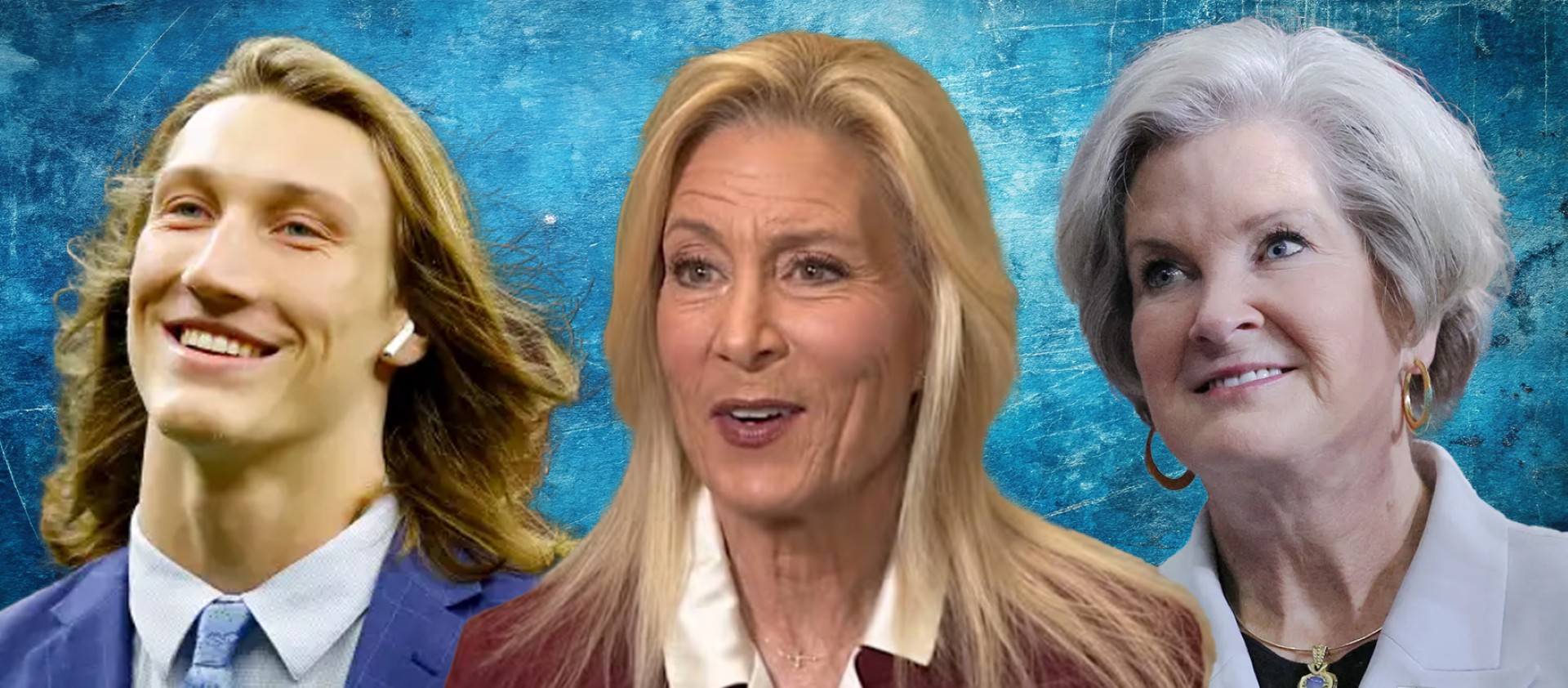
For yet another year, it was hard to nail down what the biggest stories locally were.
In one sense, the scene was static. Jacksonville’s City Council and Mayor continued to spar, but it’s called a strong Mayor government for a reason.
In another sense, we’re in what stock traders call a consolidation period, as plans are laid for 2026’s state elections and 2027’s local vote.
We now have plenty of sample size to deduce that Jacksonville’s current Democratic Mayor likely isn’t politically vulnerable in the way Alvin Brown might have been during equivalent points in his first and only term in City Hall … though there’s still time to change that.
Here are the Top 10 Jacksonville stories of 2025:
— Deegan holds on (No. 1): It’s almost time for prospective 2027 opponents to get in the race to replace Jacksonville Mayor Donna Deegan. Otherwise, they had better reconcile themselves to a full eight years and the reality that they will never be elected to replace her. Deegan weathered a series of storms that were seen as potentially difficult, such as the back-and-forth about General Counsel Michael Fackler and the handgun registry that seemed like such a big deal last Spring but hasn’t led to much. But in the end, who has stood up ahead of 2027? Elections Supervisor Jerry Holland is telling people he’s running, but whether he gets meaningful donor class support remains to be seen. Other Republicans are dipping their toes in the water. But anyone who gets in right now is doing so as a serious underdog, and at a time when indications are that there is little momentum for them.
— Curry complications (No. 2): Former Jacksonville Mayor Lenny Curry didn’t go away after leaving City Hall … and it’s to Deegan’s detriment. Curry, a former Republican Party of Florida Chair, wasn’t thrilled when Ballard Partners lost lobbying contracts when Deegan was elected, and he has stepped up his critiques since. He says he doesn’t want to run for Mayor. But also says he would win if he did run. Deegan and Curry have squabbled over policy issues for more than two years now. Curry took a leading role in advocating for a 1/8 mill property tax cut that the current administration supported. Deegan modified pension reform that Curry pushed through by creating a path for police and fire to enter the Florida Retirement System. If a serious opponent emerges for Deegan, Curry could be a problem. But as of right now, that’s a big if.
— Stadium vindication (No. 3): The Jacksonville Jaguars at this writing have a path to the top seed in the playoffs. While Denver still has pole position despite the Jags going into Mile High and scoring a statement win, the Jaguars won the biggest game of the season on the road and left the Broncos looking as bad as they have all year. In terms of sports, this is the ultimate feel-good story for a city that derives more of its identity from its NFL team than anywhere else south of Green Bay. But its political punch is even bigger. Those who were skeptical about spending money on a stadium renovation and pushing back pension payments to do so look to have lost the argument to those who prioritize the NFL over everything else.
— Wiles’ world (No. 4): The Most Powerful Woman in the World? That’s what President Donald Trump calls her and we close out 2025 not looking to argue with him. There may have been bumps in the road courtesy of Vanity Fair, but the fact is that a local still holds one of the most important political positions anywhere. This would have been the top story perhaps if Jacksonville’s local government had managed to get anything out of this unique, and necessarily temporary, dynamic. But it’s hard to imagine a Democratic Mayor being able to, given the partisan pique that characterizes the entire political process these days.
— School daze (No. 5): The Duval County School Board has become more assertive in recent months. On issues ranging from decisions to close underused schools to asserting the need for its own legal representation, the right-of-center Board has forced locals to think about education in a different way … even those who don’t have students in schools. Individual Board members like Chair Charlotte Joyce have stepped up to defend prerogatives of the panel despite resistance from the City Council. What does this ultimately lead to? At this point, that’s an open question. But it’s one this current permutation of the Board will force.

— Renner’s run (No. 6): He’s not the front-runner in the Governor’s race, but former House Speaker Paul Renner may prove to have staying power. The one-time candidate for the House from Jacksonville’s Westside drew his share of scoffing when he announced his candidacy this year. But his quiet, socially conservative leadership is keeping him in the game without endorsements from Gov. Ron DeSantis (who, when Renner announced his campaign, asked “Governor of what?”) and President Donald Trump, who backs Byron Donalds.
— Go Gators (No. 7): By this time next year, operations should be humming at Jacksonville’s downtown graduate campus for the University of Florida, transforming Lavilla as we know it. Business, health care and engineering degrees will emerge, along with the Florida Semiconductor Institute. A total of $300 million of public and private money has already been committed to the build, and by the end of the decade, we won’t be able to remember what Jacksonville was like without it.
— Nixon’s next move (No. 8): Arguably the most left-wing politician to get elected in Jacksonville history, state Rep. Angie Nixon of House District 13 has not been especially effective in Tallahassee. So she’s exploring going to Washington as a candidate for U.S. Senate, or to the Jacksonville City Council in 2027. She’s been doing a listening tour around the state to figure it out or road test her message. Nature abhors a vacuum, however, and two political vets — former state Sen. Audrey Gibson and former Councilman Reggie Gaffney — are vying for her seat.
— Bowling over (No. 9): Was it a power struggle in the Mayor’s Office? Chief Administrative Officer Karen Bowling was the biggest name to leave the Deegan administration in 2025, and for a time there was a lot of talk. Republicans who hadn’t praised anything in the Mayor’s Office suddenly had plenty of compliments. People closer to the Mayor’s Office said her departure essentially was addition by subtraction, questioning her work ethic. It’s Mike Weinstein’s job now … but aren’t they all in the end?
— Budget compromise (No. 10): Divided government often leads to paralysis, then compromise. A good example of that this year was when the Jacksonville City Council passed its Fiscal Year 2025-26 budget. While conservatives got a 1/4 mill cut on property taxes, the main event of the evening ultimately went against them. Republican Rory Diamond carried through on his proposal to stop city funding for abortions and related services, so-called diversity, equity and inclusion initiatives, and undocumented immigrants, but Democrats and a few Republican members held firm. Ultimately, the spending plan passed without the culture war language.
Politics
Donald Trump, Benjamin Netanyahu to meet in Florida at crucial moment for U.S.-backed Gaza ceasefire

President Donald Trump is scheduled to meet with Israeli Prime Minister Benjamin Netanyahu on Monday, as Washington looks to create fresh momentum for a U.S.-brokered ceasefire in Gaza that could be in danger of stalling out before a complicated second phase.
Trump could use the face-to-face at his Mar-a-Lago estate to try to leverage his strong relationship with Netanyahu and look for ways to speed up the peace process, especially as Israel’s leader has been accused of not pushing his side to move fast enough.
The ceasefire between Israel and Hamas that Trump has championed has mostly held, but progress has slowed recently. Both sides accuse one another of violations, and divisions have emerged among the U.S., Israel and Arab countries about the path forward.
The truce’s first phase began in October, days after the two-year anniversary of the initial Hamas-led attack on Israel that killed around 1,200 people. All but one of the 251 hostages taken then have been released, alive or dead.
Now comes the next, far more complicated part. Trump’s 20-point plan — which was approved by the U.N. Security Council — lays out an ambitious vision for ending Hamas’ rule of Gaza.
The two leaders also could discuss non-Gaza topics, including Iran, whose nuclear capabilities Trump continues to insist were “completely and fully obliterated” following U.S. strikes on its nuclear sites in June.
There are many key facets of the ceasefire’s second phase that Israel’s leader doesn’t support or has even openly opposed, said Mona Yacoubian, director and senior adviser of the Middle East Program at the Center for Strategic and International Studies.
“This is going to be a really tall order, I think, for President Trump to get Netanyahu to agree,” she said.
“How he does that, what kind of pressure he puts on Netanyahu, I think, is going to be important to watch for,” said Yacoubian, who also said the two could exhibit ”a broader clash of approaches to the region.”
Next phase remains complex

If successful, the second phase would see the rebuilding of a demilitarized Gaza under international supervision by a group chaired by Trump and known as the Board of Peace. The Palestinians would form a “technocratic, apolitical” committee to run daily affairs in Gaza, under Board of Peace supervision.
It further calls for normalized relations between Israel and the Arab world, and a possible pathway to Palestinian independence. Then there are thorny logistical and humanitarian questions, including rebuilding war-ravaged Gaza, disarming Hamas and creating a security apparatus called the International Stabilization Force.
The Board of Peace would oversee Gaza’s reconstruction under a two-year, renewable U.N. mandate. Its members had been expected to be named by the end of the year and might even be revealed following Monday’s meeting, but the announcement could be pushed into next month.
Netanyahu was the first foreign leader to meet Trump at the White House in his second term, but this will be their first in-person meeting since Trump went to Israel in October to mark the start of the ceasefire’s initial phase. Netanyahu has been to Mar-a-Lago before, including in July 2024 when Trump was still seeking reelection.
Much remains unsettled
Their latest meeting comes after U.S. Mideast envoy Steve Witkoff and the President’s son in law, Jared Kushner, recently huddled in Florida with officials from Egypt, Qatar and Turkey, which have been mediating the ceasefire.
Two main challenges have complicated moving to the second phase, according to an official who was briefed on those meetings. Israeli officials have been taking a lot of time to vet and approve members of the Palestinian technocratic committee from a list given to them by the mediators, and Israel continues its military strikes.
Trump’s plan also calls for the International Stabilization Force, proposed as a multinational body, to maintain security. But it, too, has yet to be formed. Whether details will be forthcoming after Monday’s meeting is unclear.
A Western diplomat said there is a “huge gulf” between the U.S.-Israeli understanding of the International Stabilization Force’s mandate and that of other major countries in the region, as well as European governments.
All spoke on the condition of anonymity to provide details that haven’t been made public.
The U.S. and Israel want the force to have a “commanding role” in security duties, including disarming Hamas and other militant groups. But countries being courted to contribute troops fear that mandate will make it an “occupation force,” the diplomat said.
Hamas has said it is ready to discuss “freezing or storing” its arsenal of weapons, but insists it has a right to armed resistance as long as Israel occupies Palestinian territory. One U.S. official said a potential plan might be to offer cash incentives in exchange for weapons, echoing a “buy-back” program Witkoff has previously floated.
Questions about Gaza reconstruction
Israeli bombardment and ground operations have transformed neighborhoods in several Gaza cities into rubble-strewn wastelands, with blackened shells of buildings and mounds of debris stretching in all directions.
Egypt, Qatar, Saudi Arabia and Turkey are pressing for a negotiated deal on disarming Hamas, and on an additional Israeli withdrawal from Gaza before moving to next elements of the plan. Those include deployment of the international security force and reconstruction, three Arab officials told The Associated Press.
That appears to run against ideas floated by U.S. officials to quickly start building temporary housing for Palestinians in parts of southern Gaza still controlled by Israeli troops. Three officials said the United Arab Emirates has agreed to fund reconstruction in Gaza, including new communities, although they said discussions are ongoing and plans remain unsettled.
A proposed map created by the U.S. and obtained by the AP shows an area labelled “UAE Temporary Emirates housing complex” inside an Israeli-controlled area of Gaza. The map shows a “U.S. planned community area” surrounding the UAE area.
An Arab official said he was aware of the map, but said it was a suggestion from the U.S. and Israel that was put to the Emiratis and other countries.
The UAE did not respond to multiple requests for comment about whether it has agreed to the plans or to fund the communities. It is not known if the money would be contingent on gestures from Israel and Hamas, such as a commitment to Palestinian statehood or disarmament.
___
Republished with permission of The Associated Press
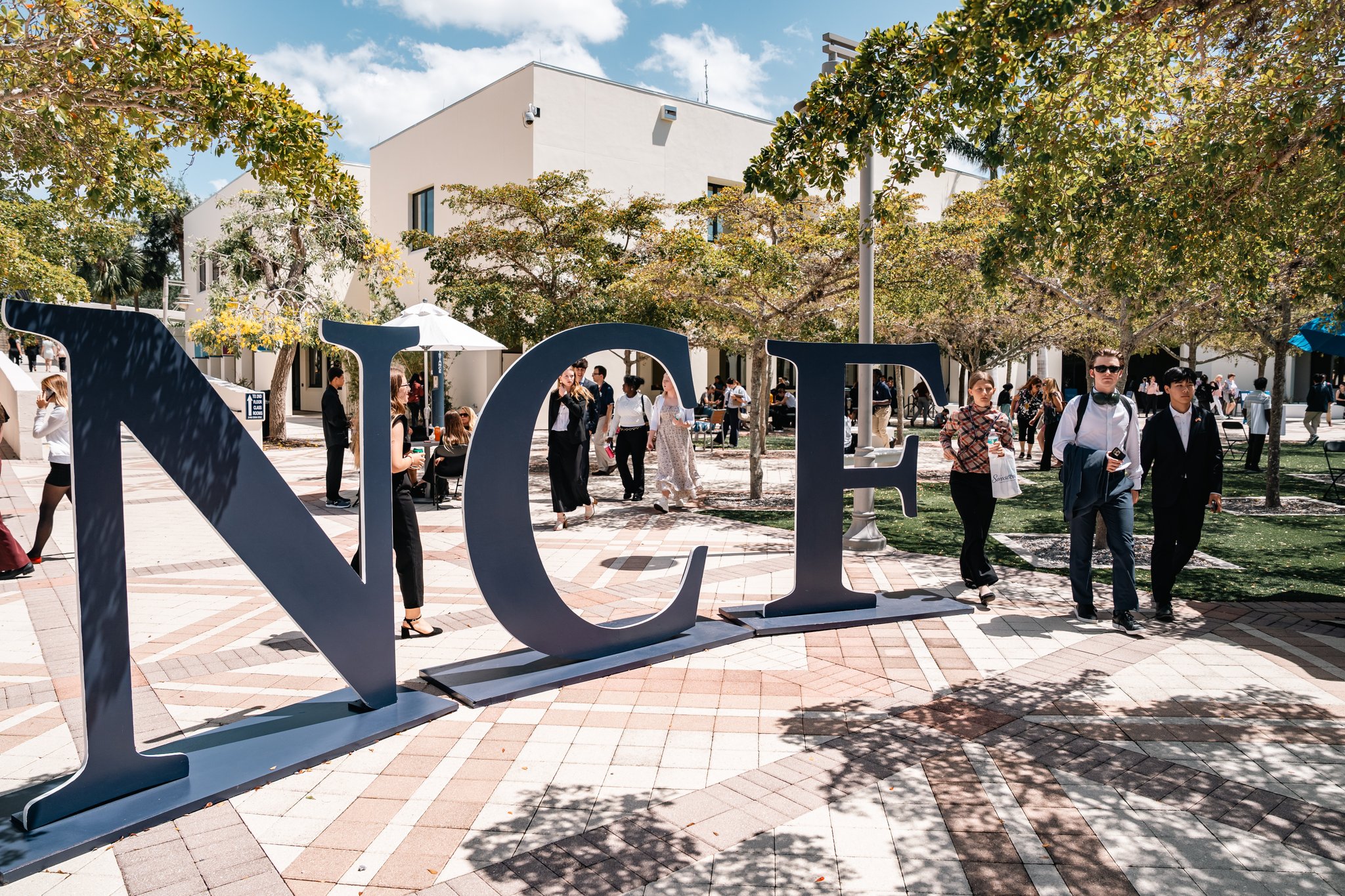
Local voters weighed in. City Councils pushed back. School boards flipped. Yet, in Southwest Florida, 2025 proved that political gravity still pulls hard toward Tallahassee.
From airport governance fights and higher education shakeups to school board drama and rare recall elections, the year was defined by clashes over who holds power.
Florida Politics has curated the top stories that capture the moments that shaped local government and education across Southwest Florida in 2025. Familiar figures returned, institutions were reshaped, and community pushback met an increasingly centralized political reality.
Together, they tell the story of a region grappling with state influence, voter intent and the limits of local control.
New College expansion plans unsettle Sarasota’s higher education landscape
New College of Florida spent much of 2025 at the center of a high-stakes tug-of-war over control of Sarasota’s cultural and academic institutions, with support from DeSantis, who repeatedly floated proposals that would dramatically expand the school’s footprint.
The year opened with a DeSantis proposal to strip Florida State University of control over The Ringling Museum complex and place the internationally recognized cultural assets under New College’s management. Lawmakers ultimately shelved that plan in the Spring, along with a separate concept that would have placed New College in charge of the University of South Florida Sarasota-Manatee campus.
But the issue resurfaced late this year in far more concrete form. DeSantis’ December budget proposal revived the push by directing a wholesale transfer of all USF Sarasota-Manatee campus facilities to New College. Around a week later, New College Trustees approved a new comprehensive plan that showcases plans for rapid expansion if certain political hurdles are cleared. And New College continues to hold out hope for a land purchase from the Sarasota-Bradenton International Airport.
The renewed proposal underscores the DeSantis administration’s commitment to reshaping New College into a larger, more influential institution in Sarasota and Manatee counties.
Naples Airport Authority overhaul ignites home rule fight

A push by Collier County lawmakers to overhaul governance of the Naples Airport Authority became one of Southwest Florida’s most contentious political storylines of 2025, exposing deep rifts between state legislators, city officials and aviation stakeholders.
The effort, led by Rep. Adam Botana, aims to replace the long-standing structure of the city-appointed Naples Airport Authority with an elected board. Supporters argue the airport serves the broader region and should be accountable to all Collier County voters, while critics warn the move would dilute Naples’ control over its own destiny and undermine home rule.
Tensions escalated after the Airport Authority rejected millions in federal aviation grants and Naples City Council attempted, but later abandoned the effort, to expand its oversight of airport development. Those decisions fueled frustration among pilots, tenants and some lawmakers, who questioned the board’s composition and its dependence on city politics.
The dispute spilled into public view through sharply worded exchanges between city and state leaders, highlighting broader friction over local authority, taxation and the Legislature’s growing role in municipal affairs. Despite vocal opposition from the City of Naples, Botana’s proposal advanced steadily, winning unanimous support from the Collier legislative delegation and clearing its first House committee without debate.
The bill is positioned to place all five Airport Authority seats on the 2026 ballot if approved by the Legislature in the new year.
Karen Rose, Bridget Ziegler and Sarasota education politics come full circle
Sarasota County’s education politics in 2025 were defined by reversals, returns and unresolved controversy, as familiar figures cycled back into power despite voter pushback and lingering scandal.
The year began with fallout from the 2024 election, when voters rejected several conservative Sarasota County School Board candidates aligned with Gov. Ron DeSantis, including incumbent Karen Rose. But DeSantis remedied that months later by appointing Rose back onto the School Board months later to fill a vacancy, effectively restoring her to office despite her recent electoral defeat.
The dance did not stop there. Rose’s return placed her once again alongside Bridget Ziegler, whose influence on the School Board has persisted despite national scrutiny. Ziegler, a co-founder of Moms for Liberty, remained on the board after a 2023 sex scandal involving her husband, former Florida GOP Chair Christian Ziegler, made headlines and fractured political circles. That dispute continued in 2025, when the Ziegler’s sued the City of Sarasota and police detectives alleging constitutional violations stemming from an investigation that ultimately produced no criminal charges.
Although Rose once called for Ziegler’s resignation in the early days of the scandal, the two women reemerged in leadership roles by year’s end. Once re-installed by DeSantis, Rose helped return Ziegler to the School Board Chairmanship. Simultaneously Rose herself advanced through confirmation to a powerful regional post on the State College of Florida Board of Trustees, another DeSantis appointment.
Together, their political resurgence underscores a broader theme that defined Sarasota’s education landscape in 2025. Voter backlash did not translate to lasting change, and controversies that once seemed career-ending have become ammo in court.
Schools of Hope expansion triggers backlash in Sarasota and across the state
Florida’s Schools of Hope program emerged as one of the most volatile education fights of 2025, with Sarasota County becoming an early focal point for the growing backlash against a state mandate that allows charter schools to claim space in public school buildings.
Budget language approved for the 2025–26 fiscal year dramatically broadened the program, allowing “Hope operators” to claim space inside any public school deemed underused, regardless of academic performance or local approval. Because every school district contains an opportunity zone, the change effectively opened thousands of campuses statewide to potential charter incursions.
In Sarasota County, Miami-based charter networks quickly signaled interest in occupying space inside campuses with strong academic track records. The letters of intent stoked fears that successful public schools could be forced to share classrooms, cafeterias and playgrounds with outside operators with no ties to the community, and without compensation for use of space and resources.
DeSantis defended the policy as a targeted intervention aimed at struggling communities, insisting most Floridians would never notice the schools being created. But data shows the program’s reach extends well beyond traditionally underserved areas. By Fall, bipartisan frustration had spilled into the Legislature. A bill filed by Sen. Darryl Rouson aims to repeal the co-location requirement entirely, arguing the policy amounted to an unfunded mandate that forced districts to subsidize private operators.
Sarasota’s experience is one of many similar tales in communities across the state, forcing communities to scramble to either respond or fight to protect classrooms from what many view as forced takeovers. Rouson’s SB 424 will be one to watch during the 2026 Legislative Session.
Fort Myers immigration vote triggers Uthmeier
In Fort Myers, a split City Council vote rejected an agreement with federal immigration authorities triggered a rapid response from state leaders. Attorney General James Uthmeier warned the city risked being labeled a “sanctuary” jurisdiction and suggested Council members could face removal from office. The standoff highlighted how little room local governments had to maneuver on immigration policy once Tallahassee drew a hard line.
Florida land purchase ends in court dispute over contaminated land
In Collier County, pushback took a more personal note. Parker Collier, matriarch of a powerful real estate family, sued a former adviser for defamation after allegations surfaced that contaminated land had been sold to the state as part of a major conservation deal. The case opened a bitter dispute that blends environmental concerns, political influence and the limit of public accountability on high-dollar land deals.
Fort Myers Beach voters force the recall of two Council members
On Fort Myers Beach, voters delivered one of the rarest rebukes in local politics: A successful recall. Residents ousted Town Council members Karen Woodson and John King — although King’s case is tied up in court — over support for a controversial high-rise redevelopment at the site of the Red Coconut RV Park after it was destroyed by Hurricane Ian. The vote marked the county’s first successful recall in decades.
Enos resignation opens door for Karen Rose
Board Chair Tim Enos resigned mid-year to return to his former role as chief of the Sarasota County Schools Police Department. His departure reopened questions about continuity and control, temporarily leaving the board evenly split and handing Gov. DeSantis another appointment to tilt the board’s direction. He used that appointment on Rose.
Sarasota school board debates anti-discrimination policy
Board members also reconsidered the district’s long-standing anti-discrimination policy, weighing whether to replace explicit protections for specific groups with language more in line with federal guidance under President Donald Trump. Critics warned the change could weaken safeguards for vulnerable students and staff, while supporters framed it as compliance amid legal and political uncertainty.
Tension over Tom Edwards support for inclusion
Political tensions sparked again when local Republicans called for openly gay Board member Tom Edwards to resign after he accepted a leadership role with a nonprofit focused on inclusion. Edwards brushed off the demand as partisan noise, but the episode reflected how school governance in Sarasota remains entangled in culture-war politics.

Let’s get one thing clear: 2025 was, thankfully, NOT 2024. Along with the rest of the state, the Tampa Bay area avoided any direct hits from storms this hurricane season, allowing residents still battered and bruised (figuratively speaking) from 2024’s back-to-back whammies in Hurricanes Helene and Milton.
An off-election year, there also weren’t too many major political battles locally, and South Florida, as home to the sitting President of the United States, seemed to dominate news cycles, dwarfing the Tampa market’s usual news heaviness.
Nevertheless, the Tampa Bay area will always be home to political drama, strife and overall newsiness. From battles to claim local power to efforts to mitigate what many see as state overreach, headlines were grabbed from St. Pete to Tampa and everywhere in between.
Here are ten of the top political stories from across the Tampa Bay region in 2025. Many offer glimpses into what may become top stories in the new year.
1. Rays, Rays and more Rays
It was actually 2024 when the Tampa Bay Rays saga faced its ultimate curve ball — Hurricane Milton and its driving tropical storm-force winds that ripped the roof from Tropicana Field, displacing the team for the entire 2025 Major League Baseball season and setting in motion the demise of a yearslong effort to strike a stadium deal in St. Petersburg.
Marred by cost overruns due to delays in various government approvals — including bond approvals needed to move forward with the deal that got kicked down the road after the Rays decided to play in Tampa for the 2025 season — Rays leadership ultimately decided this March to end the agreement with St. Pete and Pinellas County for a $1.3 billion stadium near the existing Tropicana Field.
In the meantime, the city was on the hook for $22.5 million in roof repairs to a stadium that is headed for demolition anyway. Adding to critics’ frustration, that cost rose even higher, to the tune of $4 million. While repairing a roof on a doomed stadium seems like a waste of taxpayer money. — and maybe it is — the city had no choice. With the roof repairs, other facility repairs and cost overruns, work on the Trop came in at nearly $60 million. The price tag was particularly painful considering a calculated risk the city took in early 2024, when it reduced its insurance coverage on the Trop from $100 million to $25 million, with a $22 million deductible.
But the drama wasn’t done. With a stadium deal dead, Rays ownership faced pressure to sell. And sell they did.
Previous principal owner Stu Sternberg finalized a $1.7 billion sale in late September to a new ownership team led by Jacksonville home developer Patrick Zalupski, with Jacksonville Jumbo Shrimp Triple-A baseball team owner Ken Babby and Bill Cosgrove, who serves as the team’s CEO.

There’s much to come on the issue in 2026. The new team owners have said they are committed to identifying a new stadium site in the Tampa Bay region, with a preference for Tampa. Owners have said the site selection process is progressing and they’re confident a selection will be made soon.
And watch for the Rays’ stadium debacle to plague St. Pete Mayor Ken Welch, who faces re-election in 2026, potentially against former Governor and former U.S. Rep. Charlie Crist, and definitely against City Council member Brandi Gabbard, making for an especially competitive race between Democrats (though the race is technically non-partisan).
2. Tragedy gives way to a new generation of leadership in Tampa
Tampa City Council member Gwendolyn Henderson passed away at just 60 years old in June, leaving her District 5 seat vacant and prompting what would become a crowded Special Election to fill it.
Ultimately, grassroots activist Naya Young emerged victorious in late October, defeating Thomas Scott in a runoff. Her victory was resounding; she took 61% of the vote, though turnout was low at just over 11%.
Before the runoff, though, the race featured an eclectic bunch of candidates from various walks of life, including Henderson’s daughter, Ariel Amirah Danley. In all, more than a dozen names appeared on the September ballot, leading Young and Scott to advance to the runoff with relatively low support in the Primary. Scott was the top finisher, with 27% of the Primary vote, while Young received 13%.
But what’s potentially most impactful — or at least telling — is that Young was the lesser-funded candidate and beat an opponent who had held elected office previously. Scott previously served as both a City Council member and a Hillsborough County Commissioner and had powerful support from people connected to Mayor Jane Castor and former Mayor Bob Buckhorn.
Given voters’ rejection of a candidate perceived as a Castor/Buckhorn ally, political watchers in the region are already questioning whether Buckhorn’s plan to run again for Mayor may face some hiccups. But with that race not coming until 2027, a lot could still change.
3. St. Pete Mayor’s race takes shape
About four years ago, St. Petersburg Mayor Welch was inaugurated — at his home, in a socially distanced ceremony because he had COVID — and he became the city’s first Black Mayor. Supporters then would likely not have guessed that by the closing months of his first term, lengthened a year due to a voter referendum that moved city elections to even years, Welch would be facing a fight for his political life.
Fueled by what detractors have described as an ineffective administration and a series of missteps ranging from slow storm response in 2024 to the breakdown of the Tampa Bay Rays stadium deal, Welch will likely face opposition from a variety of credible challengers, though none so far (not even Welch) have officially filed for the 2026 contest.
Former Gov. Crist, more recently a former U.S. Representative, has said he’s mulling a bid and is expected to jump into the race officially after the new year. He’s already launched a political committee to raise funds. City Council member Gabbard has also said she will challenge Welch. All three are registered Democrats, though the race is technically nonpartisan.
Even in a nonpartisan race, facing intraparty opposition is rare, and it punctuates the strife Welch has faced in his first term. It’s also looking like he may face a Republican. Former Fire Chief Jim Large, who faced accusations he was ultimately cleared of and later retired, is rumored to be considering a run himself, though he has not yet confirmed the rumors.
In any case, St. Pete voters in 2026 are all but guaranteed a competitive local race that will cost in the millions to win.
4. Bye-bye street art, hello loopholes
Like other areas across the state, the city of St. Petersburg was forced this year to remove five pieces of local street art, including a progressive Pride mural in the Grand Central District and a Black History Matters mural near the Woodson African American History Museum.
The Florida Department of Transportation (FDOT) removed the murals at the city’s expense.
The removals, which came after the city appealed to the state to keep them, prompted local protests.
Two local pastors — Revs. Andy Oliver and Benedict Atherton-Zeman of Allendale United Methodist Church and the Unitarian Universalist Church of St. Petersburg, respectively — were arrested after sitting on the location of the Black history mural on 9th Avenue South and refusing police orders to stop blocking the roadway as they were protesting the mural’s removal. The pastors were later released.
The other murals removed include the Fluid Structures mural located at the University of South Florida St. Pete campus, which was created by students; the Common Ground mural, which includes brightly colored geometric shapes that actually decreased traffic accidents at the intersection by 70%, according to Mayor Welch; and the Crux mural in Child’s Park, which was painted with local children and designed specifically to reduce speed and increase safety for drivers, pedestrians and cyclists.
The removals happened in September. In December, the city sought to make amends for the losses by installing rainbow bike racks in the Grand Central District along Central Avenue and 25th Street, where the progressive Pride mural was located.
5. Rob Lorei dies
Retired journalist Rob Lorei, who was among the founding members of WMNF Community Radio and served as host of WEDU’s Florida This Week for nearly 24 years, passed away in August following a battle with cancer.
He was 70 years old.
Lorei most recently served as anchor of Florida This Week on WEDU, the local PBS station. Each week, he hosted a panel of guests, including other local journalists, political strategists, political activists, scholars and other experts in various areas. Lorei was known for ensuring balanced viewpoints, sharing the camera with Democrats, Republicans and nonpartisans alike.
Lorei served as host until March, when he announced he would be stepping down. It was then that Lorei also revealed his cancer diagnosis.
6. Tampa Pride falls victim to war on woke
Tampa Pride announced in September that it was taking “a one-year hiatus” from its annual Pride Festival and Diversity Parade, citing “current political and economic climate.”
The group posted a letter Aug. 1 to Carrie West, the group’s former President, saying it would not be renewing her contract after it expired at the end of the month.
The announced cancellation also cited “challenges with corporate sponsorships, reductions in county, state and federal grant funding, and the discontinuation of DEI programs.”
The Tampa Pride cancellation came as GOP leaders at the state and federal level were pushing back against LGBTQ+ issues, particularly transgender issues. The state has also been cracking down on diversity, equity and inclusion efforts in local governments, including through Chief Financial Officer Blaise Ingoglia’s work in the newly created state Department of Government Efficiency, which targeted St. Pete this year.
But St. Pete Pride, which hosts the largest pride parade in the Southeast U.S., has vowed that its 2026 events will continue. St. Pete Pride said the group “still has events coming later this year” and that planning “for our 2026 celebration is already underway.”
7. Clearwater rejects ‘Charlie Kirk Way’
At the end of September, in what likely would have otherwise been a quiet meeting, Clearwater residents, stakeholders and others packed City Hall so tightly, many were moved to an overflow room. The reason: Charlie Kirk.
Clearwater City Council member Ryan Cotton had proposed renaming a major downtown road after the late conservative activist. His motion to consider it died for lack of a second, but that didn’t stop the dozens of concerned citizens who showed up to oppose the move from speaking up.
Cotton said his idea to rename Court Street to “Charlie Kirk Way” was to recognize the importance of First Amendment rights. But when the matter died, residents almost didn’t have the opportunity to exercise theirs. Without an item before them to consider, Mayor Bruce Rector initially planned to skip public comment. After what can only be described as robust protests from those gathered, he allowed it anyway.
Several speakers cried. Some recounted personal stories about being subjected to racist vitriol, misogynistic rhetoric or other hurtful tropes they said Kirk perpetuated and encouraged. Some vowed to ensure Cotton was voted out of office. All expressed outrage over the attempt to name a street — in a city for which Kirk had no ties — after someone who stirred so much controversy.
While the “Charlie Kirk Way” conversation isn’t likely to reemerge, renaming streets in general could come up in 2026. Rector suggested bringing a discussion to a future workshop evaluating the city’s procedure for renaming roads and other amenities to better understand when such action is appropriate.
8. Chris Latvala’s health scare
In late September, Pinellas County Commissioner Chris Latvala found himself battling a health annoyance for which few of us have been spared: abdominal discomfort. But for Latvala, it was more than a bad oyster or a particularly spicy batch of curry. The persistent, intense pain sent him to the emergency room, triggering a weekslong fight for his life.
Latvala experienced an SMA dissection, where the superior mesenteric artery tears. The SMA supplies blood to part of the large intestine, much of the small intestine and part of the colon. A dissection requires highly specialized care. It’s an emergent condition, but Latvala had initially responded well to monitoring, rest and treatment. He was discharged from the hospital on Monday, Sept. 29, one week after his pain had initially begun.
But by the next night, Latvala faced a grim prognosis. A spike in his blood pressure that would not abate sent him back to the ER. This time, imaging revealed the tear had worsened. Much worse.
Latvala received care from a certified vascular surgeon who fully understood the complexity of Latvala’s condition, which is exceedingly rare, especially for a man of Latvala’s age. SMA dissections are more common in women and typically occur in a person’s 50s.
Latvala was transported to UF Health Shands Hospital, known for its vascular surgery program, and placed under the care of a vascular surgery expert.
Even when he was finally released from the hospital after the ultimate health scare, Latvala’s fight wasn’t done. He had to head back to Shands for even more observation, treatment and recovery.
He’s since returned to the dais, and he’s more grateful than ever for his life. That includes his loving family; his mom’s request for prayers reached across entire oceans. Most of all, Latvala’s love for his wife Bianca was put on full display as he praised her, along with God, for seeing to his care and recovery.
9. Buckhorn/Carlson feud reignites ahead of 2027 contest
Bob Buckhorn is an interesting character in Tampa politics. He’s charismatic to an extent that demands attention, if not always respect. For those who can’t find it in them to respect the former Tampa Mayor, it seemed they’d be done with him when his term ended in May 2019.
Think again.
Buckhorn, for much of 2025, has been teasing a bid to return to his old office, only officially saying he was definitely running earlier this month in an interview with Florida Politics (he had said so earlier in the year while speaking to a group of college students, but confirmed later that it wasn’t an official announcement).
To be sure, Buckhorn wields a level of power in public and behind closed doors far greater than others who have come before and many who will come after. And his supporters are aplenty. But so are his detractors, and his intention to run for Mayor again in 2027 sets up a battle royale with his biggest one: Tampa City Council member Bill Carlson.
In May, Buckhorn’s return to politics already appeared imminent, as the guest of honor at a lunch featuring a discussion with him about “what’s next for Tampa and for this campaign.”
Carlson frequently feuded with Buckhorn when he last served, and he continued that feud with now-Mayor Castor when she succeeded Buckhorn with his blessing. Carlson appears well aware that his days of battling with Buckhorn are far from over.
In July, a poll unattributed to any potential candidate went out to Tampa voters asking about the 2027 mayoral race. There were curious omissions. In a question asking respondents about their opinion of Carlson, the only responses available were “very favorable,” “somewhat favorable,” “neutral,” or “no opinion.” There was no option to indicate an unfavorable opinion.
Asked whether he sent the poll or knew who did, Carlson said he didn’t and suggested it was Buckhorn who may have sent it.
Nevertheless, that poll came a couple of months after an internal poll from Mercury Communications showed Buckhorn leading a five-way field for Mayor in 2027, including against Carlson. Despite the crowded field of options, Buckhorn captured 49% support in the poll, with Carlson trailing at 22%.
And Buckhorn is raising funds aggressively. His third-quarter fundraising through his political committee, Friends of Bob Buckhorn, showed more than $1 million already raised. He also has some earned media wins to focus on, including one that will regularly remind voters of his banner accomplishments — the massive renovation of Julian B. Lane Riverfront Park and the extension of the nearby Riverwalk.
On the former, Buckhorn’s name is now literally on the main building, in huge, hard-to-miss letters.
It’s a new time in Tampa, and there have been signs that the Buckhorn era of dominance may not be as strong as it once was. First — and this goes back further than 2025 — a Castor-backed (and by proxy, Buckhorn-backed) attempt to unseat Carlson with Blake Casper, a Republican, blew up miserably. Efforts to defeat City Council member Lynn Hurtak were also unsuccessful. And most recently, voters rejected the Castor-backed Scott in the Special Election for District 5.
While the Tampa mayoral race isn’t until 2027, 2026 is sure to pack a pretty big punch, even if much of the politicking will still be behind the scenes.
10. Cross Bay Ferry rebirth
Things were not looking good for the Cross Bay Ferry, a seasonal premium transportation option that shuttled riders between downtown St. Pete and downtown Tampa across Tampa Bay. It operated for seven years and was a huge win from the Rick Kriseman era in St. Pete — the former St. Petersburg Mayor was the project’s biggest champion. But the service was canceled this year after operator HMS Ferries failed to meet the terms of its contract by using a replacement boat.
But rejoice, coordinated work between city and county governments, the Pinellas Suncoast Transit Authority (PSTA) and private operators has again made the ferry a reality.
The PSTA voted earlier this year to move forward with a $1.5 million purchase of a 97-foot vessel named Bay Breeze from San Francisco. And because the cost, along with refurbishment, will come in at less than the $4.8 million federal grant funding the purchase, PSTA will have about $2 million left to buy a second ferry, one expected to be smaller and zippier. The new boat will offer about 100 more seats on board than the previous ferry.
Additionally, Hubbard Marina will operate the new Tampa Bay Ferry, as it is being rebranded.
While the new ferry is still subject to various safety and sea tests, it’s expected to get the all-clear, and the revitalized service could launch again as soon as the Summer.


Donald Trump, Benjamin Netanyahu to meet in Florida at crucial moment for U.S.-backed Gaza ceasefire

And B.B. created style – FashionNetwork

10 stories that shaped Jacksonville politics in 2025 … and possibly beyond
-

 Politics8 years ago
Congress rolls out ‘Better Deal,’ new economic agenda
-
Entertainment8 years ago
New Season 8 Walking Dead trailer flashes forward in time
-
Politics8 years ago
Poll: Virginia governor’s race in dead heat
-
Entertainment8 years ago
The final 6 ‘Game of Thrones’ episodes might feel like a full season
-
Politics8 years ago
Illinois’ financial crisis could bring the state to a halt
-
Entertainment8 years ago
Meet Superman’s grandfather in new trailer for Krypton
-
Business8 years ago
6 Stunning new co-working spaces around the globe
-
Tech8 years ago
Hulu hires Google marketing veteran Kelly Campbell as CMO